
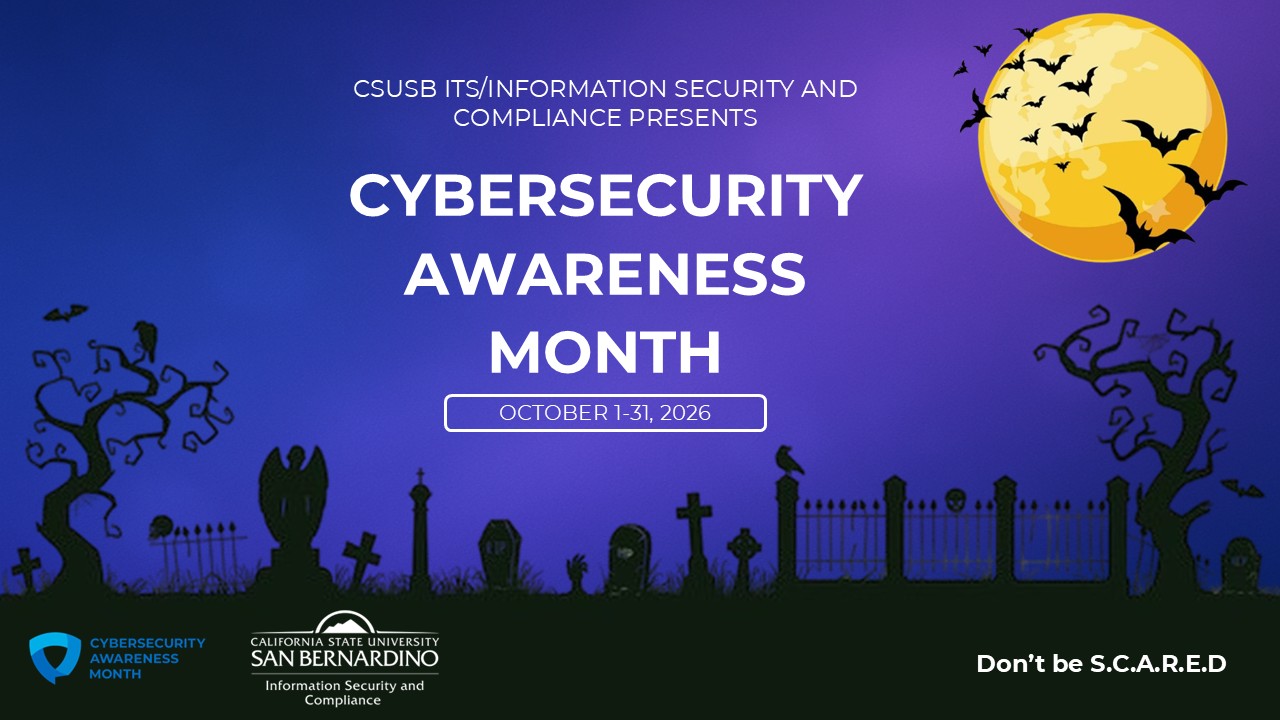
CSUSB Cybersecurity Awareness Month 2026!
October heralds the start of the National Cybersecurity Awareness Month, and the Information Security and Compliance Department is thrilled to launch our campus-wide campaign to bolster our digital defenses.
Over the next four weeks, we'll explore crucial cybersecurity topics to safeguard our personal and institutional data.
The overall theme for this year's cybersecurity awareness month is: “Don’t be S.C.A.R.E.D.”
- S - Social Media: Share smart. Lock down profiles. Guard personal info.
- C - Classification: Know your data. Handle it the right way.
- A - AI & AI Threats: Use AI wisely. Verify outputs. Protect inputs.
- R - Report & Risk Assessment: Report suspicious activity and understand cyber risks.
- E - Email Security: Spot phishing, verify senders, handle attachments/links safely.
- D - Device Security: Update, encrypt, lock, and back up. Bring Your Own Device (BYOD) best practices.
Weekly themes for Cybersecurity Awareness Month include:
- Week 1 (10/5 – 10/9): Social Media & Personal Information
- Week 2 (10/12 – 10/16): Data Classifications and You
- Week 3 (10/19 – 10/23): AI and AI Threats
- Week 4 (10/26 – 10/30): Workstation Security Best Practices
Something wicked may be making its way through your social media feed. From deceptive messages and fake profiles to malicious links and oversharing, digital threats can appear when you least expect them. This week is all about how to stay safe and secure when using social media apps and platforms.
Spooky Social Media Risks to Avoid:
🕷️ Phantom Profiles
Cybercriminals often create fake profiles that imitate classmates, coworkers, staff and faculty members, university leaders, recruiters, or trusted organizations. They may use a real person’s name, photo, and public information to make the account look convincing. Once they are accepted as part of your friend list, they can collect information about you, send malicious links, request money, or attempt to steal your login credentials.
Spooky Tip: Examine the account before connecting. Look for warning signs such as a recently created profile, very few posts, unusual spelling, limited connections, or a slightly altered username.
🕷️ Bewitched Links
Not every link is safe to click. Cybercriminals use shortened URLs, fake login pages, misleading advertisements, QR codes, and compromised accounts to trick people into visiting malicious websites. Clicking one of these links could expose your password, install malware, or give an attacker access to your social media or university account.
Spooky Tip: Navigate through an official source. Instead of opening a link from an unexpected post or message, visit the organization’s official website or mobile app directly. If you clicked a suspicious link or entered your password, change it immediately and report the incident with the social media app.
🕷️ Tagging Terrors
It’s not always you! Photos and posts shared by other people can expose your location, activities, workplace, school, or personal relationships—even when you did not post the content yourself. Unwanted tags may also connect your profile to spam, scams, or inappropriate material.
Spooky Tip: Adjust your privacy settings so you can approve tagged posts and photos before they appear on your profile.
🕷️ Deepfake Doppelgängers
Artificial intelligence can create convincing images, videos, and audio recordings that impersonate real people. Cybercriminals may use this content to spread false information or make fraudulent requests appear legitimate.
Spooky Tip: If a video, voice message, or post makes an unusual or urgent request, verify it with the person through a trusted communication channel.
🕷️ Digital Footprint Frights
Once you share something on social media, you may lose control over where it goes and who sees it. Others can save, copy, or repost your content—even if your account is private or you later delete the original. One careless post can reveal personal information or create consequences that last far beyond the moment.
Spooky Tip: Regularly check your past posts, tagged photos, privacy settings, and publicly visible profile information.
Spook-Proof Your Social Media
To avoid falling for these tricks, remember:
- Examine profiles before accepting the friend request.
- Navigate to pages through an official source.
- Enable tag review.
- Confirm any unusual messages before you provide any information.
- Review your digital footprint.
🎃 Spooky Week Challenge 🎃
Think you can spot the spooky social media risks? Review the image in this week’s challenge, identify the cybersecurity and privacy concerns, and submit your answers through the Qualtrics survey. Complete the challenge by 12:00 p.m. on Monday, October 12, for a chance to be entered into the weekly raffle.
👻Data Classification Levels 👻
Did you know that CSUSB assigns data classification levels to all information that is (or will be) gathered, processed, transmitted, or stored by its IT assets? This VERY important exercise typically happens prior to the acquisition, purchase, or implementation of an IT resource. In accordance with CSU Systemwide policy, CSUSB utilizes three classification levels, and each requires specific controls for handling:
- Level 1 – Confidential Data (Highest Protection Required)
- Level 2 – Data for Internal Use
- Level 3 – General Information (Publicly Accessible)
Level 1 data is information that is sensitive and confidential to the university, its students, employees, or customers. This level presents the highest level of risk and damage if compromised. Examples include (but are not limited to):
- Passwords or credentials that grant access to Level 1 or Level 2 data
- Social Security Number (SSN) and name
- Birth date combined with last four digits of SSN and name
- Medical records related to an individual
- Biometric information
- Electronic or digitized signatures
Level 2 data is private information that is handled for the purpose of “internal use.” This level presents a moderate level of risk if accessed or disclosed without proper authorization. Examples include (but are not limited to):
- Photos (taken for identification purposes)
- Student information/education records not defined as “directory” information, including, but not limited to grades, courses taken, schedule, test scores, advising records, educational services receive, disciplinary actions, student photo)
- Trade secrets or intellectual property such as research activities
- Licensed software
- Employee information, including, but not limited to employee net salary, home address, personal telephone number, personal email address, payment history, employee evaluations, pre-employment background investigations, mother’s maiden name, race and ethnicity, gender, marital status, physical description
Level 3 data is general information that is publicly available and/or meant for public consumption. As the least “riskiest” classification standard, this level does not require specific protective measures but is still subject to University review and use procedures.
We ALL play a role in safeguarding the information that we handle!
🎃 Spooky Week Challenge 🎃
This week’s challenge is a spooky word search on this week’s theme: Data Classification! Review the word search and submit your answers through the Qualtrics survey. Complete the challenge by 12:00 p.m. on Monday, October 19, for a chance to be entered into the weekly raffle.
Meet CSUSB’s Cyber Defenders
Cybersecurity Awareness Month is also an opportunity to recognize the students helping protect our campus every day.
The CSUSB Security Operations Center (SOC) brings together Information Technology Services and the Center for Cyber & AI to provide cybersecurity students with hands-on, real-world experience. Under professional guidance, student analysts monitor security alerts, investigate suspicious activity, and help identify and escalate potential cybersecurity incidents affecting university systems.
Their work strengthens CSUSB’s security while preparing the next generation of cybersecurity professionals.
Meet the student analysts and learn more about the CSUSB Security Operations Center.
Learn more about the Life of a SOC Analyst below:
Exciting Challenges for Students and Staff!
Each week, you'll have the opportunity to complete an activity related to the theme. If the weekly activity is completed by 12:00 PM PST the following Monday, you will have the chance to be entered into a weekly raffle! (Note: weekly activities will be submitted through the Qualtrics survey platform.)
Campus Events
October 12 & 14: ITS October Tech Conference
October Tech brings together students, faculty, staff, and the community to explore how emerging technologies are changing the way we learn, create, research, and interact. Through hands-on demonstrations, presentations, immersive experiences, and collaborative sessions, participants can engage with artificial intelligence, robotics, motion capture, spatial media, and new approaches to teaching and learning.
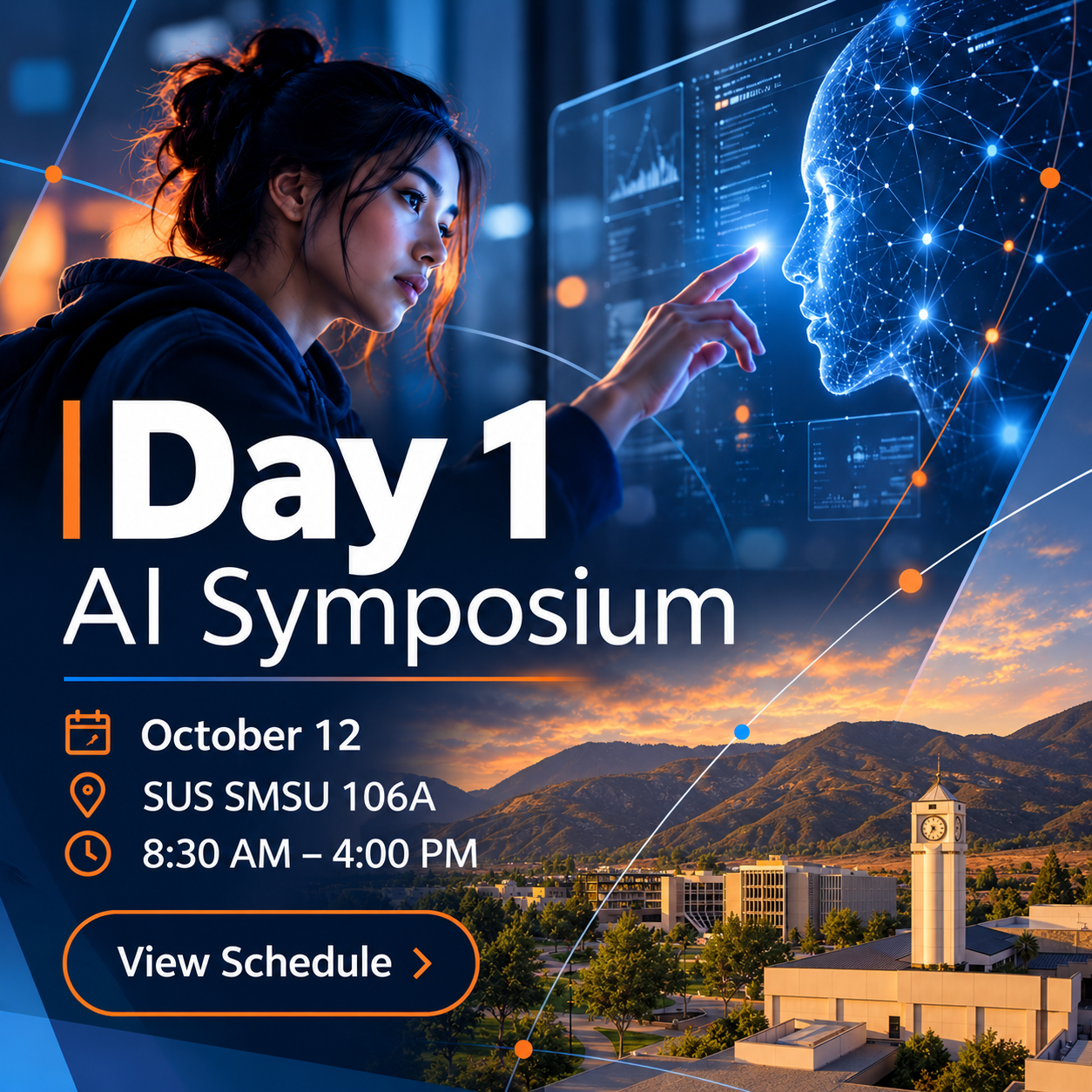

October 23: The Center for Cyber & AI - Wired In!
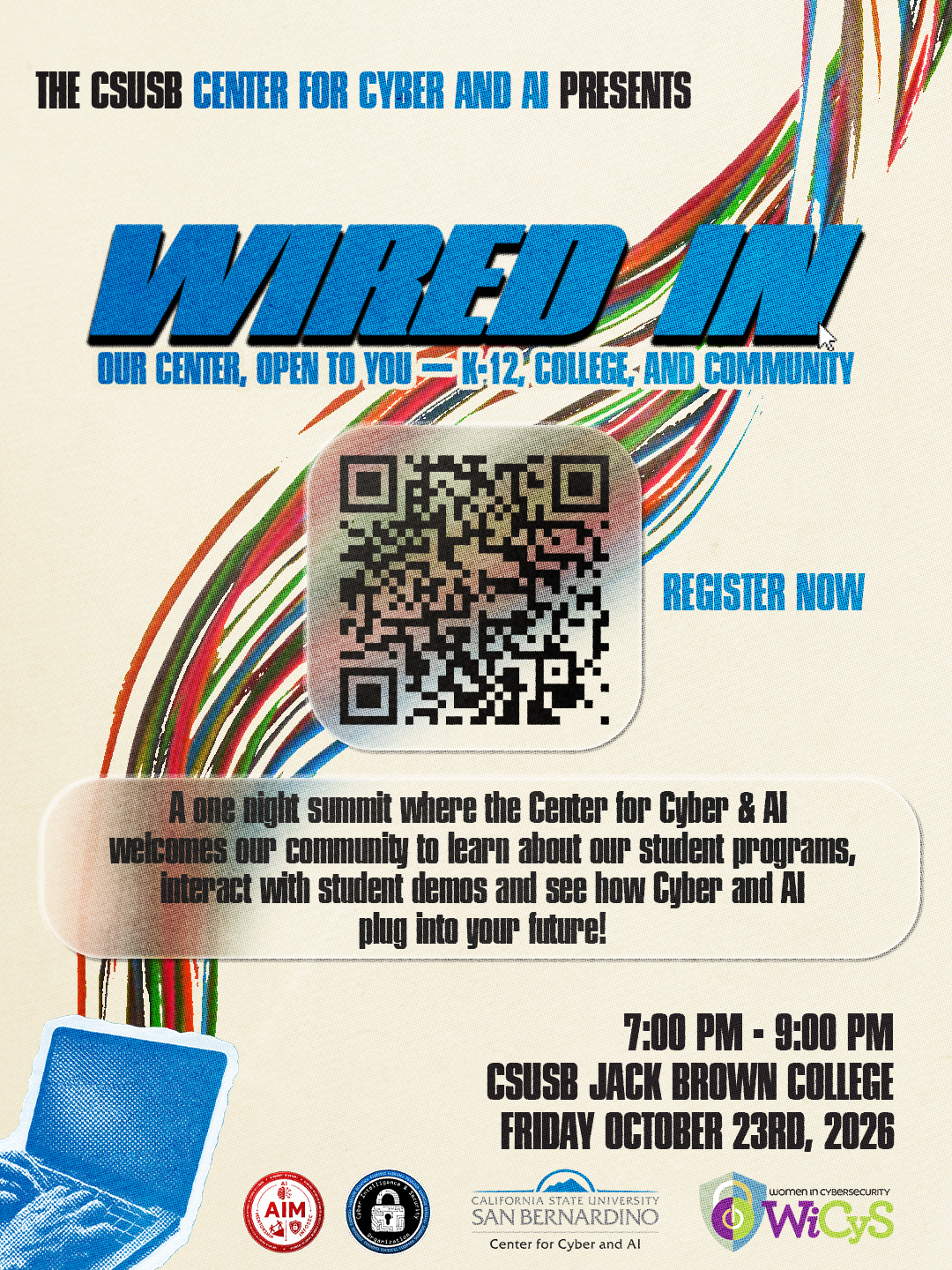
A one night summit where the Center for Cyber & AI welcomes the community to learn about CSUSB's student cyber programs, interact with student demos, and see how Cyber and AI plug into the future!
Enable Multifactor Authentication (MFA) – Enable Multifactor Authentication (MFA) to add a level of security to work and/or personal accounts by using a password to protect a password. View Multifactor Authentication Tips.
- Create and use strong passwords – Use strong passwords to prevent compromise/breach to work or personal information. Safety is the name of the game. View Passwords Tips.
Setup Password Managers – Use a password manager to store all passwords to digital accounts. Create, store, and save passwords that can be automatically filled in for future use and keep accounts safe. View Password Managers Tips.
Update software – Update software frequently, or use scheduled software updates that are often included with software apps, etc. This will ensure you have the latest security for your device and use of new features. View Software Update Tips.
Recognize and report phishing – Recognize and report suspicious emails and links. Never click on suspicious links sent via email, and or text especially from people you do not know. Report phishing emails received at work to your Information Technology Services Department (ITS) or utilize personal email platforms such as Google to report phishing events. View Phishing Tips.
Be a Champion in the war on cybercrime visit: Stay Safe Online or the Cybersecurity & Infrastructure Security Agency for additional digital safety!
