Description & Objectives
The Psychological Science program is a 33-4-semester unit program designed to provide a broad background in psychology suitable for employment requiring a Master of Arts degree. The Psychological Science program is especially designed to improve the candidacy of students who wish to enter doctoral programs in any academic area of psychology. In the past 10 years, over two-thirds of students awarded an M.A. degree from the Psychological Science program were subsequently admitted to doctoral programs in the United States and Canada. We pride ourselves on being a program that emphasizes individual educational mentoring. Between 10 and 15 students are enrolled each year. All Psychological Science M.A. students conduct original research as a thesis project. Research productivity of Psychological Science students and faculty ranks favorably when compared to other M.A. programs across the country. Students enroll in one of following concentrations:
General Concentration:
- This concentration provides a broad background suitable for entry into doctoral programs in any area of psychology (e.g., social, cognitive, developmental, neuroscience, or clinical), or for employment that benefits from a Master of Arts degree in Psychology. Active research involvement in some area of Psychological Science will be expected of all students in the program.
Behavioral and Cognitive Neuroscience Concentration:
- This concentration provides a focused course of study for students intending to advance to doctoral programs in biological psychology, behavioral neuroscience, cognitive neuroscience or related disciplines; or for employment that benefits from a Master of Arts degree in Psychology or training related to Neuroscience. Active research involvement in Behavioral and/or Cognitive Neuroscience is an expectation of the program.
MAPS Program Handbook
The MAPS Program Handbook provides current students with information about degree requirements, the recommended two-year course roadmap, academic policies, thesis milestones, faculty mentors, professional development opportunities, forms, and other program resources.
Psychological Science Faculty (by concentration)
Contact Information
Please feel free to email any of the Psychological Science faculty for more information about specific areas of interest to you. To discuss the program and its relevance to your career goals, please contact the program director, Dr. Nicolas Brunet, email: nicolas.brunet@csusb.edu
To apply to the MA Psychological Science program, please visit our Graduate Admissions webpage for deadlines and step-by-step instructions.
Our Psychological Science Faculty are:
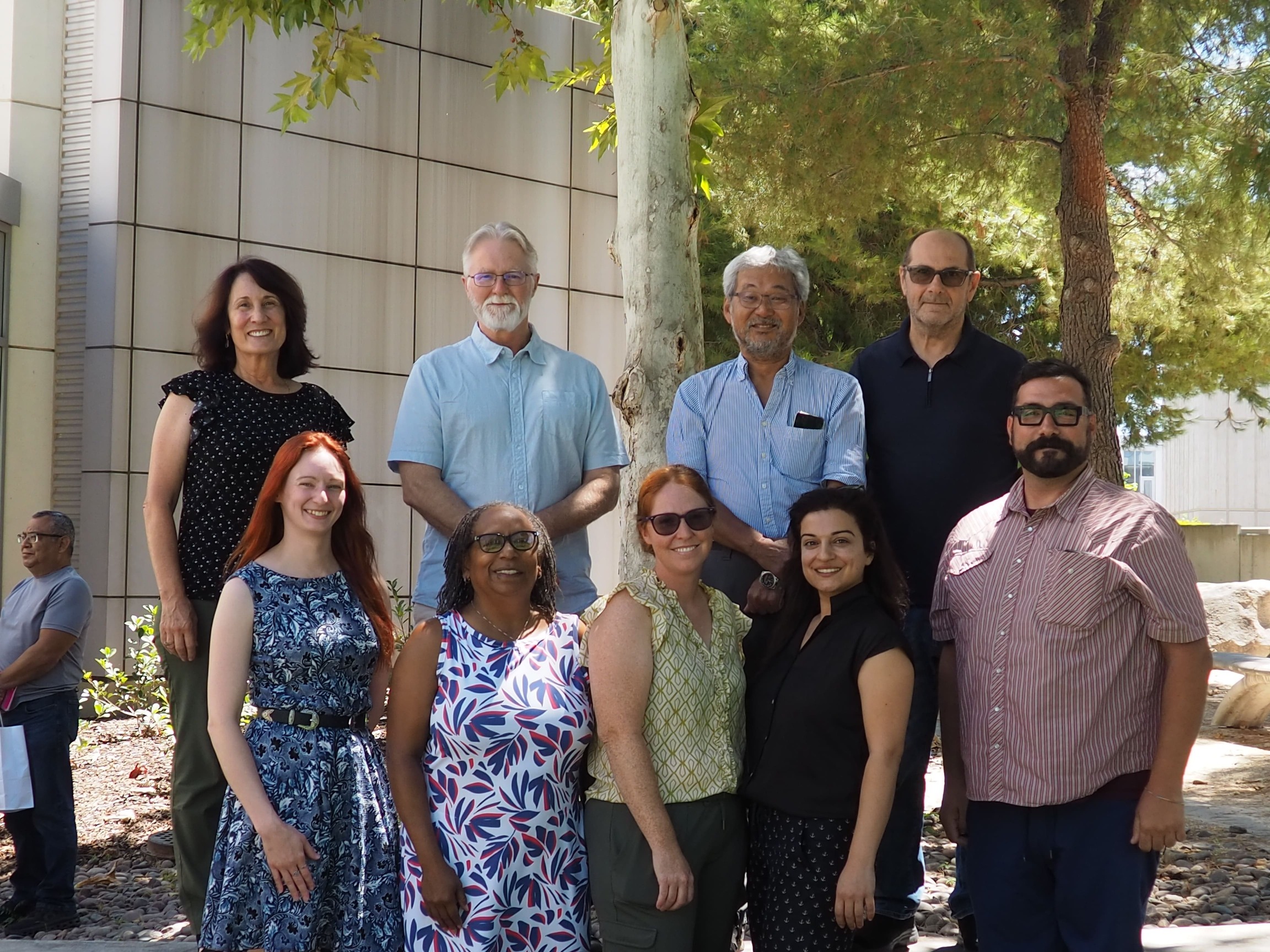
(From top left to right) Dr. Donna Garcia, Dr. John Clapper, Dr. Hideya Koshino, and Dr. Nicolas Brunet
(From bottom left to right) Dr. Miranda McIntyre, Dr. Cynthia Crawford, Dr. Leslie Amodeo, Dr. Anahid Modrek, and Dr. Dioniso Amodeo
Requirements
Master of Arts in Psychological Science
The objective of the Master of Arts in Psychological Science is to provide a program of study with courses selected from a variety of basic areas in experimental psychology. The program provides a broad background suitable for entry into doctoral programs in any area of psychology (e.g., social, cognitive, developmental, neuroscience, or clinical); or for employment that benefits from a Master of Arts degree in Psychology. Active research involvement in some area of Psychological Science will be expected of all students in the program.
Admission to the Program
In addition to the general requirements of the university, specific requirements for admission to classified graduate status are:
- A baccalaureate degree with a major in psychology; or with any other undergraduate major;
- Satisfy the graduate admissions committee of the Department of Psychology that a satisfactory course of study has been pursued in preparation for graduate study in psychology;
- A cumulative undergraduate grade point average of at least 3.0 ("B") overall and in the major;
- A brief statement describing preparation for graduate study (e.g., research experience, academic accomplishments), identifying a specific Psychological Science faculty member (or two) whose research is of particular interest to the applicant, and discussing the applicant's professional aspirations and goals for graduate study. To be submitted to the department;
- Three letters of recommendation, with at least two from former professors. Letters should come directly from the writers or be included in a placement file. (It is the applicant's responsibility to determine if letters have been received.);
- Satisfaction of the prerequisites or their equivalent:
- PSYC 1100 Introduction to Psychology
- PSYC 2210 Psychological Statistics
- PSYC 3311 Introduction to Experimental Psychology
Students who meet the general requirements of the university for admission to graduate study, but who do not meet the Psychology Department's specific requirements for admission to classified status or who wish to take course work prior to spring semester consideration of their application for classified status, may be admitted to the university in the unclassified post baccalaureate status. Unclassified post baccalaureate students may enroll, with consent of the Psychology Department, in selected graduate courses.
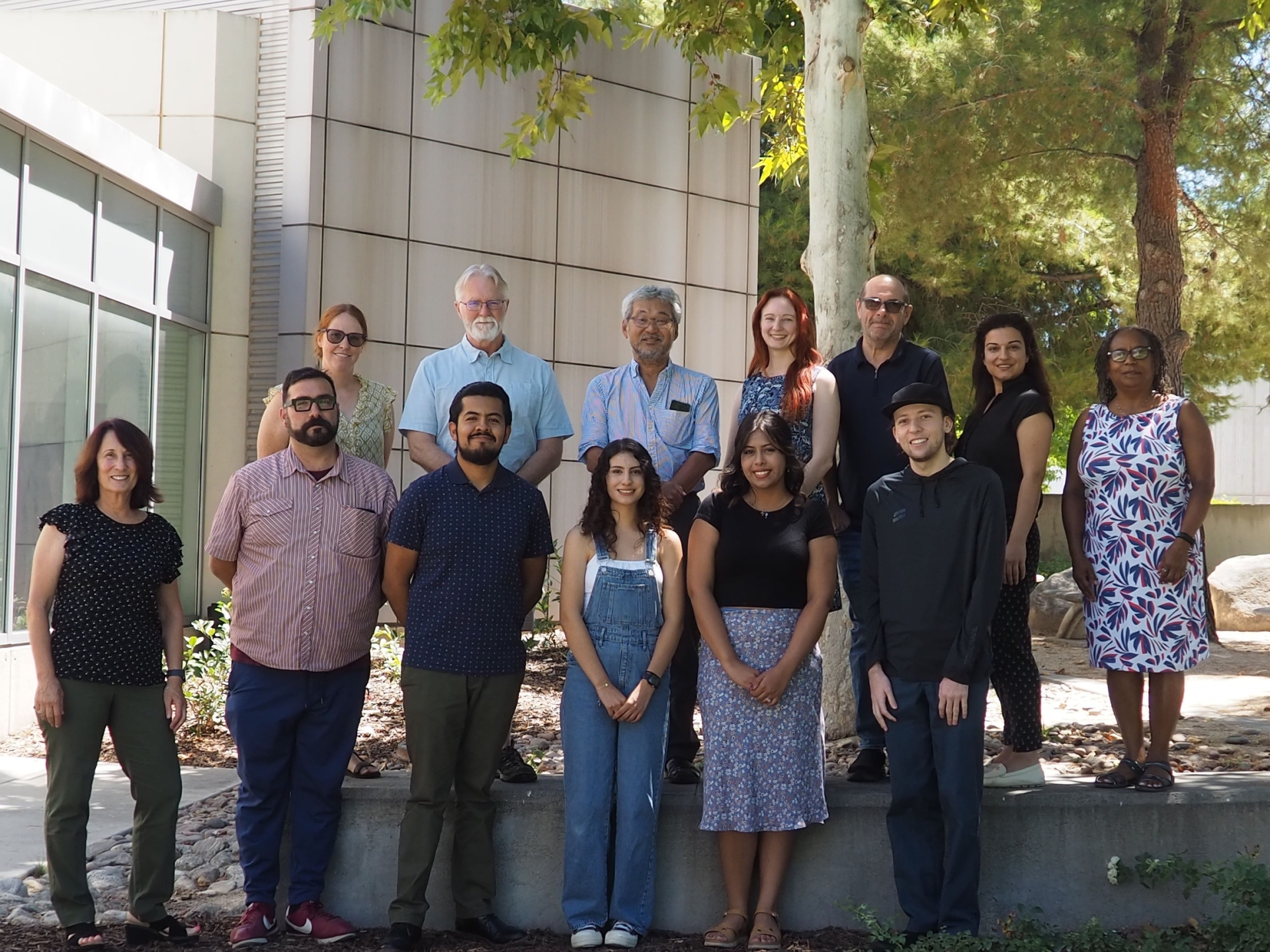
(Welcome our newest MAPS cohort)
Advancement to Candidacy
At the end of the winter semester, all first year graduate students will be evaluated to determine whether or not they will be advanced to candidacy for the Master of Arts degree. Students will be reevaluated each semester until they are either advanced to candidacy or declassified.
To be formally advanced to candidacy, a student must, to the satisfaction of the chair of the department, have:
- Achieved classified status
- Successfully completed 17 units of course work in the program and maintained a 3.0 ("B") grade point average in the course work;
- Selected a graduate advisor to supervise the course of study;
- Complied with the ethical standards of the American Psychological Association;
- Filed an approved graduate program which must have the approval of the student's advisor, the department chair or the graduate program director and the Dean of Graduate Studies;
- Demonstrated successful research participation with a faculty advisor. Success will be determined by a passing grade in PSYC 6952 (2 units). PSYC 6953 (3 units) will be reserved for the completed thesis proposal after advancement. This requirement can be fulfilled in one of three ways:
- Student becomes familiar with the literature in a research area related to their thesis research. This could take the form of a partial literature review, an annotated bibliography and/or a presentation of the literature of interest to faculty/student groups.
- Student becomes familiar with several related research literatures if their area of interest is currently undeveloped or if specialized knowledge of particular methodologies requires further investigation for the development of a thesis project.
- Student acquires skills in certain specialized research methods which will pertain to their abilities to gather data for the thesis. Examples of such activities could include gathering pilot data to acquire interview skills, knowledge of survey procedures, assessment skills, advanced statistical skills, understanding of content analysis, skills to work with a special population, or advanced physiological measurement skills.
Requirements for Graduation
- A minimum of 34 semester units of approved graduate-level work, with a minimum of 25 units completed at this university. Any transfer units are subject to approval by the program director.
- A grade point average of at least 3.0 ("B") in all courses taken to satisfy the Master of Arts degree, grades of "B-" (2.7) or better in each required course in the program, and grades of "C" (2.0) or better in each elective course;
- Successful completion of the course work listed below, including a culminating experience consisting of the completion and defense of an original master's thesis;
- The Graduate Writing Assessment Requirement is met through successful completion of PSYC 6640 with a grade of B- or higher.
- Any additional general requirements not cited above and listed in Graduate Degree and Program Requirements
Classified graduate students in the Master of Arts program must complete their degree requirements within seven years of admission to that program. Students in classified status who fail to register for at least one course in the Psychology M.A. program each semester will automatically be declassified. PSYC 6990-6996 (Continuous Enrollment for Graduate Candidacy Standing) must be taken if another course is not taken during a given semester.
Please see full breakdown of units/courses for the catalog year here
Point of Contact
Please feel free to call or email any of the Psychological Science faculty listed above for more information about specific areas of interest to you. To discuss the program and its relevance to your career goals, please contact the program director, Dr. Nicolas Brunet.
- Dr. Nicolas Brunet
- Nicolas.Brunet@csusb.edu
To apply to the MA Psychological Science program, please visit our Graduate Admissions webpage for deadlines and step-by-step instructions.