Careers in Physics
A physics degree opens doors across a wide range of fields, not just careers labeled "physicist." Physics majors are known for strong problem-solving, quantitative, and analytical skills that transfer well to research, industry, education, and beyond.
Common Career Fields
- Research and graduate study in physics, astrophysics, or related fields
- Industrial and government research laboratories
- Aerospace and defense
- Data science and software engineering
- Geophysics and atmospheric physics
- Radiation safety
- Oceanography
- Biophysics and medical instrumentation development
- Technical administration
- K-12 and community college teaching
Where Physics Graduates Work
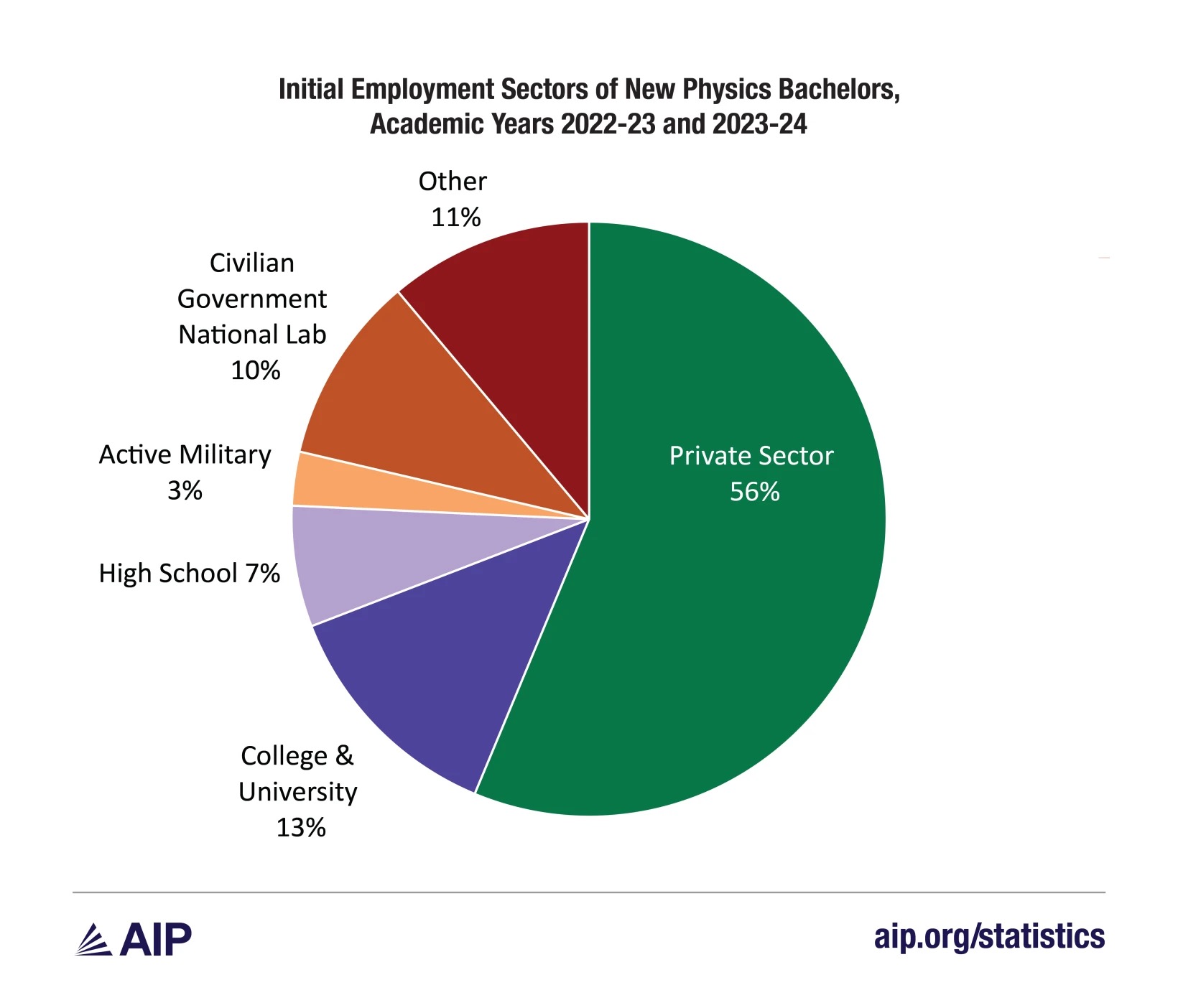
Caption: More than half of new physics bachelor's graduates go straight into the private sector, but plenty of paths lead to college and university positions, government and national labs, and even high school teaching.
What Do New Physics Bachelors Earn?
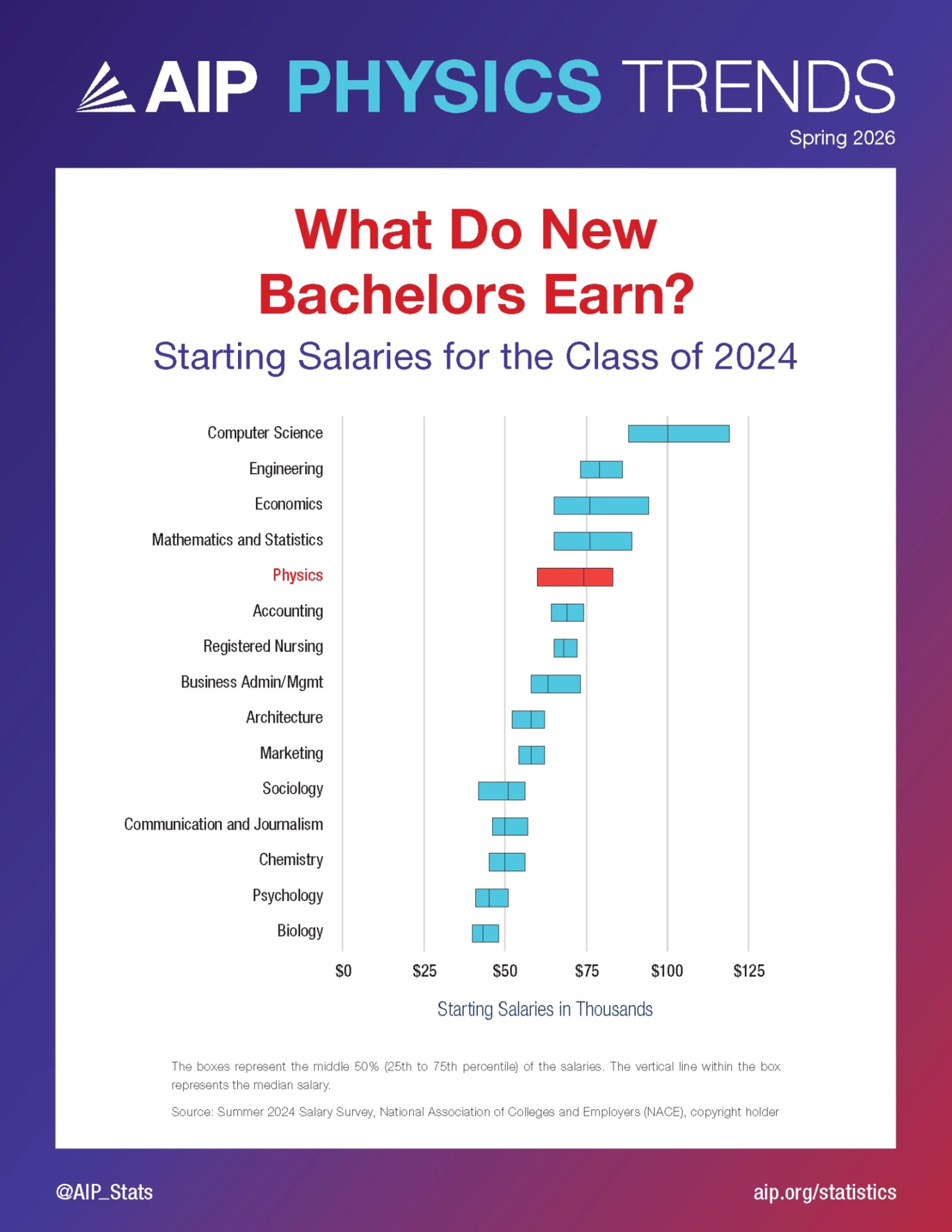
Caption: Physics starting salaries compare well against many other majors, landing in a similar range to mathematics, statistics, and economics.
What Happens After Graduation?
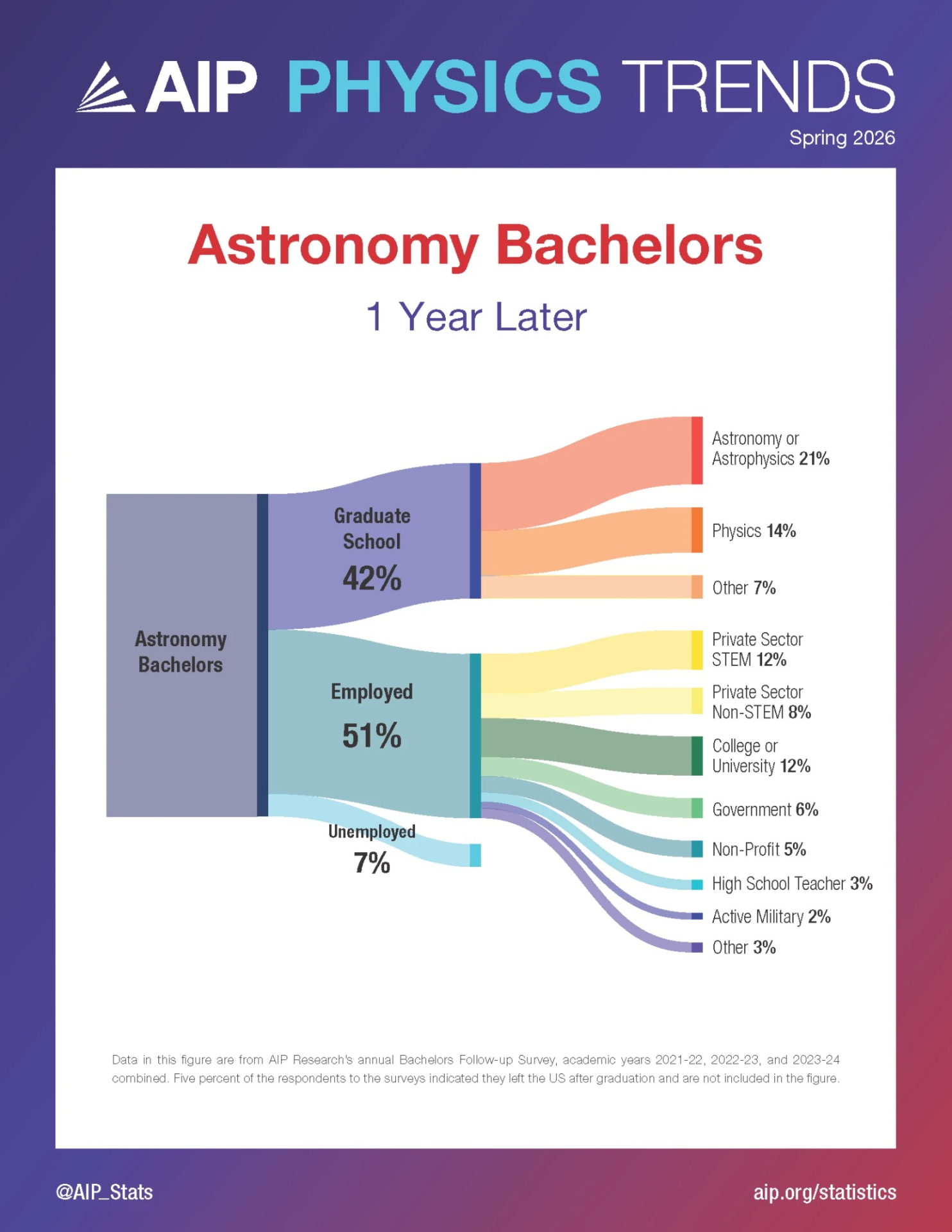
Caption: One year after graduation, new astronomy bachelor's recipients split largely between two paths: about 42% continue to graduate school (mostly in astronomy, astrophysics, or physics), 51% are employed across private industry, government, and education, and a small remainder are still job-searching.
What Physics Graduates Actually Do
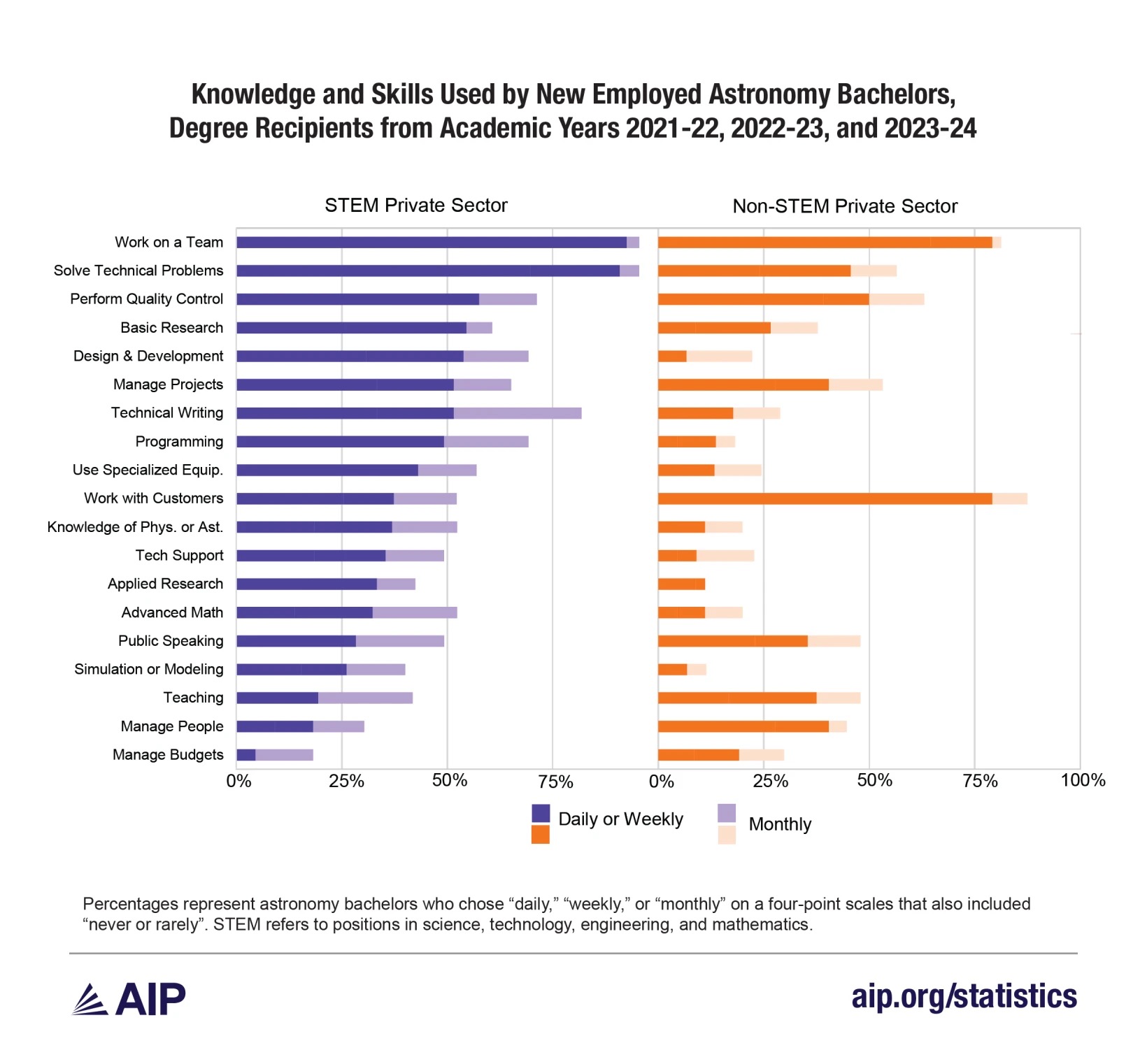
Caption: Whatever sector they land in, physics and astronomy graduates report using skills like teamwork, technical problem-solving, and programming on a daily or weekly basis, proof that the analytical training from the major carries directly into the workplace.
Why Choose Physics and Astronomy at CSUSB?
- Small class sizes with dedicated faculty mentorship
- Hands-on research starting as an undergraduate, including paid summer research opportunities
- Access to the Cal-Bridge Program, which supports students from underrepresented backgrounds pursuing physics and astronomy PhDs
- NSF-REU (Research Experience for Undergraduates) opportunities at other institutions
See our Research page for more on Cal-Bridge, NSF-REU, and the Center for Advanced Functional Materials.
Explore Career Data and Resources
A physics degree offers many opportunities to pursue a fulfilling career. The following links contain a wealth of information to help you choose the right path:
- Society of Physics Students: Plan Your Future
- American Physical Society: Careers and Education
- Institute of Physics: Your Future with Physics
- Canadian Association of Physicists: Careers for Physics Graduates
- The AIP Statistical Research Center publishes current data on physics career outcomes, starting salaries, and employment sectors by degree level.
- The CSUSB Career Center offers career counseling, resume support, and job search resources for all majors.
Ready to plan your path? See our Roadmaps to Degrees and Course Schedule.