Alan Llavore | Office of Marketing and Communications | (909) 537-5007 | allavore@csusb.edu
When Kim Rosas transferred to Cal State San Bernardino, she had a plan: major in history, get involved on campus — but maybe not too involved.
That plan did not last long.
Today, Rosas is helping lead the Yotie Film Club as president-elect, has served in Associated Students, Inc., is deeply involved with CSUSB’s College Corps and has helped launch a film festival. Along the way, the first-generation student rediscovered a love of filmmaking she thought she had left behind in high school and began imagining a future that brings together history, education, film, community service and leadership.
“I went from seeing myself being somewhat involved to now forefronting many initiatives at school through ASI, film and College Corps,” said Rosas, who expects to graduate in fall 2026.
It wasn’t the path she expected when she arrived at CSUSB. But figuring that out has become one of the most important parts of her college experience.
For Rosas, simply getting to college once felt intimidating. Neither of her parents attended college, and navigating applications, financial aid and even understanding the differences between community colleges, transfers and four-year universities felt overwhelming.
She eventually began at a community college before transferring to CSUSB, drawn in part by the university’s connection to the community and opportunities for civic engagement. One of her first experiences was with College Corps, where she became involved in community service throughout the Inland Empire.
But another part of herself was waiting to make a comeback.

Rosas had participated in a film program in high school, but the experience was cut short during the COVID-19 pandemic. She moved on, focused on history and eventually assumed filmmaking was part of her past.
Then she found the Yotie Film Club.
“The film club here definitely rekindled my love and my affinity for film and the filmmaking process,” she said. “I think that I’ve always had it in me.”
Getting behind the camera again did more than revive an old interest. As she competed in film festivals, worked on productions and collaborated with campus offices, Rosas began to see filmmaking — and herself — differently.
“Hey, I am actually made for this!” she realized.
It’s a discovery Rosas now wants other students to benefit from, too.
The Yotie Film Club has created a space where students from different majors and experience levels can explore what filmmaking might look like for them. For some, it complements what they’re already studying. For others, it’s simply a chance to try something creative and discover a new interest.
“You can do film because you want to do something silly with your friends,” Rosas said. “If you’re someone who is interested in transforming your major through film and adding your creative element to it … that’s the type of space we want to provide.”
That welcoming approach has helped turn the club into more than a place to make movies. Members learn to manage schedules, communicate on production sets, solve problems and work as a team; more often than not, they become friends in the process.
Rosas has watched students who once arrived unsure of themselves grow comfortable with camera work, editing and writing. She has also seen those friendships spill beyond productions into movie nights and time spent together off set.
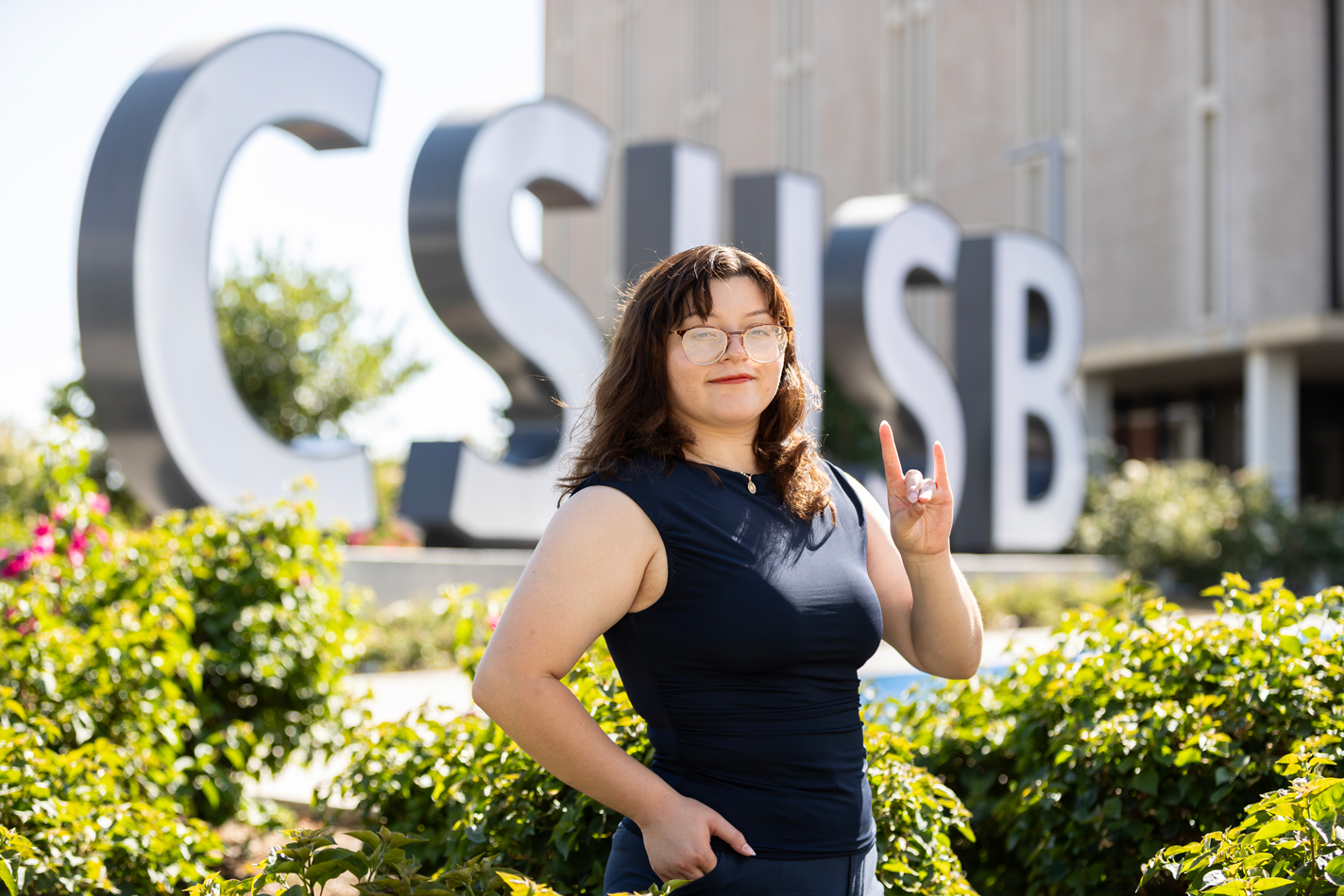
Sometimes that sense of community includes four-legged cast members.
During the 48-Hour Film Competition in fall 2025, Rosas and her teammates had just 48 hours to write, shoot and edit a complete film. They needed a filming location — fast. Her solution was to call her mom and ask whether roughly 15 to 20 film club members could take over the family home.
Permission granted.
Soon, students were making their way up the hill, Rosas’ dogs were barking at the commotion and the production was underway. One of her pugs even wandered into a shot. There was no time for a do-over, so the unexpected canine cameo made the final cut.
The film went on to win Best Sound Design.
“I looked back at that and that was my first real production experience, and I’m so glad I got to participate,” Rosas said.
The fun has come with challenges, too — and those moments have helped Rosas discover strengths she didn’t know she had.
When an equipment access issue once threatened the club’s participation in a film competition, Rosas stepped in. She made calls, figured out who could resolve the problem and advocated for her fellow students. The club regained access to the equipment in time to compete.
What stayed with her wasn’t only that the problem was solved. It was how she handled it.
“I learned that I have a lot more confidence and that I’m much more capable than I thought,” she said.
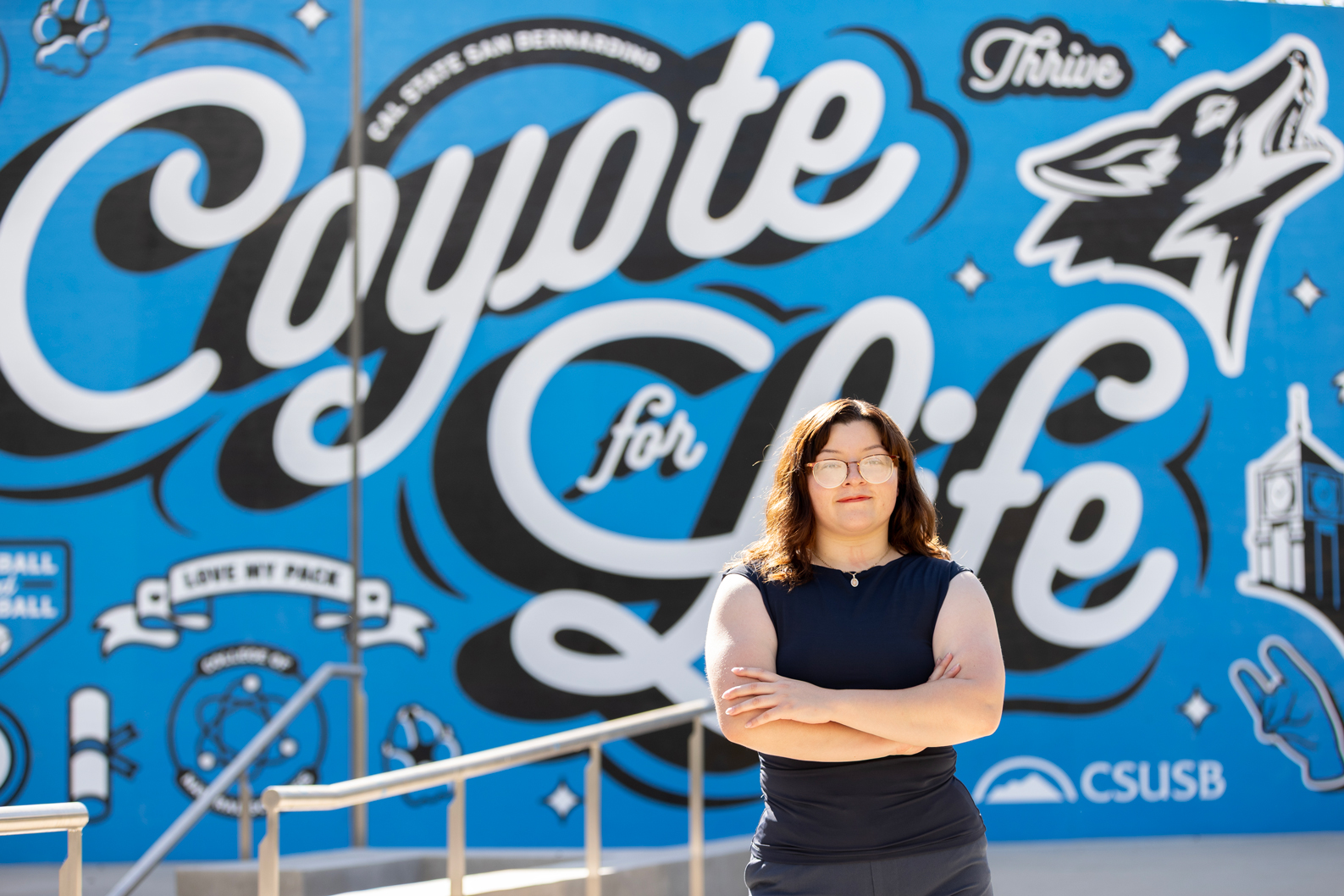
She didn’t build that confidence alone.
Rosas credits Yotie Film Club staff advisor Sarai Maldonado, a career counselor and liaison for the College of Arts and Letters, with recognizing her leadership potential when Rosas was still shy and uncertain of herself.
Maldonado, Rosas said, “whipped me into shape to be an advocate for the club and a determined leader. Her guidance helped me gain the confidence and skills to assume club leadership."
Faculty advisor Matthew Poole, interim chair of the Department of Communication & Media and chair of the Department of Music and Department of Theatre Arts, has helped support the club’s growth, while Ryan Keating, professor of history and director of the Office of Student Research, helped Rosas recognize how the analytical skills she developed as a history student could also strengthen her work in film.
The club has also become a bridge between students’ creative interests and professional opportunities. With Maldonado’s help, two members gained work as production assistants on a Netflix production. Rosas herself was invited to judge films for the Inland Film Festival — an opportunity she said she likely would not have had without her film club experience and leadership.
As Rosas gained experience, something else began to come into focus: the interests that once seemed separate were actually connected. History taught her to research and analyze. Education and College Corps connected her with young people and community service. Filmmaking gave her another way to tell stories. Leadership taught her how to turn ideas into action.
“Many people wouldn’t see the connection, but I did,” she said. “With the help of many mentors at CSUSB, I’ve been able to combine all of these interests to create a real direction and purpose for myself and the film club.”
That combination was especially clear during the inaugural Yotie Film Festival in May. The club received more than 200 film submissions and brought students, faculty, staff and filmmakers together for an event designed to showcase emerging talent from the Inland Empire and beyond.
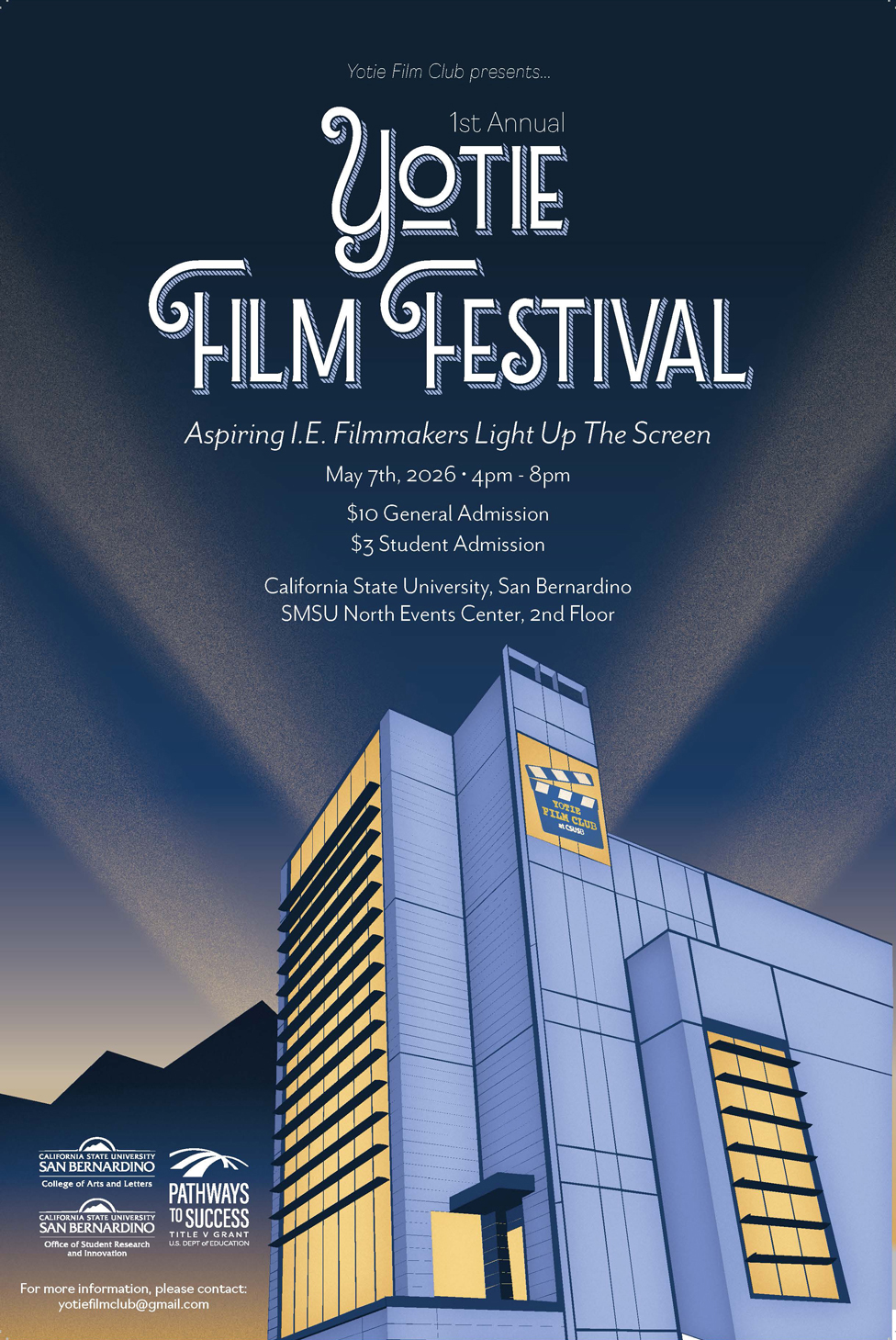
Launching the film festival was no small undertaking. Students had to figure out funding, submissions, judging, campus procedures and the countless details behind producing a large event. Rosas drew on relationships she had developed through ASI and across campus to help move the project forward.
Then came an unexpected moment.
Representatives from the California State Senate attended and presented the club members with recognition for their work supporting fellow students and uplifting the Inland Empire through film.
For a group that had once wondered whether the festival would happen at all, the recognition was especially meaningful.
“It was just the highlight of the night,” Rosas said.
But one of Rosas’ favorite festival moments came from a much younger filmmaker.
A 15-year-old high school student had submitted a short film created with classmates. Rosas and the other club members recognized the young filmmaker from another festival they'd participated in and watched as she earned an award for her work.
For Rosas, seeing a young person create something and be recognized for it brought together the interests that once seemed unrelated.
“When people ask me, why film, why education? Why both?” she said. “That’s my why.”
And Rosas is already thinking about what she can do with that “why.”
She hopes to someday combine her experience in K-12 education with her growing connections to filmmaking by developing a film academy for young students. She imagines participants learning the craft and then spending an intensive week writing, shooting and editing a film before screening the finished project for their families.

It’s a future she might not have imagined when she first transferred to CSUSB intending to keep things relatively small.
Her experience has also shaped the advice she gives students who are still figuring out what they want to become: follow what interests you. Get involved on campus. Find people who encourage you. And don’t be afraid to try something new.
“As a first-generation student, helping other students discover opportunities is my way of paying it forward after others helped me,” she said. “It’s essentially my way of passing the torch.”
For Rosas, a college experience that began with one path in mind became something much bigger — a chance to discover talents she hadn’t fully recognized, find a community that helped her develop them and turn a collection of interests into a purpose.
And now she wants to make sure the students coming behind her get their chance to discover what they can do, too.
Watch this video to hear Kim Rosas share how the Yotie Film Club is helping students discover their potential, find their place and pursue new opportunities — with support from mentors and the CSUSB community along the way.