Nursing Virtual Reality Training
Ready, set, simulate!
CSUSB nursing students jumped into the future of healthcare during the university’s first virtual reality (VR) nursing learning activity. In partnership with the xREAL Lab and the Multimedia and Immersive Technologies department within CSUSB’s Information Technology Services division, Dr. Samantha Juan led 48 students through an immersive clinical training experience in PL-013, located in the basement of the Pfau Library.
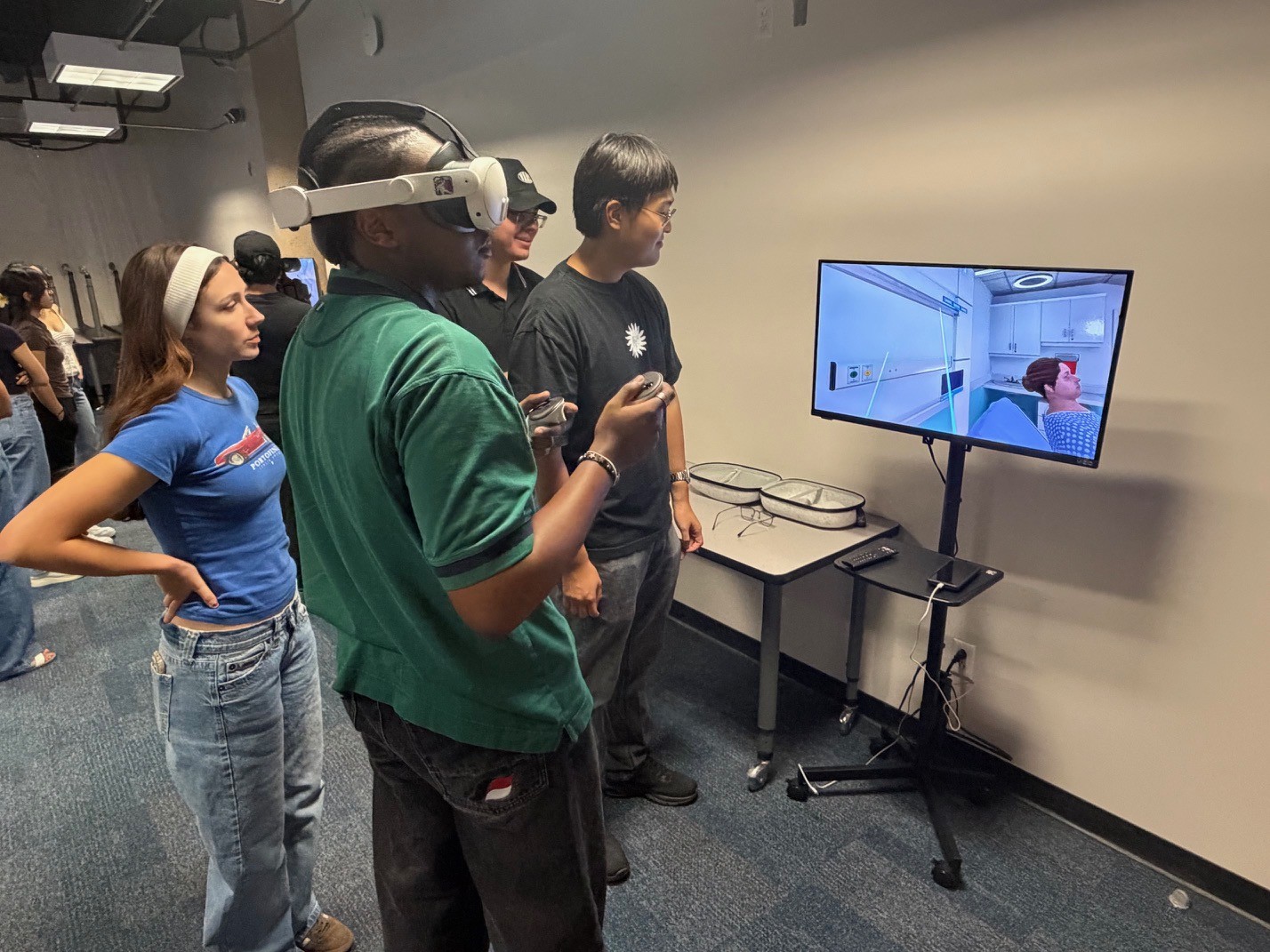
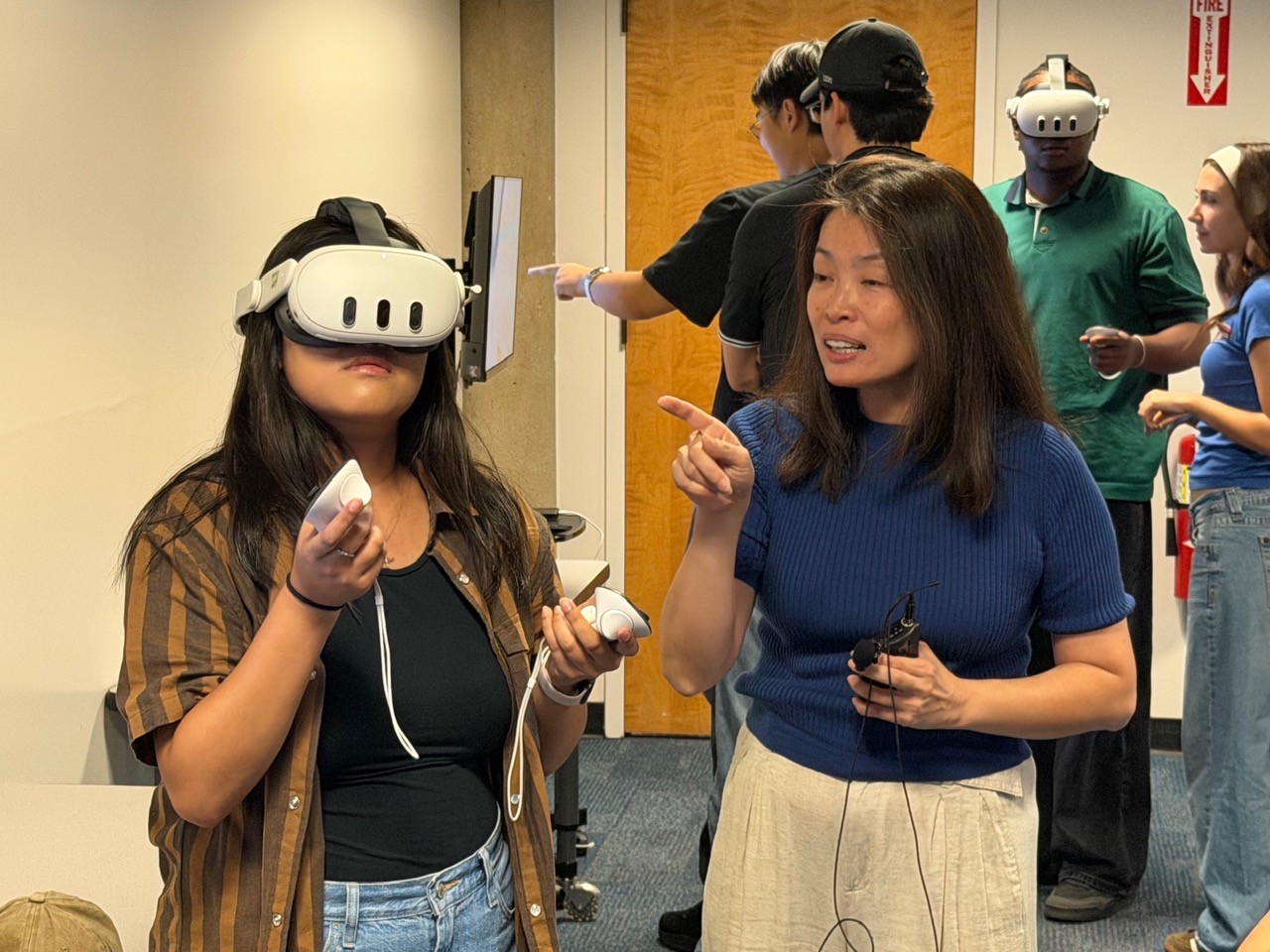
Students put on VR headsets and entered an AI-powered clinical environment to care for a virtual patient experiencing heart failure. They held simultaneous, lifelike conversations with the patient while assessing symptoms, making clinical decisions, and practicing how to deliver safe, compassionate care—all without leaving the classroom.
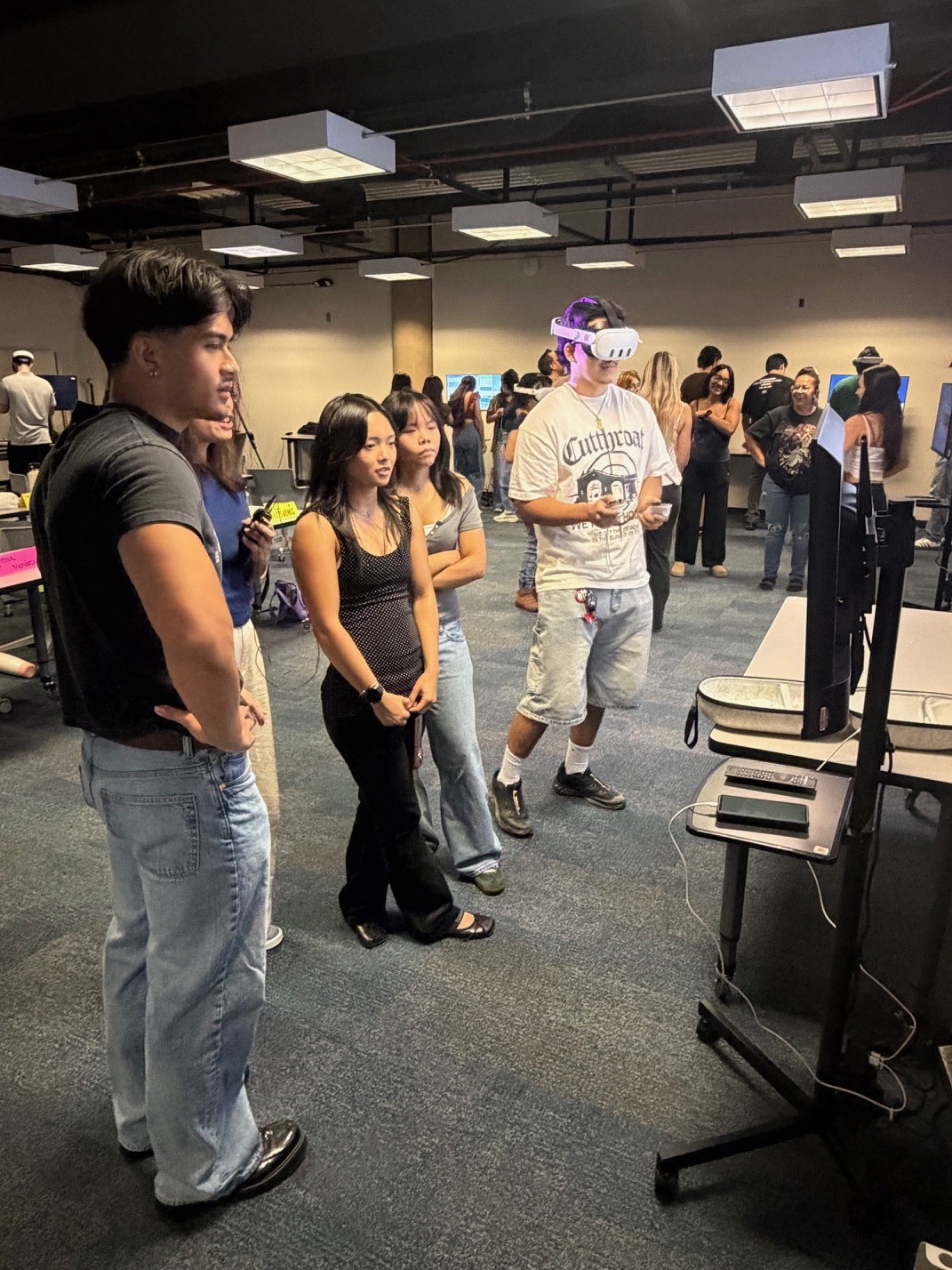
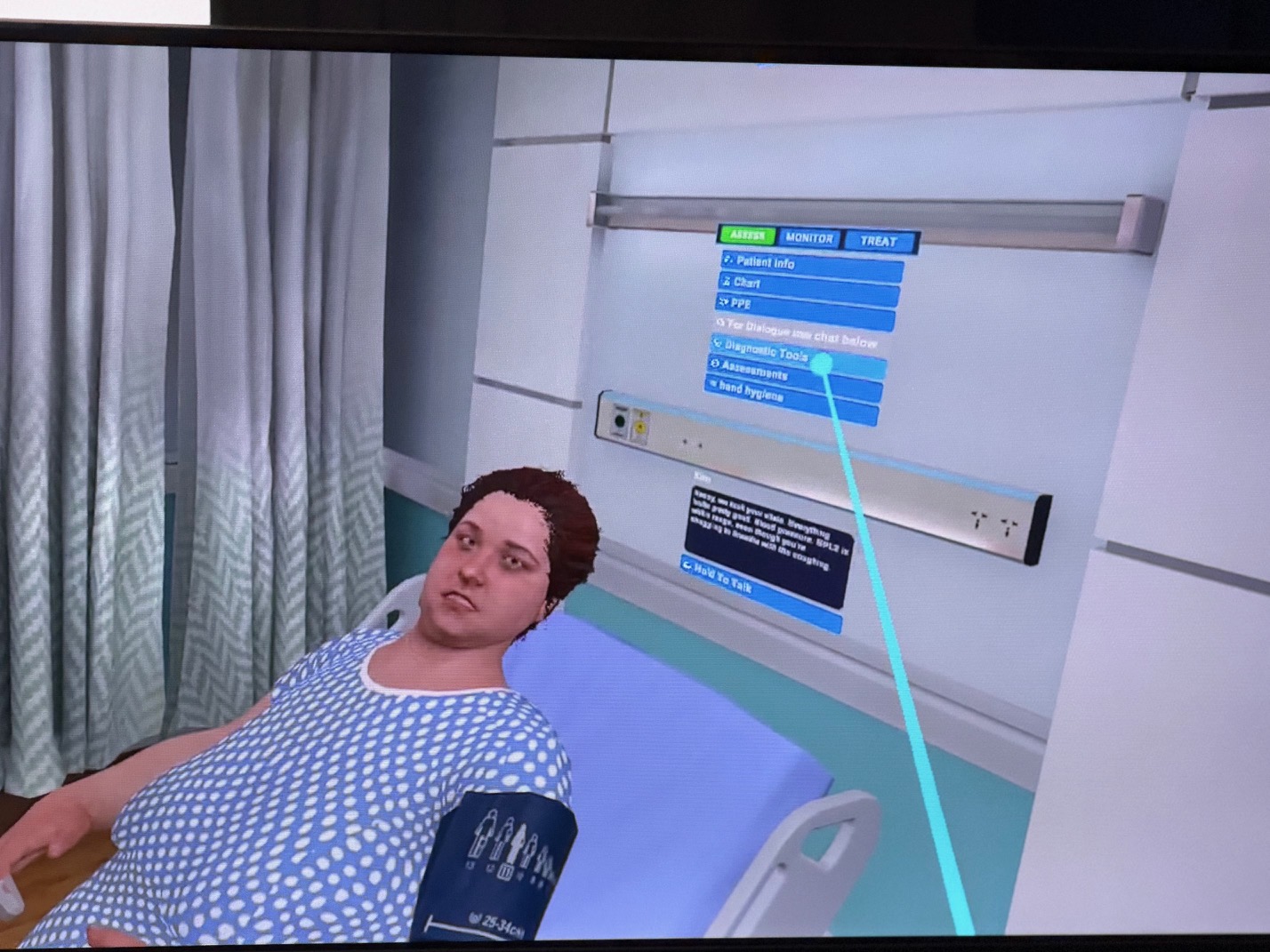
Beyond the excitement of using emerging technology, the pilot gave students an immersive way to strengthen their clinical judgment, build confidence, and connect classroom knowledge with real-world practice. Their experiences and feedback will help shape the future Coyote VR Lab into an accessible, student-centered resource that promotes deeper engagement and prepares students for the healthcare workforce.
Photos and videos captured CSUSB Coyotes learning, collaborating, and rising to the challenge. We look forward to sharing the highlights and welcoming even more students into the growing world of VR-enhanced learning at CSUSB.
Immersive Learning projects
Immersive learning spaces utilize Virtual Reality (VR), Augmented Reality (AR), and 360-degree images and videos to create dynamic, interactive environments where students can engage with content in innovative ways. These technologies bridge the gap between theory and practice by allowing learners to explore simulated real-world scenarios, manipulate virtual objects, and immerse themselves in lifelike experiences that enhance understanding and retention. Immersive learning spaces are highly versatile, supporting interdisciplinary collaboration, experiential learning, and accessibility for diverse learners. By fostering active participation and engagement, these spaces transform traditional education into a more personalized, hands-on, and impactful experience, preparing students for careers in an increasingly digital and interconnected world.
The xREAL Lab and Multimedia and Immersive Technologies (MIT) Department at CSUSB drive the development of immersive media, including VR, AR, and 360-degree content. The xREAL Lab features a motion capture studio that supports interdisciplinary projects in fields like kinesiology, theater arts, and game development. The MIT provides workshops and training to expand access to immersive tools for faculty and students. Together, they enable the creation of innovative educational experiences, transforming traditional learning.Examples of Immersive Learning Spaces in Virtual Realty and 360 Video and Images.
The xREAL Lab and Multimedia and Immersive Technology Departments have created several examples of immersive content. See examples below.
Learning Objectives and Outcomes for Immersive Learning Spaces
The primary objective of immersive learning spaces is to foster the co-creation of innovative hybrid learning environments that address the evolving instructional needs of faculty and students, particularly in a post-pandemic educational landscape. These spaces leverage technologies such as Virtual Reality (VR), Augmented Reality (AR), and 360-degree images and videos to enhance teaching and learning experiences.
Learning Objectives:
Faculty Empowerment: Equip faculty with the knowledge and tools to integrate immersive media into course design effectively.
Enhanced Student Engagement: Foster student interaction with course material through immersive and interactive technologies.
Interdisciplinary Collaboration: Promote the blending of multiple disciplines using immersive tools, enriching the learning experience.
Skill Development: Encourage experiential learning that enables students to practice and apply theoretical concepts in simulated real-world scenarios.
Increased Faculty Adoption: A measurable rise in the number of faculty using immersive media in their courses and their perception of its value for student engagement.
Greater Interdisciplinarity: Students will experience and recognize the integration of multiple disciplines within immersive learning environments.
Improved Student Learning Outcomes: A higher proportion of students will meet or exceed course-specific learning goals through the use of immersive technologies.