Alan Llavore | Office of Marketing and Communications | (909) 537-5007 | allavore@csusb.edu
For Lady Caterine Guillen, who earned a master’s degree in Teaching English to Speakers of Other Languages (TESOL) in May, her decision to pursue bilingual teaching was deeply influenced by her own experiences in the educational system and those of her children. Born in Colombia, she immigrated to the U.S. in 2017 at age 35.
“Through these experiences, I came to understand how important it is for students whose first language is not English to feel supported, understood and valued in their learning journey,” she said. “I wanted to be part of creating an educational environment where students can succeed academically while maintaining their first language and feeling proud of their cultural identity.”
Guillen found such an environment at Cal State San Bernardino. The university has dramatically expanded its bilingual teacher preparation program, increasing participation by about 900% over three years while helping aspiring educators prepare to teach in multilingual classrooms throughout the Inland Empire.
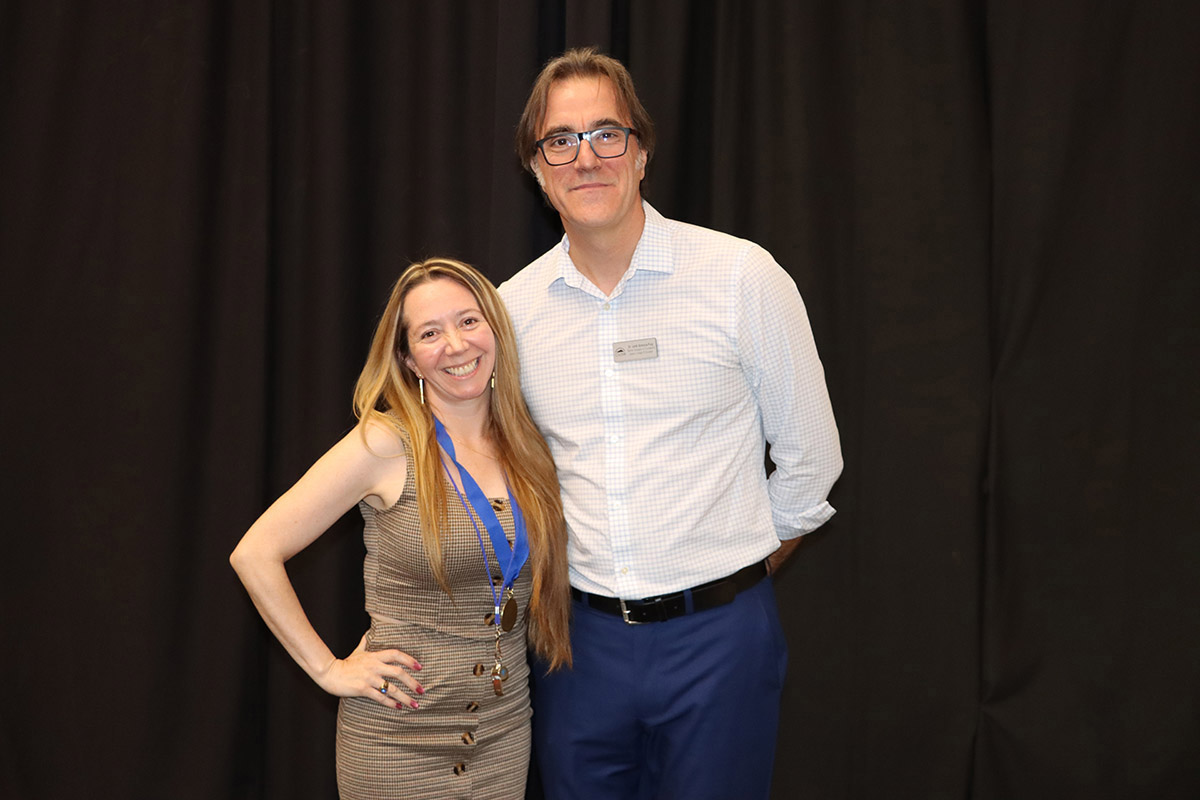
The growth is the result of a multi-pronged effort to strengthen the university's Spanish Bilingual Authorization program through redesigned coursework, school district partnerships and two grants originally awarded at approximately $3.8 million.
For Jordi Solsona-Puig, assistant professor in CSUSB's James R. Watson and Judy Rodriguez Watson College of Education and co-coordinator of the program with Nena Tórrez, professor of teacher education and foundations, improving the quality of teacher preparation has been as important as increasing enrollment.
When he joined CSUSB in 2022, Solsona-Puig recalled thinking, “We are sitting in a treasure trove of people with the potential to become great bilingual teachers. How can we make this program better? Bigger comes after.”
The Spanish Bilingual Authorization is “an added authorization, not a standalone credential – candidates must already be pursuing a multiple- or single-subject credential to add it,” Solsona Puig said.
The need is especially relevant in the Inland Empire, where about 40 percent of residents report speaking a language other than English at home, according to Solsona-Puig. He sees that linguistic diversity as an educational asset.
“We want to train our teachers to be able to use that asset for the benefit of the schools, for the benefit of the students and for the benefit of the communities,” he said. “Historically, the majority of teachers in the Inland Empire have been white, while the student population is majority Latinx – the program aims to reduce this demographic mismatch.”
In 2022, Solsona-Puig said only about 2 percent of CSUSB’s teacher candidates were pursuing the bilingual authorization, despite 65 to 70 percent of candidates identifying as Hispanic/Latinx. “We identified three barriers the students cited: lack of awareness of the program, self-doubt about Spanish language proficiency and economic constraints from additional coursework.
“‘You have the potential. You have the language. You have the culture,’” he tells prospective candidates. “‘You may not have the full academic repertoire in Spanish, we can help you achieve it.’”
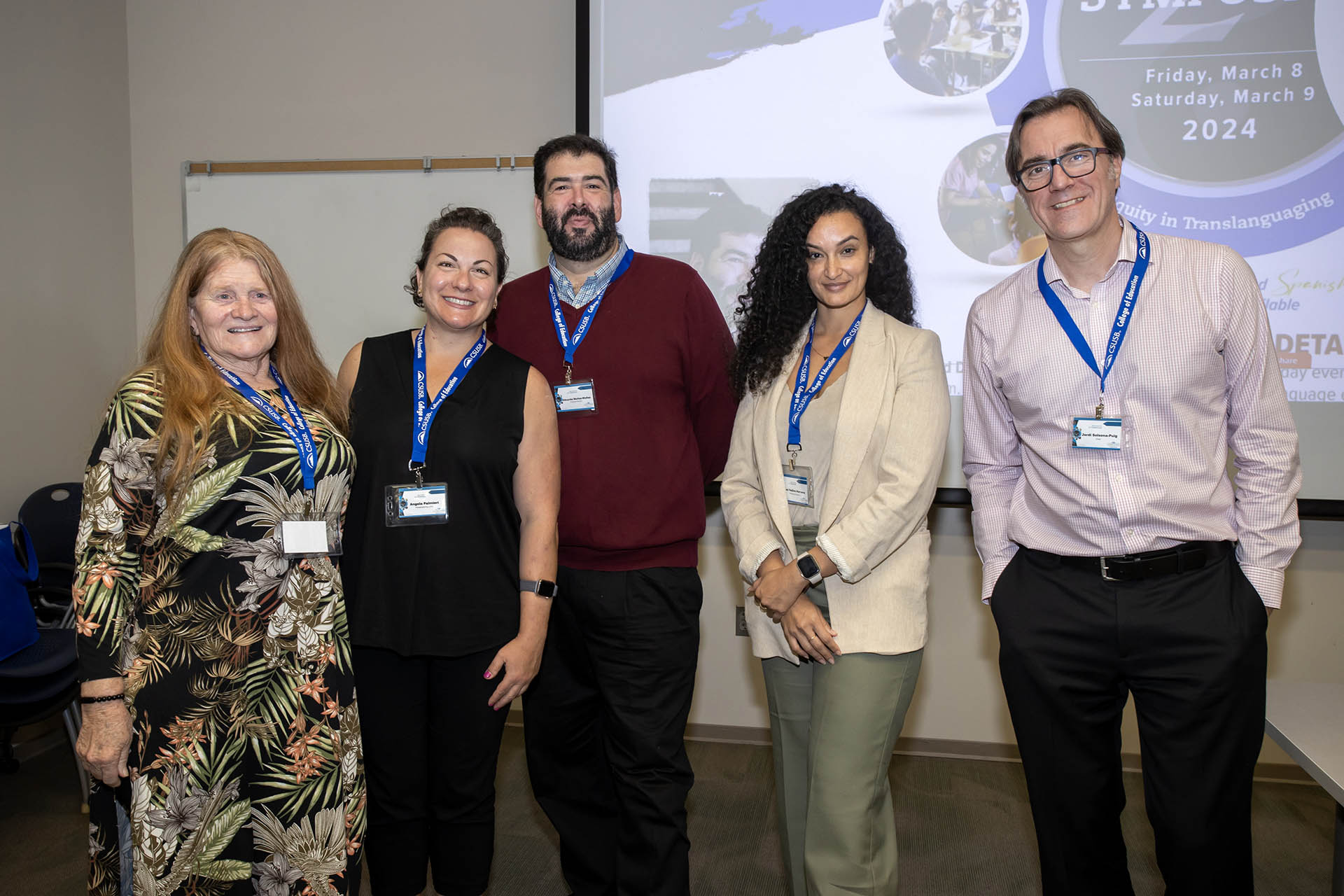
From left, at the 2024 Dual Language Immersion Symposium: Nena Tórrez (CSUSB co-coordinator, Bilingual Authorization program), Angela Palmieri (Culver City Unified School District), Eduardo Muñoz-Muñoz (San José State) and Luz Yadira Herrera (Cal State Channel Islands) with the symposium chair Jordi Solsona-Puig (CSUSB co-coordinator, Bilingual Authorization Program.)
To address those barriers, Solsona-Puig and his colleagues increased outreach, redesigned courses and introduced an in-house Spanish placement assessment. Students who need more academic Spanish are referred to the university’s Spanish department for supplemental coursework. Bilingual teaching methods and cultural proficiency courses are now taught entirely in Spanish, the language candidates will use in their classrooms.
Placement of bilingual student teachers in bilingual K-12 classrooms has grown from about 10 per semester to more than 65, he said. By 2025-26, a little more than 12 percent of CSUSB teacher candidates were seeking the bilingual authorization.
Financial assistance has also been critical. A $500,000 Integrated Bilingual Authorization Program (IBAP) grant in 2023 from the California Commission on Teacher Credentialing, followed by a $3.3 million federal Excellence as Multilingual Innovators and Leaders in Education (ExMILE) grant in 2024 together provided full tuition assistance to 97 bilingual teacher candidates.
Solsona-Puig estimated that about $800,000 was spent on tuition, although final figures are still being calculated. “‘You have to go the extra mile, you have to take this extra class, you have to take this extra test,’” he tells students. “‘But we can pay for your tuition.’”
“Receiving grant support made a meaningful difference in my educational journey,” Guillen said. “The support also reminded me that there are people and programs that believe in preparing educators who can make a positive difference in their communities.”
“Bilingual authorization is not only another tool that makes you more marketable as teacher candidate, it helps to better represent the student population you're going to work with,” Solsona-Puig said.
In her coursework, Guillen learned “the importance of creating lessons that are accessible, using different instructional strategies, and providing students with opportunities to demonstrate their understanding in meaningful ways,” she said. “I also understand that building relationships with families is essential because families are important partners in their children's education.”
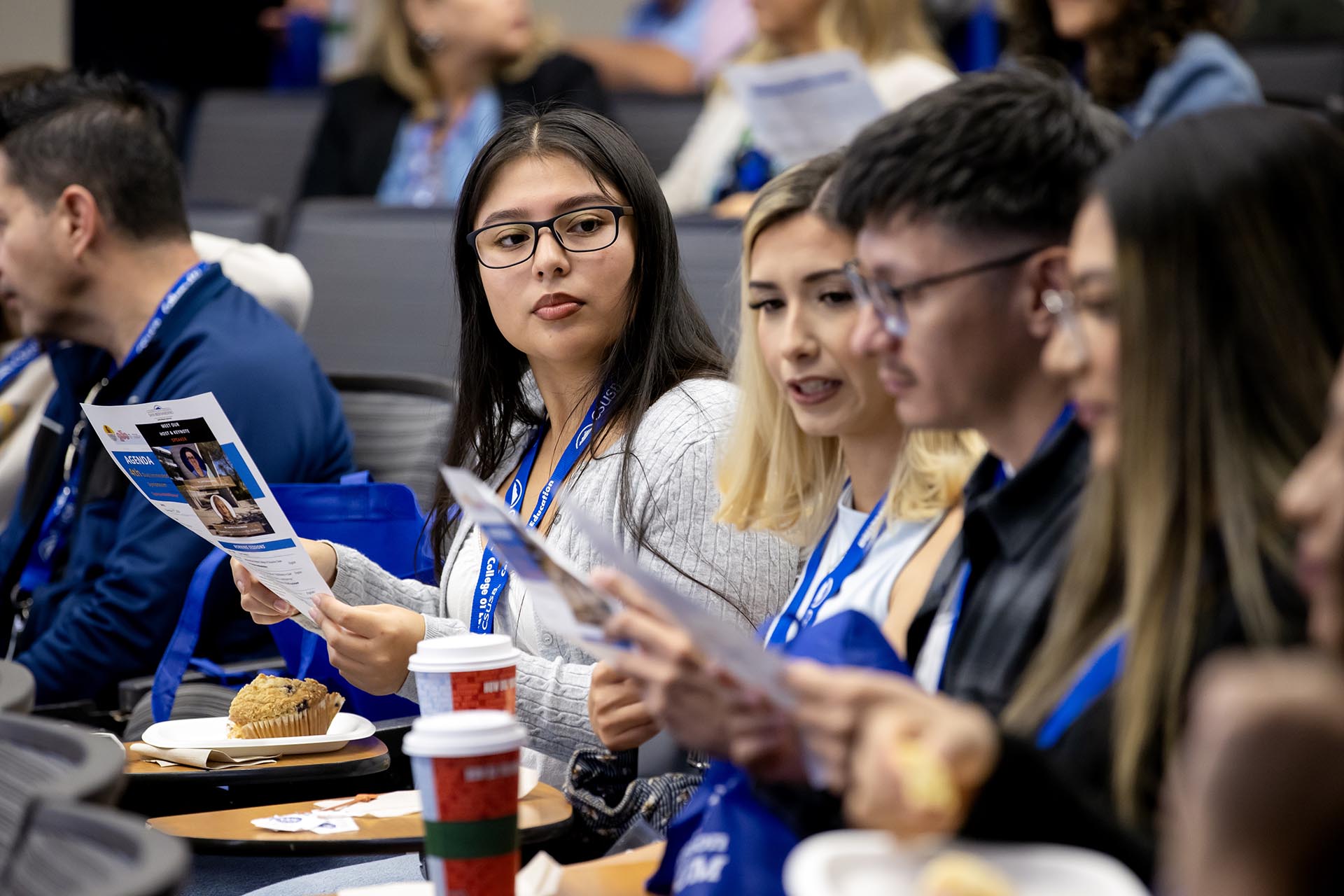
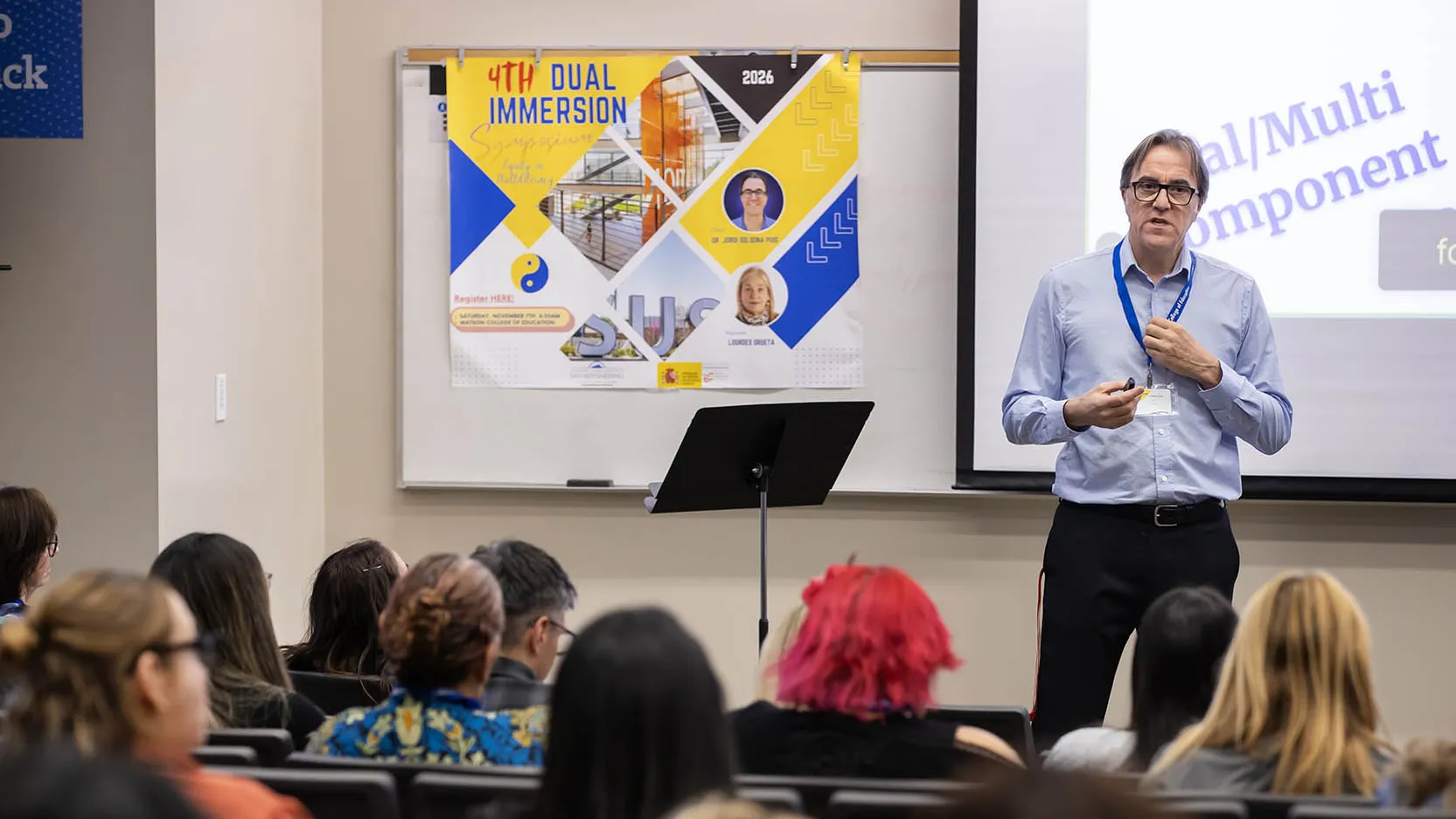
CSUSB also established an annual Dual Immersion Symposium, with more than 500 attendees across four symposia. The fourth symposium took place on Nov. 7. The event connects teacher candidates, practicing educators and school district representatives through professional development and networking, and former candidates now return as practicing teachers.
“The credential programs give bilingual teacher candidates the foundation, but you have to have that idea of being open to lifelong learning and improving your craft as it goes,” he said.
The program faced a setback in late 2025 when the U.S. Department of Education canceled the ExMILE grant after determining that language in the proposal conflicted with revised federal policies. CSUSB received about $700,000 of the planned five-year award, leaving roughly $2.5 million in anticipated funding unavailable.
Although some services and planned initiatives were eliminated, Solsona-Puig said enrollment has remained strong through 2026.
“The good news is that the program is self-sufficient and can continue without external funding,” he said. “The most rewarding thing is seeing that people value multilingualism, multiculturalism and there's no language or culture that's less than another or less important than another.”
Guillen said, “As an educator, I want every student to feel represented, respected and included and the program helped me become more aware of how I can create a classroom where students from different linguistic and cultural backgrounds feel that they belong.”