Alan Llavore | Office of Marketing and Communications | (909) 537-5007 | allavore@csusb.edu
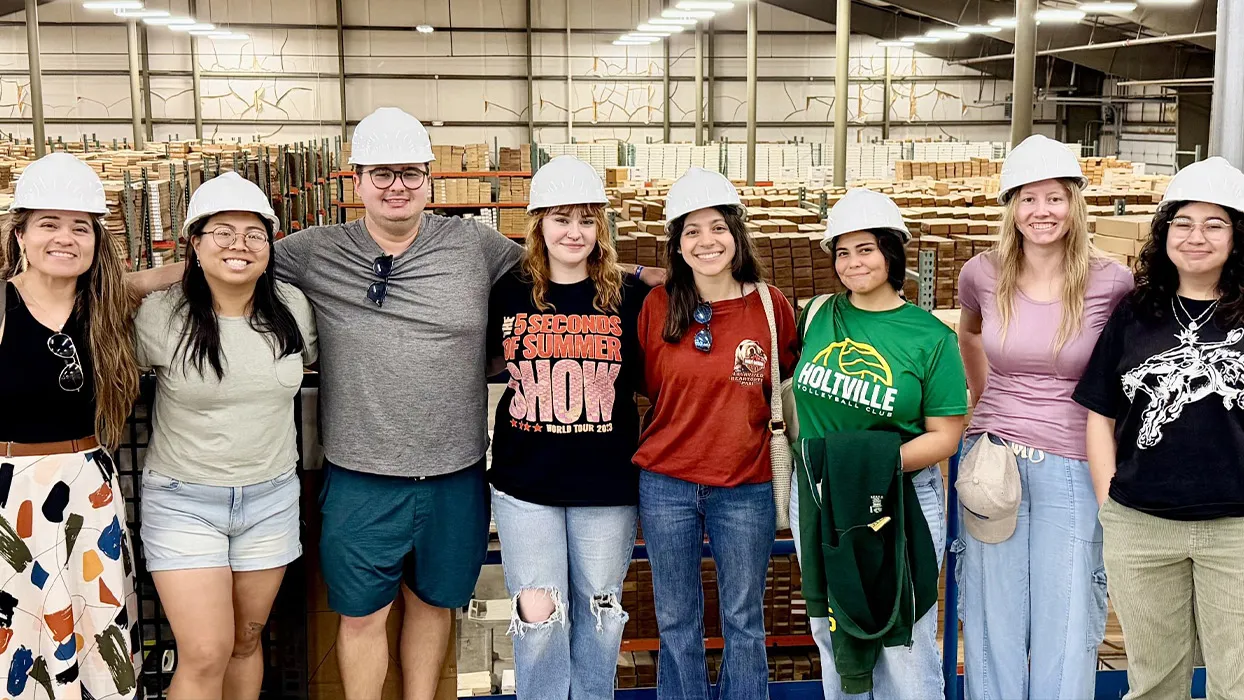
For Cal State San Bernardino students participating in Project DE-STRESS (DEsigning Sedimentation and Tectonics Research Experiences for Student Success), studying the San Andreas fault means more than learning about one of California’s most significant geological features. It means doing the work of professional geologists and preparing for careers after graduation.
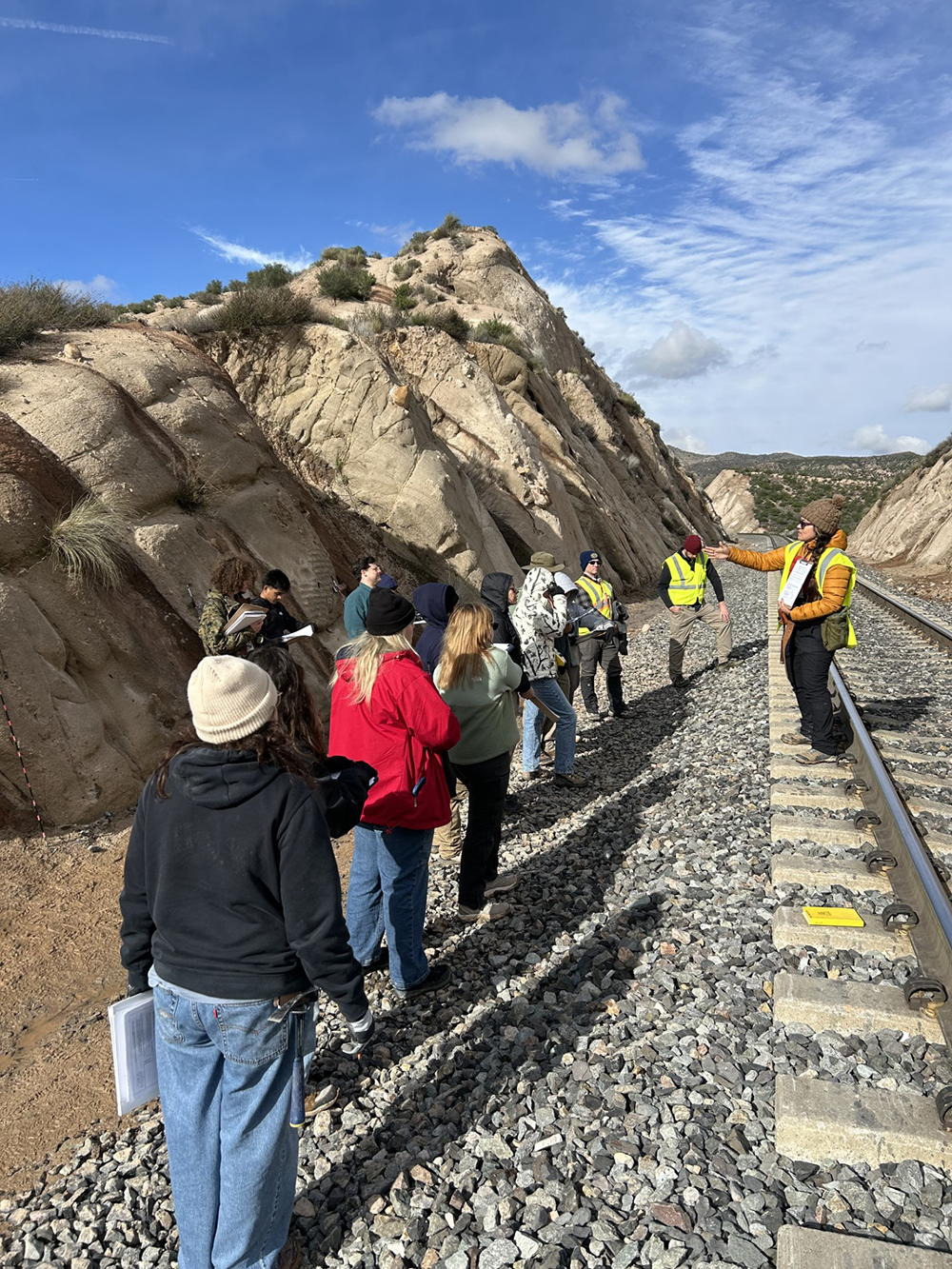
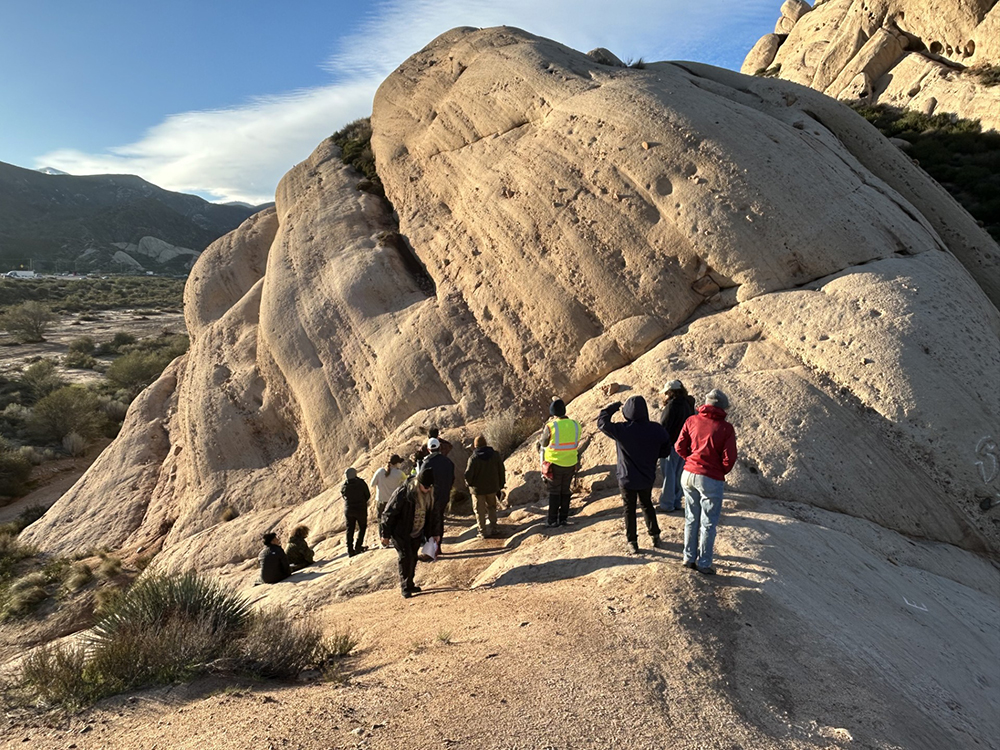
“They’re getting real geology experience,” said Tandis Bidgoli, associate professor of geological sciences and director of the program. “We go out in the field, we collect data, and then they come back and get this whole laboratory training experience.”
The National Science Foundation-funded Research Experiences for Undergraduates program is a collaboration between CSUSB and the University of Cincinnati. The three-year, $484,803 award, including $354,304 for CSUSB, supports research into the movement history of the southern San Andreas fault.
Each year, about 16 students participate: eight geology majors from across the country who commit to the full-year program and eight community college students who join either a two-week field or laboratory experience. Four local community college students participate in the San Bernardino field component, while four Cincinnati-area students participate in the laboratory component.
Yearlong participants spend two weeks conducting fieldwork each January at locations such as Mormon Rocks in Cajon Pass and the Mecca Hills near the Salton Sea, followed by two weeks of laboratory work at the University of Cincinnati. The rest of the program is conducted virtually.
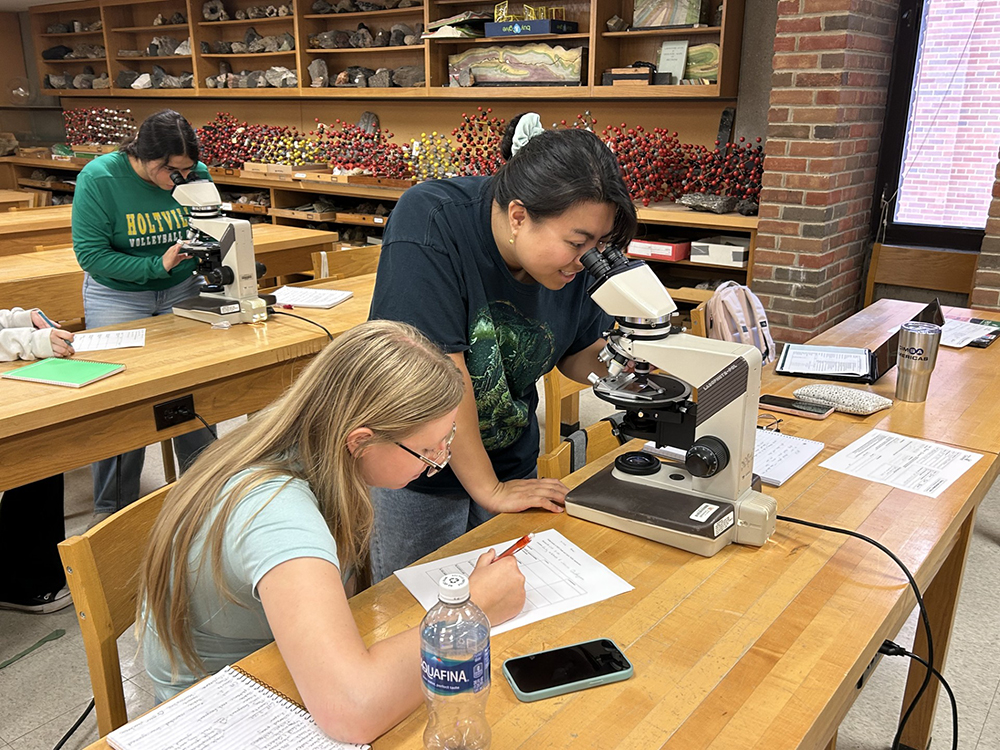
Their research helps fill gaps in what scientists know about the San Andreas fault’s history.
“Part of what we’re trying to do is collect data to strengthen correlations and recover age information,” Bidgoli said. “Ultimately, our goal is to say with a high degree of confidence, are these units correlated? And can we say something about how the San Andreas fault has evolved over time?”
Bidgoli and co-director Dan Sturmer (University of Cincinnati) also designed the program for students whose lives may not accommodate a traditional summer research experience.
“Many CSUSB students are either working students, or parents, or have family members at home they’re caring for,” she said. “There are a lot of other obligations that our students have.”
Traditional programs often require six- to eight-uninterrupted weeks during the summer, Bidgoli said. DE-STRESS divides its intensive work into two-week periods.
“If you’re a working student, who is able to just give up six weeks of their summertime to do this?” Bidgoli said. “It’s a lot easier to do that as a two-week chunk, where I’m going to be off for this two-week period, and then I can go back to my job.”
Students receive a $700-per-week stipend during the field and laboratory portions, with travel and other program expenses covered.
“I always tell the students, ‘You can write this down as a job experience because you are being compensated,’” Bidgoli said. “‘You are a paid geologist now, and that’s real job experience that you can put down on a resume.’”
Students also participate in professional development workshops on careers, resumes, cover letters, scientific writing and graduate school.
“We have two really big goals,” Bidgoli said. “One is, we want to see students get onto a geology pathway, a geoscience pathway. And two, once they’re on that pathway, we want to see them persist on that pathway.”
Ultimately, she wants students prepared for graduate school or the workforce.
“I hope they either end up in a graduate school pathway ... or they finish their bachelor’s degrees, and they ultimately are more career ready and workforce ready,” she said. “It delights me when I hear that students are getting jobs, and they’re getting internships.”
For senior geology major Emily Mackenzie, that has already happened.
“This experience has helped me realize that I do want a career in the geoscience field,” Mackenzie said. “The experience has already landed me a job in engineering geology.”
Junior geology major Johanna Quidangen, a transfer student, said the project also changed how she views her future.
“I think this project has shifted my perspective on furthering my education and obtaining my master’s or doctorate,” Quidangen said. “There are many different opportunities that I can take with a geoscience degree, but for now I’m set on resource management and hydrogeology.”
The students recently capped the experience by presenting their research at the Geological Society of America conference in Denver Oct. 11-14.
“This is my first big conference for an official organization,” Quidangen said, “and being surrounded by other brilliant minds, all working in the geoscience community, really puts into perspective that I put in the work to be there with them.”
For Bidgoli, expanding access to such experiences is central to the project.
“To say they had a little bit of real geology experience makes a huge difference,” she said. “Our goal is to just broaden the pool of people who are able to participate in these opportunities.”
*
Applications for the next Project DE-STRESS cohort will be available Nov. 1, 2026, by visiting the project website.