Alan Llavore | Office of Marketing and Communications | (909) 537-5007 | allavore@csusb.edu
Cal State San Bernardino has received a five-year, nearly $5 million grant from the U.S. Department of Labor to establish the Science Career Success Center (SC²), a new initiative designed to help students successfully progress from community college to university, graduation, employment and advanced study.
The grant, titled “Partnering for Allied Health and STEM Transfer, Workforce Advancement, and Student Success,” or PATHWAYS, will expand and rebrand CSUSB’s existing Science Success Center as the Science Career Success Center, known as SC².
SC² will support students in STEM and allied health programs throughout their academic and professional journeys. The center will connect them with proactive advising, transfer support, tutoring, peer mentoring, undergraduate research, internships, financial and economic literacy, career counseling, industry-recognized credentials, clinical lab science training, and preparation for graduate and professional programs.
“Student success must mean more than earning a degree,” said Guillermo Escalante, PATHWAYS principal investigator, associate dean for Student Success in the College of Natural Sciences, and director of Strategic Partnerships at CSUSB. “It must also mean that students understand where their education can take them, develop the skills and experience employers and graduate programs value, and have a clear path toward a meaningful career or further education.”
Escalante will lead the project with co-principal investigators Sastry G. Pantula, dean of the College of Natural Sciences; Carol Hood, senior associate dean in the College of Natural Sciences; and Fadi Muheidat, professor of Computer Science and Engineering. The project will bring together faculty, staff, campus units, community college partners, employers and regional workforce organizations.
A key focus of the partnership is expanding educational and career opportunities for students from rural and geographically remote communities. Barstow Community College and Copper Mountain College will serve as key partners, helping develop clearer transfer pathways into CSUSB STEM and allied health programs. The project will also collaborate with additional community colleges across the Inland Empire.
Through PATHWAYS, students will create Individual Development Plans that connect their courses and academic progress to career goals, internships, research, professional credentials, graduate-school prerequisites, artificial intelligence fluency, and financial planning. Students will receive coordinated guidance as they prepare for careers in health care, technology, science and other high-growth fields.
The project advances the CSU Student Success Framework and CSU Forward’s emphasis on clear pathways, career success, experiential learning, economic mobility and regional impact. It also reflects the CSU Promise that every student will graduate with the opportunity for a first-career job and/or a clear path to further study.
“CSUSB has been building this work for more than a decade,” said Pantula. “PATHWAYS allows us to bring together the advising, research, internships, transfer partnerships and career preparation already taking place across the university and create a more intentional and measurable student-success ecosystem.”
Pantula also expressed appreciation to congressional staff members, state legislators, community college leaders, and regional hospitals and businesses for providing support letters and advocating for federal investments in workforce development.
The PATHWAYS grant builds on two previous five-year federal investments from the U.S. Department of Education.
The first, Advising for Undergraduate Success (A4US), supported proactive advising and student-success strategies for STEM students. It also helped CSUSB establish the STEM Center, which laid the foundation for its Science Success Center.
The second, Proactive Approaches for Training Hispanics in STEM (PATHS), expanded support for Hispanic and low-income students pursuing STEM degrees through advising, Individual Development Plans, undergraduate research, learning assistant opportunities and community college transfer partnerships.
Both initiatives were led by Pantula and supported by faculty and campus partners, including Escalante, Hood, David Maynard, professor and chair in the Department of Chemistry and Biochemistry, and Khalil Dajani, professor and chair in the School of Computer Science and Engineering.
Together, the projects created the infrastructure and knowledge that now make it possible for CSUSB to expand its focus beyond retention and graduation to a broader vision of career readiness, graduate and professional school preparation, and economic mobility.
“PATHWAYS represents the next step in CSUSB’s commitment to transforming lives and strengthening the Inland Empire,” said Hood. “Our goal is for students to come to learn, gain the experience and support they need to succeed, and leave prepared to contribute to their communities and thrive in the regional economy.”
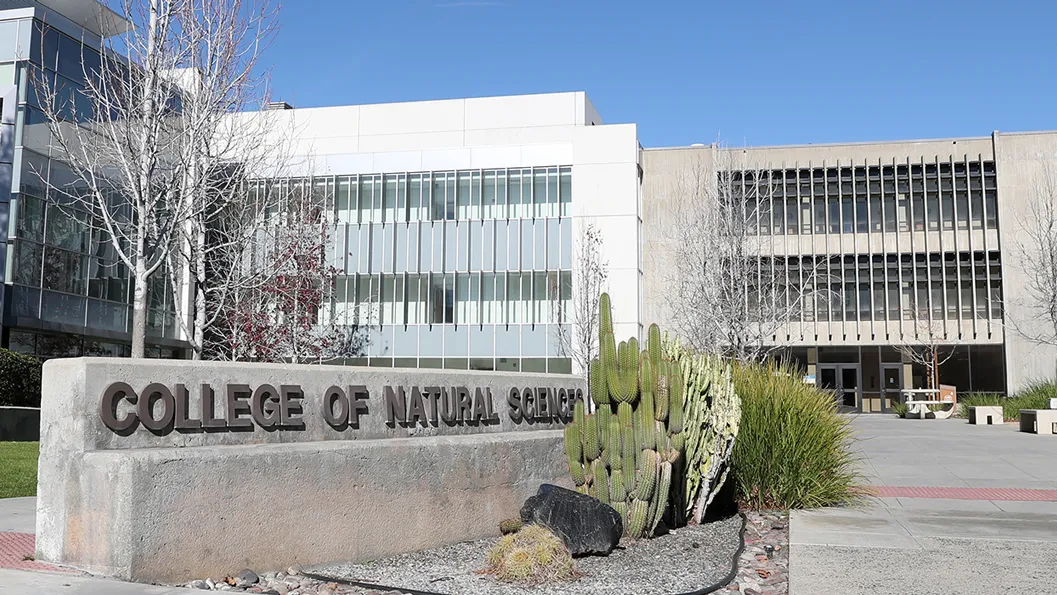
Housed within CSUSB’s College of Natural Sciences, the Science Career Success Center will serve as a central hub for students, faculty, community college partners, alumni and employers. The project will also establish a sustainability strategy to continue the center’s work beyond the five-year grant period.