Alan Llavore | Office of Marketing and Communications | (909) 537-5007 | allavore@csusb.edu
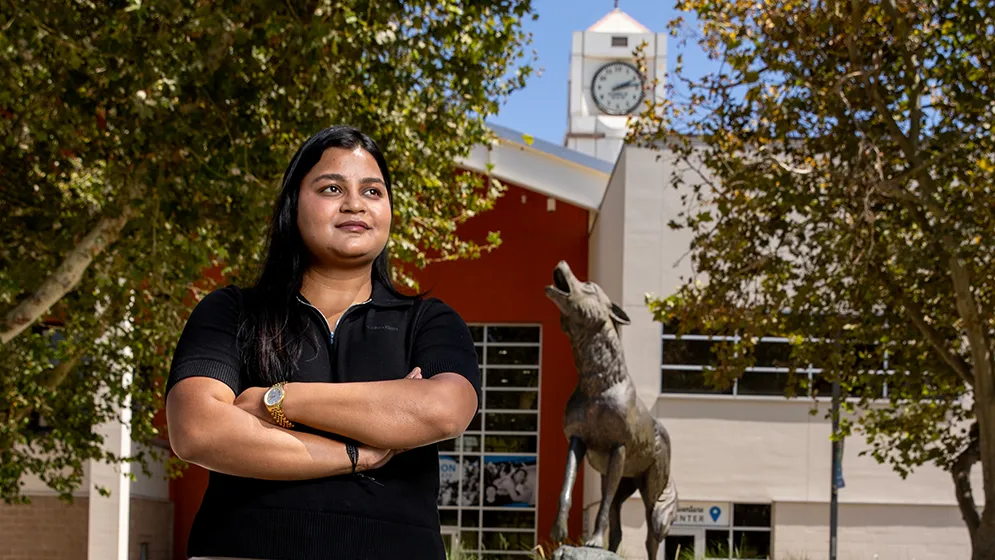

After hundreds of job rejections, Tanu Gupta, an international student pursuing a master’s in cybersecurity, was running out of time before graduation.
Born in northern India, she had earned her bachelor’s degree and was living in Chandigarh, working in quality assurance (QA) for a global digital services company. “I wanted to deepen my expertise in cybersecurity and get a better education,” she said. “California just made sense because this is where the tech is.”
After arriving in the U.S. in 2024, she transferred to Cal State San Bernardino after her first semester elsewhere left her feeling isolated.
Set on becoming a cybersecurity expert, she applied to more than 500 cybersecurity positions with no luck, “not even a single interview,” she said. “I felt so discouraged. I remember thinking, ‘Is this actually going to work? Did I make a mistake?’ There were definitely dark days.”
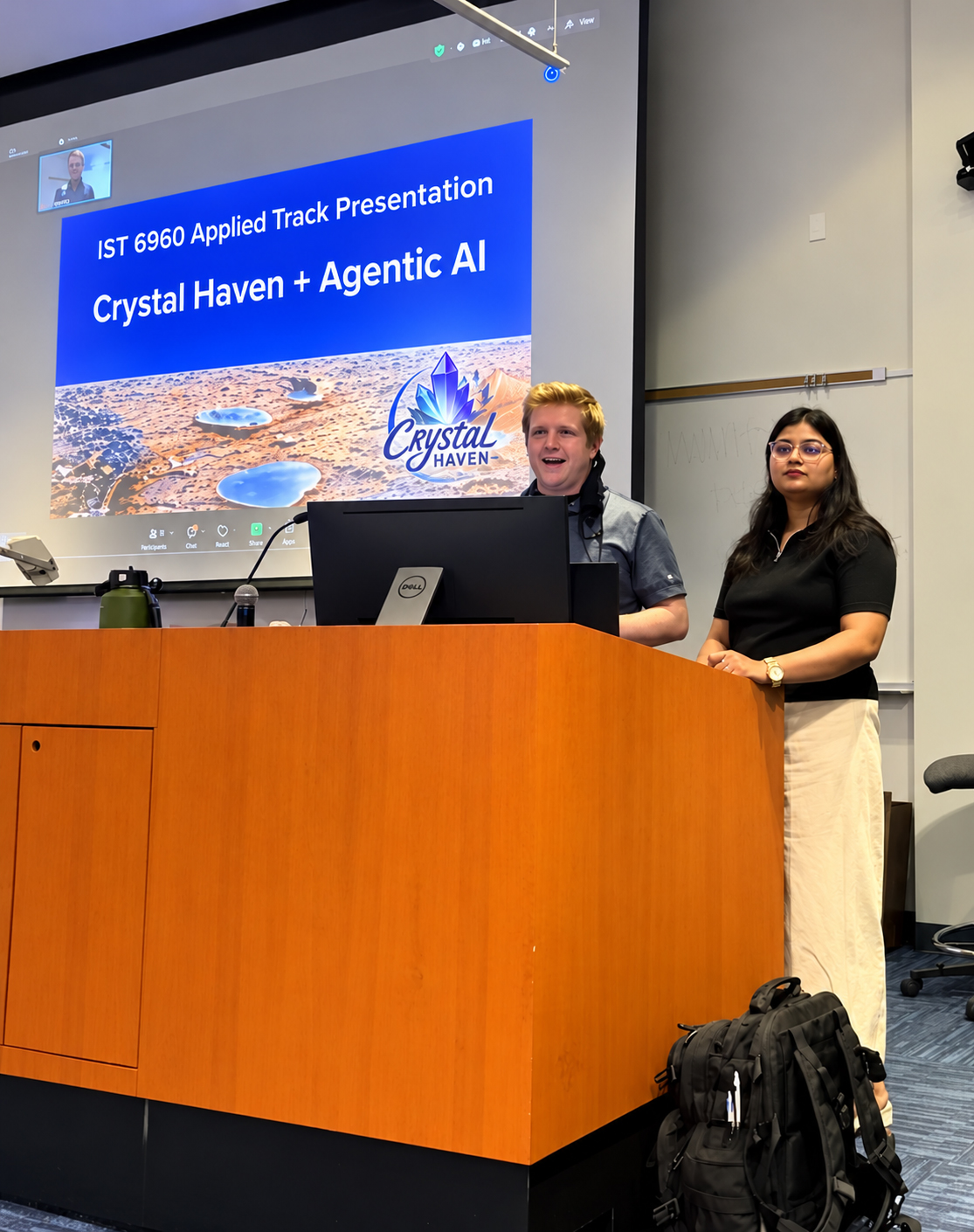
During her final semester, she remembers the first day of class with her mentor, Vincent Nestler, professor of cybersecurity and director of the Center for Cyber and AI. Nestler introduced the class to AI, passionate about its potential.
At the end of that class, frustrated, discouraged and losing hope, Gupta asked him, "How do I get a job in the USA? I've applied to 500 positions in cybersecurity, and I'm getting no response."
Nestler listened, then offered advice she describes as her turning point. ‘You have QA experience,’ he said. ‘Apply to QA roles, and build something unique and needed in that field.’
“That changed everything,” Gupta said. “He wasn't just asking me to do a school assignment. He was really challenging me to think like an engineer, to think like a builder. That stuck with me.”
She shifted her focus to QA and began building the AI UX Auditor App, which uses AI to do what senior QA specialists do. The app audits screenshots to check accessibility issues and creates reports — among other things — essentially creating a system that can think like a human QA expert.
She began applying to QA positions and in only three days received a screening call from a company. “After 500 rejections in cybersecurity and months with no response, suddenly the door opened,” she said. “That moment showed me that sometimes the path forward isn't the one you planned, it's the one someone believes in you enough to suggest.”
The interview with the company was scheduled for one hour but ran for more than three — they wanted to learn more about her project.
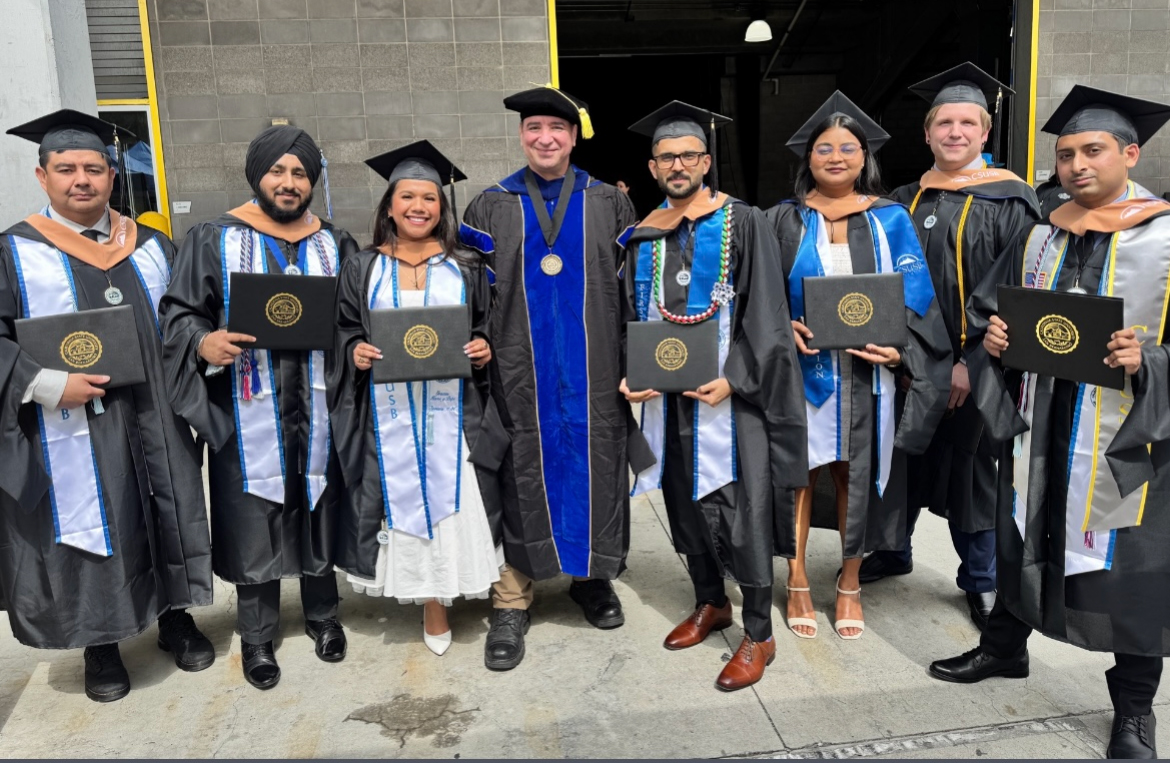
After earning a master's degree in information systems and technology with a concentration in cybersecurity from CSUSB’s Jack H. Brown College of Business and Public Administration in May 2026, Gupta was hired as a senior QA analyst at Electric Power Group in Pasadena. Her team monitors sensors that are critical to California’s power grid. Missing even a single software bug, she said, could have serious consequences: “The whole thing could go blackout.”
Gupta is grateful for the community she found at CSUSB. She recalls seeing her classmate Omar get a job offer and feeling happiness for him mingled with doubt surrounding her own abilities. “But Omar was incredible. He didn't just celebrate his win, he guided me,” she said. “He shared how to talk about AI in interviews, how to explain technical concepts in a way that resonates with employers, and most importantly, he reminded me that the work we were doing mattered.”
From India to Cal State San Bernardino to launching her career in Southern California, Gupta’s message to students as they plan ahead comes from experience: “Your path may not look like you think it will. Mine didn't. But life is going to give you information. Pay attention to it.”