Alan Llavore | Office of Marketing and Communications | (909) 537-5007 | allavore@csusb.edu
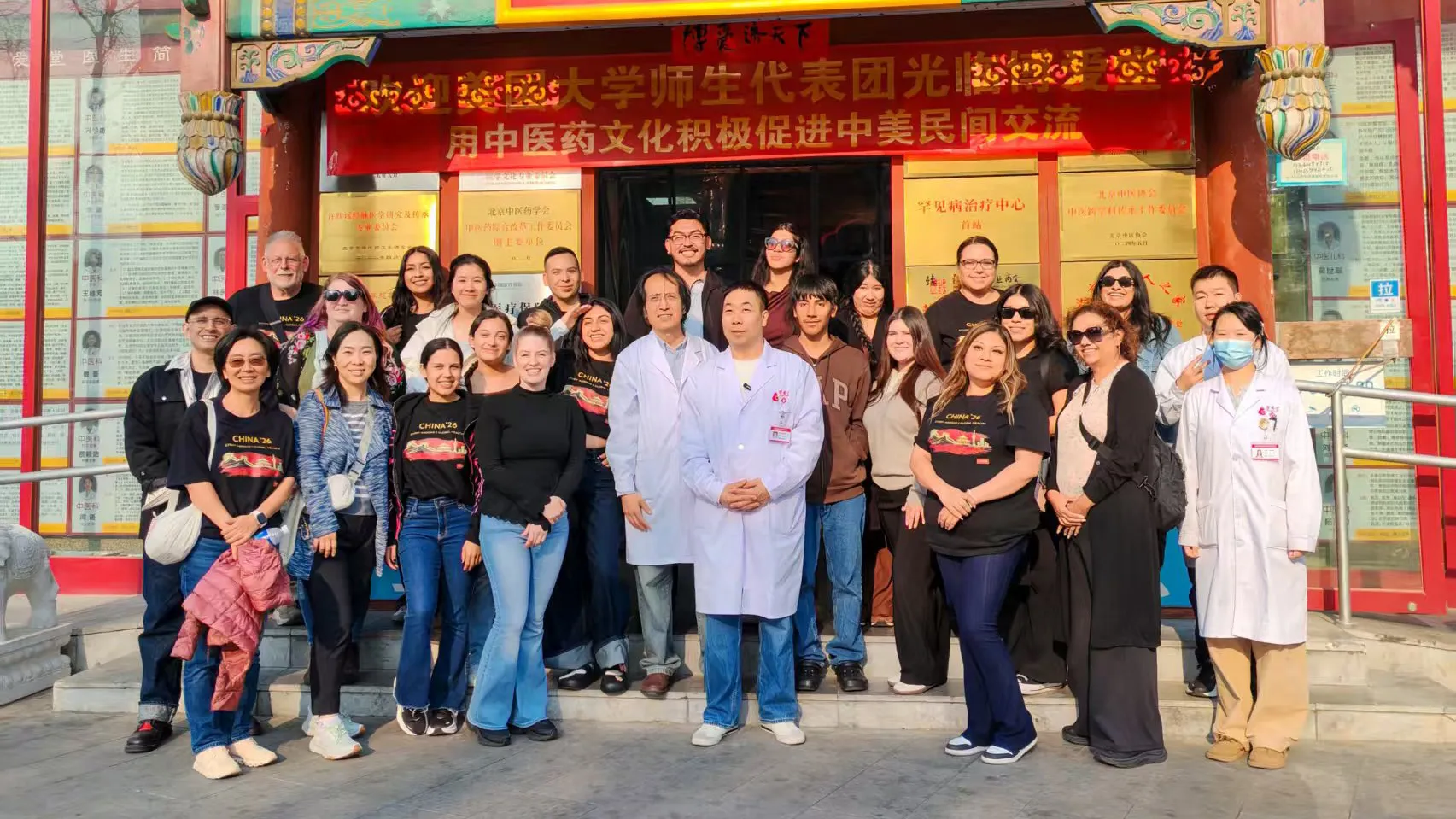
Students from California State University, San Bernardino spent their spring break in China as part of an immersive study abroad program focused on health and healthcare systems in Beijing and Shanghai.
Co-taught by Jie Yu, associate professor of nursing, and Yawen Li, professor of social work, the program brought together 19 students from disciplines including social work, nursing, sociology, psychology, child development, computer science, natural sciences and Spanish.
Centered on healthcare in China, the program combined classroom learning with hands-on experiences and a look at how traditional practices and modern innovation intersect within China’s evolving healthcare system.
Students visited the nation’s major institutions, such as Guanganmen Hospital, and a leading traditional Chinese medicine facility, Boai Chinese Medicine Clinic. There, they observed and experienced practices, including acupuncture, cupping and moxibustion, while also learning about emerging AI-driven diagnostic technologies.
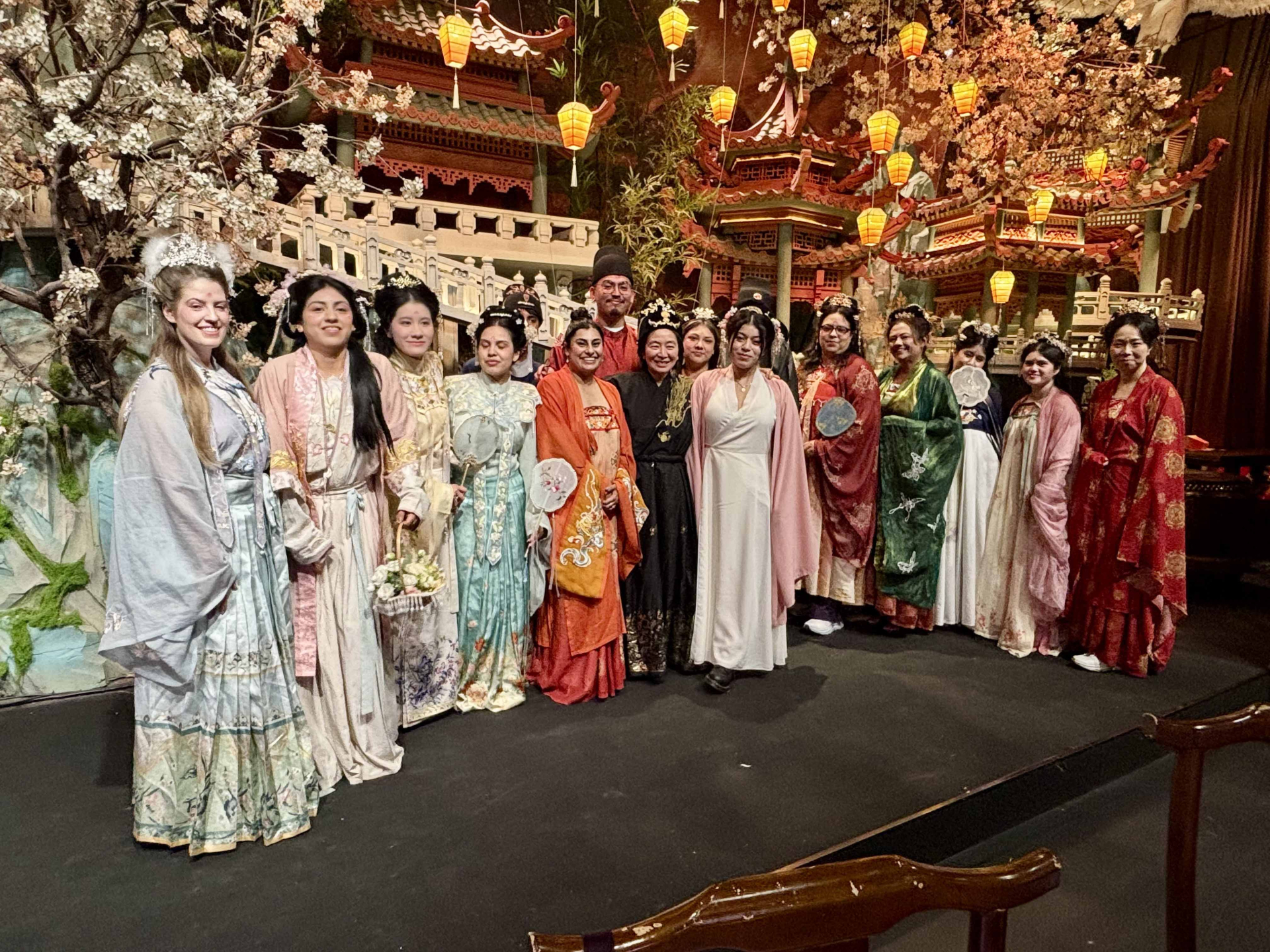
Beyond clinical exposure, students engaged with cultural aspects of health and daily life. In Shanghai, they participated in a Tang Dynasty-themed cultural experience, prepared traditional Chinese dishes in a culinary class and practiced Tai Chi, reinforcing connections between movement, mindfulness and well-being.
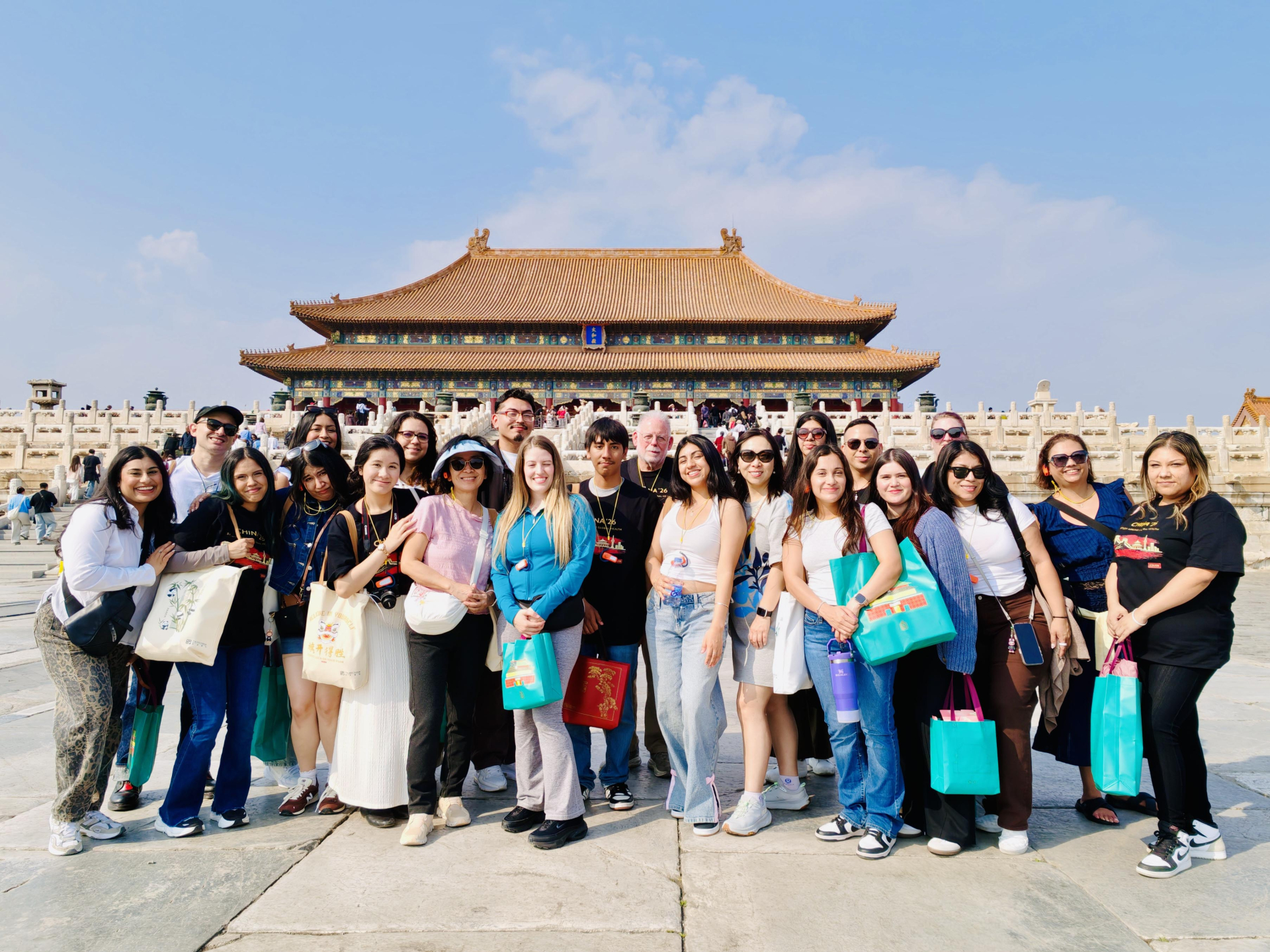
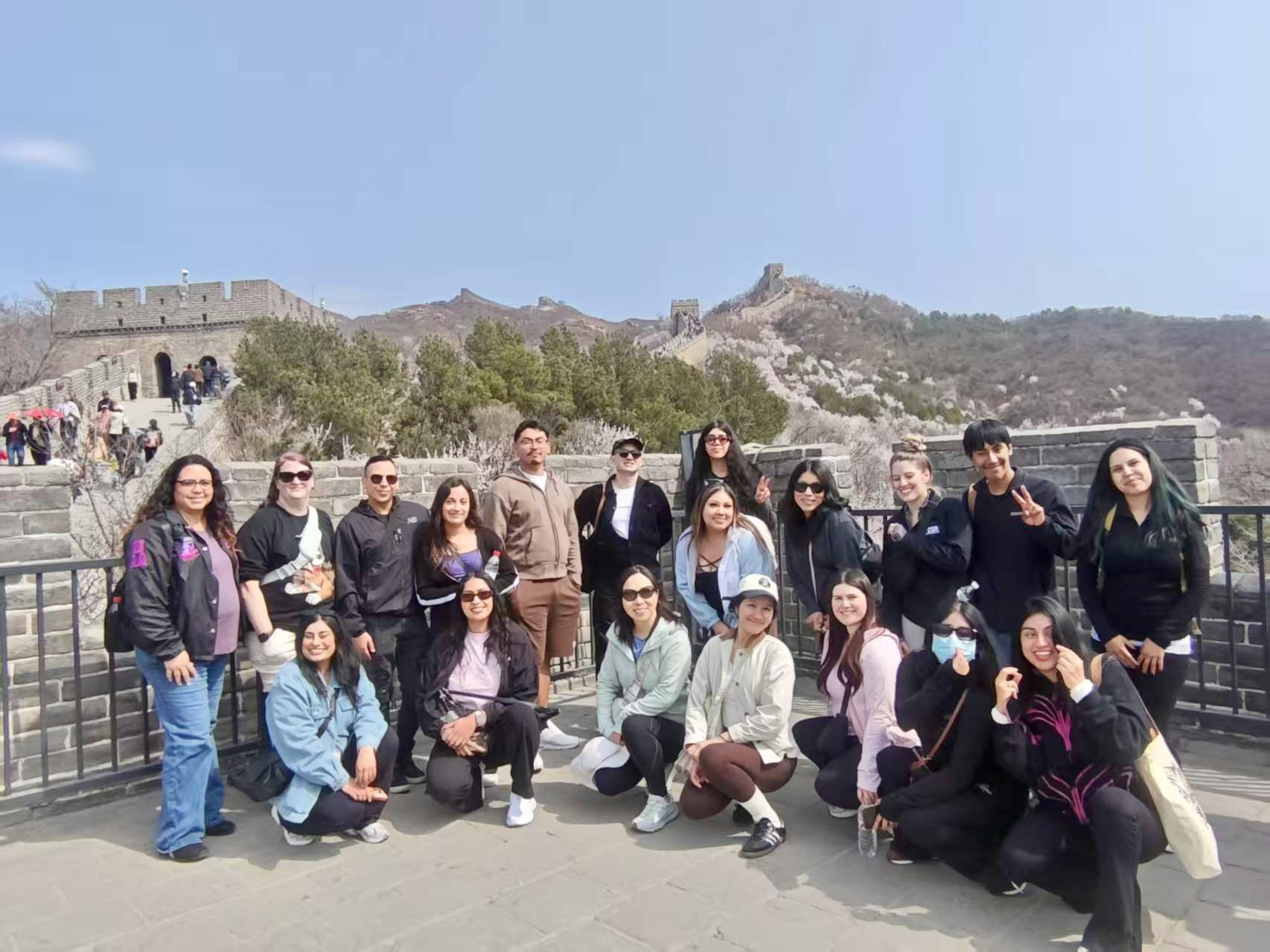
The program also included visits to landmarks, such as the Great Wall, the Forbidden City and museums, along with travel on China’s high-speed rail between Beijing and Shanghai. These experiences highlighted how history, culture and infrastructure shape health beliefs and practices.
Students noted key differences between Chinese and U.S. healthcare approaches. While U.S. systems often emphasize specialization and treatment outcomes, China’s approach places greater focus on holistic well-being, integrating diet, lifestyle, family and environment.
“This trip changed my perspective on both the world and my career,” one student said, describing a shift toward understanding interconnected aspects of health and care. “It gave me a firsthand look at how different life is in China – from the food and culture to core beliefs, healthcare systems and traditional medicine practices.”
The student went on to note, “In the U.S., care can often feel less centered on the individual, with a stronger focus on systems like pharmaceuticals and treatment outcomes. In China, I saw a more holistic perspective – one that emphasizes overall well-being and recognizes how factors like diet, family, culture and lifestyle are interconnected.”
For students, particularly those in social work and health-related fields, this experience deepened their understanding of what it means to care for the whole person, with another reflection highlighting “a broader, more integrated view of self-care through a social work perspective.”
The experience also fostered significant personal growth. For some students, navigating a new cultural environment challenged long-held assumptions about their own capabilities. As one student shared, “Before this trip, I didn’t really see myself as someone who would do anything extraordinary, especially coming from an immigrant family where stability often feels more realistic than big dreams. But being in China changed that.”
The student reflected that being immersed in a completely different environment pushed them beyond their comfort zone, helping them realize their ability to adapt, learn and thrive in unfamiliar situations. “It made me want to become the best version of myself, not just for my future, but to prove to myself that I can achieve more than I once believed,” the student noted. The experience ultimately shifted their mindset, as they came to see their background not as a limitation, but as a source of strength that shapes their unique perspective and potential.
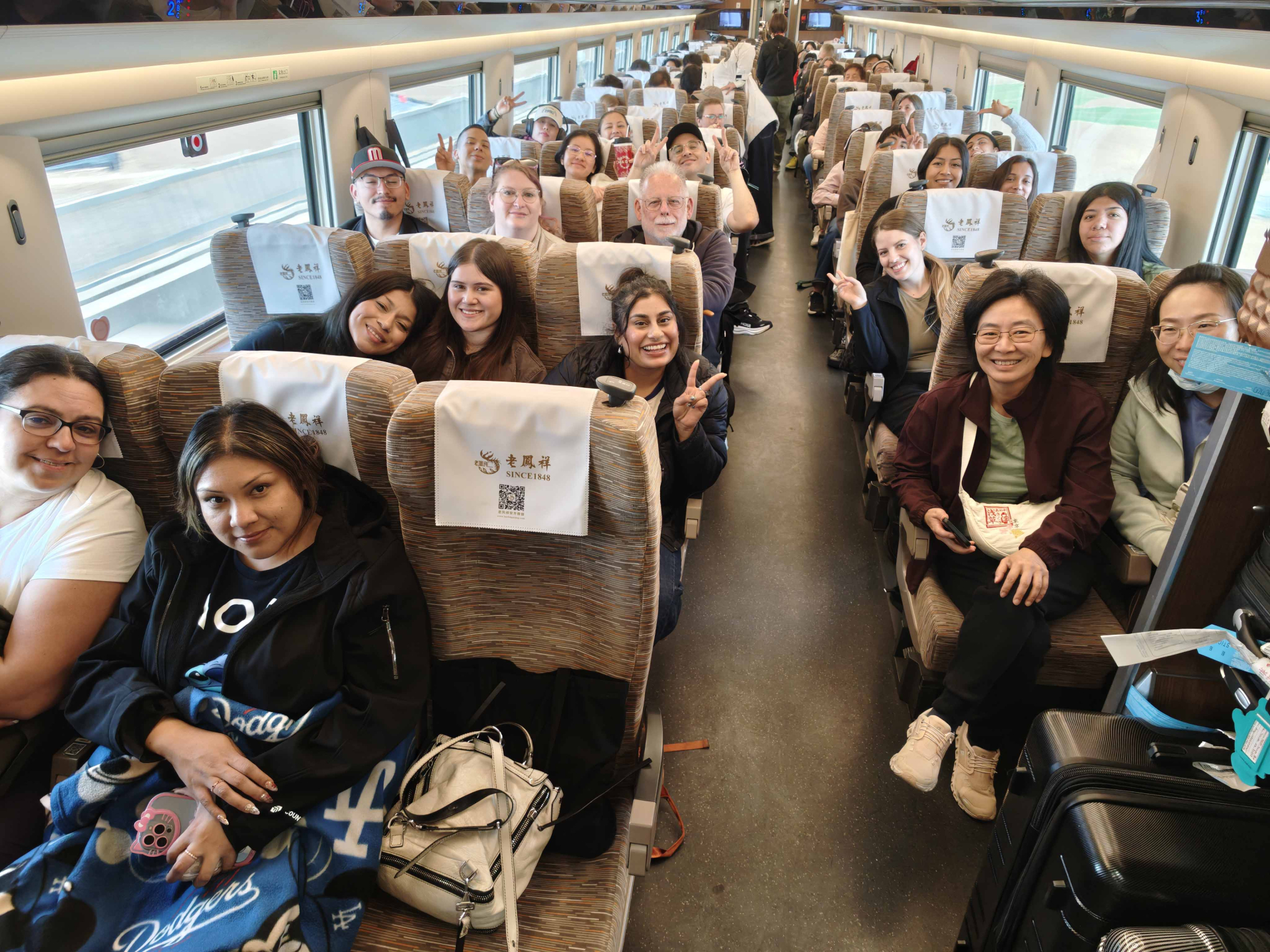
Faculty leaders said the program broadened students’ perspectives.
“This program delivered far more than what we expected and truly reshaped what students thought they knew,” said Yawen Li, faculty lead for the program. “China and the U.S. are two sides of the same coin – distinct in many ways yet closely connected. When students engage directly with different healthcare systems and cultural approaches to well-being, their perspectives expand and become more complete in meaningful ways, especially in how they understand care across cultural contexts.”
Added Jie Yu: "As a nursing educator, I am glad from this study abroad program, students can see the healthcare system from multiple lenses as a reflection from culture, history and values influences. Students witnessed the differences and the surprising overlaps between Chinese and Western healthcare systems. Such experience is transformative and will shape how they approach care, service and cultural competency throughout their careers, regardless of their field.”
For information on next year’s study abroad program to China, which will open for enrollment in the fall, contact Yawen Li at yawen.li@csusb.edu or Jie Yu at jie.yu@csusb.edu.