Mike Singer | Office of Marketing and Communications | (909) 537-8107 | msinger@csusb.edu
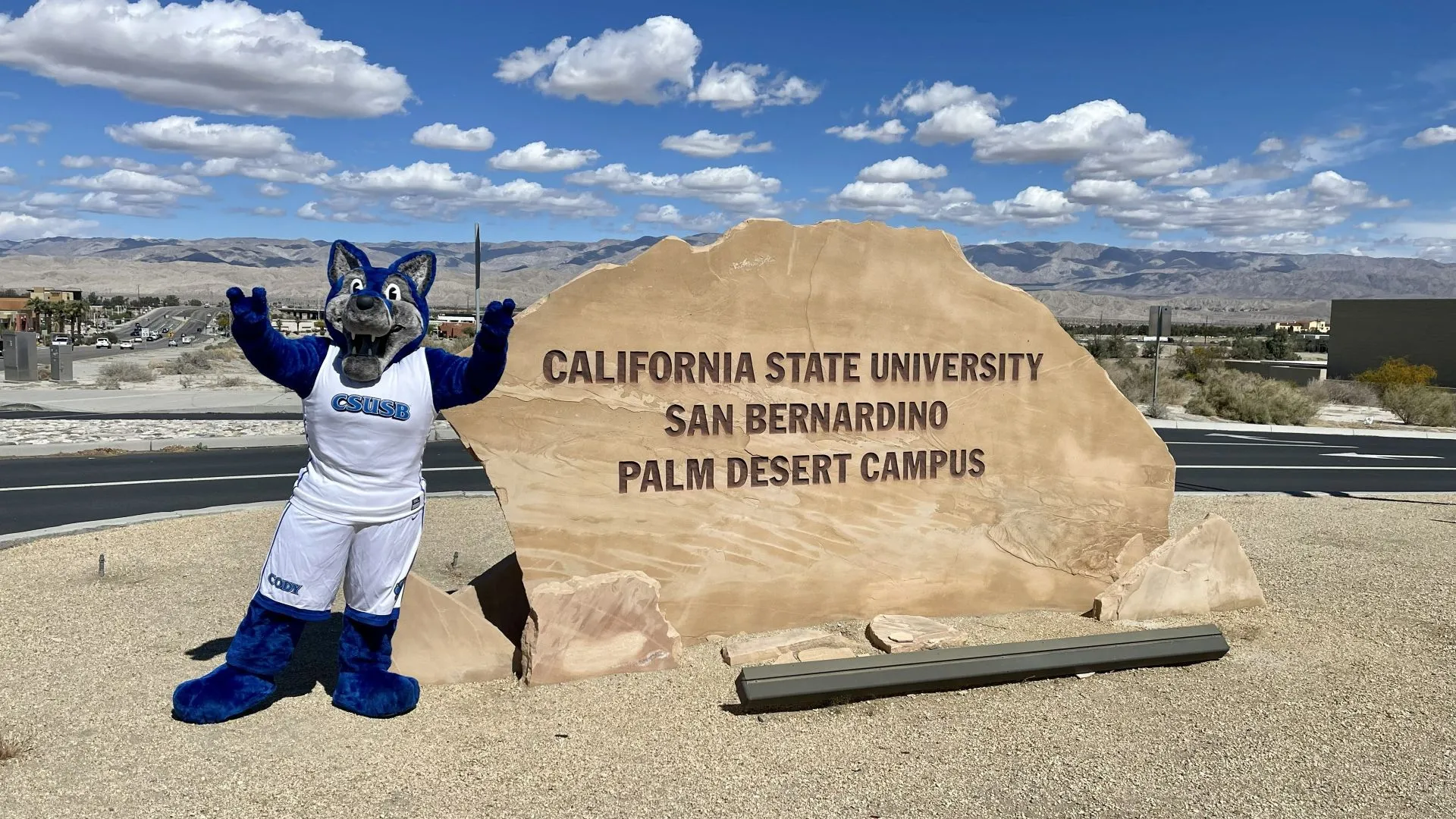
California State University, San Bernardino’s Palm Desert Campus (PDC) is celebrating a major milestone this year: 40 years of serving the Coachella Valley through access to higher education, workforce development, community engagement and student success.
What began in 1986 as a bold vision to bring higher education opportunities closer to residents of the Coachella Valley has grown into a thriving campus that has transformed thousands of lives and helped shape the economic, civic and cultural fabric of the region.
Today, the CSUSB Palm Desert Campus serves students pursuing degrees in fields including business, education, nursing, kinesiology, hospitality management, social work, cybersecurity and entrepreneurship, while continuing to expand programs that address emerging workforce needs across the region.
“Over the past 40 years, the CSUSB Palm Desert Campus has become much more than a university campus — it is where access meets excellence,” said Edna Martinez, associate vice president of the Palm Desert Campus. “It is a place where students discover opportunities, families see dreams become reality, employers find exceptional talent and communities come together to build a stronger future. We are proud of the legacy we have built and excited to begin PDC’s next chapter of growth, excellence and regional impact.”
Four Decades of Impact
For 40 years, the Palm Desert Campus has fulfilled its mission of expanding access to higher education and increasing educational attainment for residents throughout the Coachella Valley. Many students are the first in their families to attend college, balancing coursework with jobs, family responsibilities and community commitments while pursuing degrees that create pathways to economic mobility and leadership.
“The Palm Desert Campus was a community creation. It was truly an experiment that brought municipal and county governments together to develop a place to educate the people of the Coachella Valley,” said Robert Leo, professor of communication and media at the Palm Desert Campus and the campus’s longest-serving faculty member. “The city of Palm Desert donated the land and the other cities in the Coachella Valley reached into their budgets to ensure that a community campus would be built. With the support of private funds, a joint partnership emerged. Such an experimental creation brought us to the front page of The New York Times as a new way to create educational opportunities. What started out in a portable classroom on the College of the Desert Campus is now a permanent educational home for the people.”
The Palm Desert Campus has also emerged as a critical workforce partner for the region, working closely with employers, school districts, healthcare systems, nonprofit organizations, government agencies and community leaders to prepare graduates for careers in high-demand industries.
A Brief Timeline — 40 Years of Milestones
1986 — Citizens of the Coachella Valley recognized the economic, cultural and social benefits that a four-year university would bring to the region, leading to California State University, San Bernardino establishing the Coachella Valley Center (CVC), as it was known back then. The CVC opened on land leased from College of the Desert and consisted of an administrative office and classroom housed in a construction trailer. The first dean, Catherine Gannon, is said to have registered the first class of 80 students out of the trunk of her car.
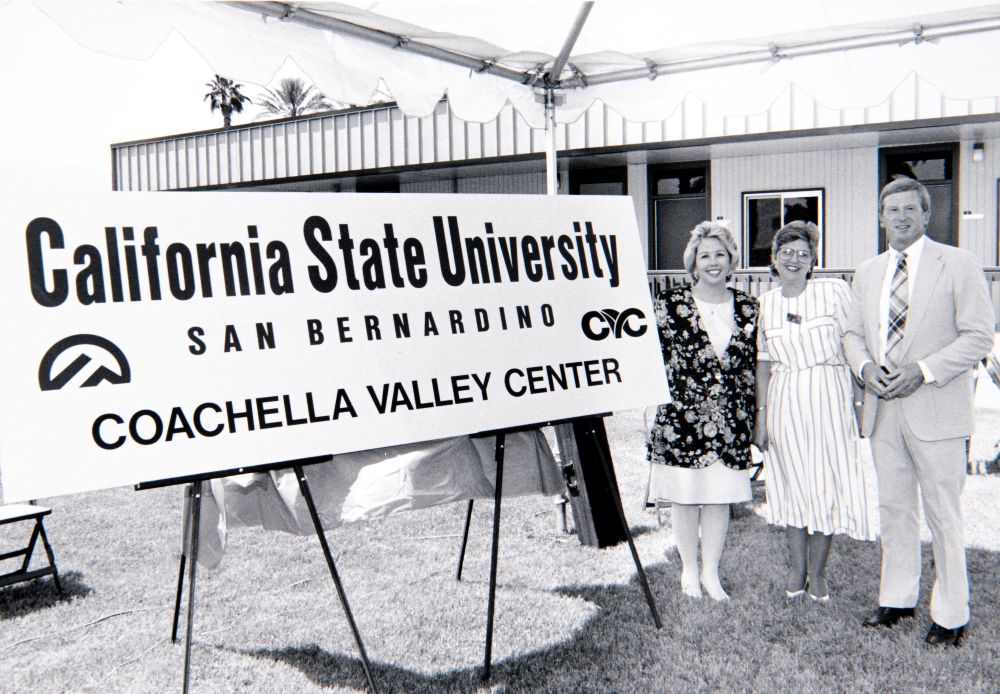
1990 — Peter Wilson became the center’s second dean. He was instrumental in working with members of the Palm Desert City Council to create a permanent site for the campus.
1994 — The CSU Board of Trustees accepted a donation of 55 acres from the city of Palm Desert to construct a permanent campus on Cook Street. That led to a unique public-private partnership and a capital campaign, led by co-chairs Dick Oliphant and Betty Barker.
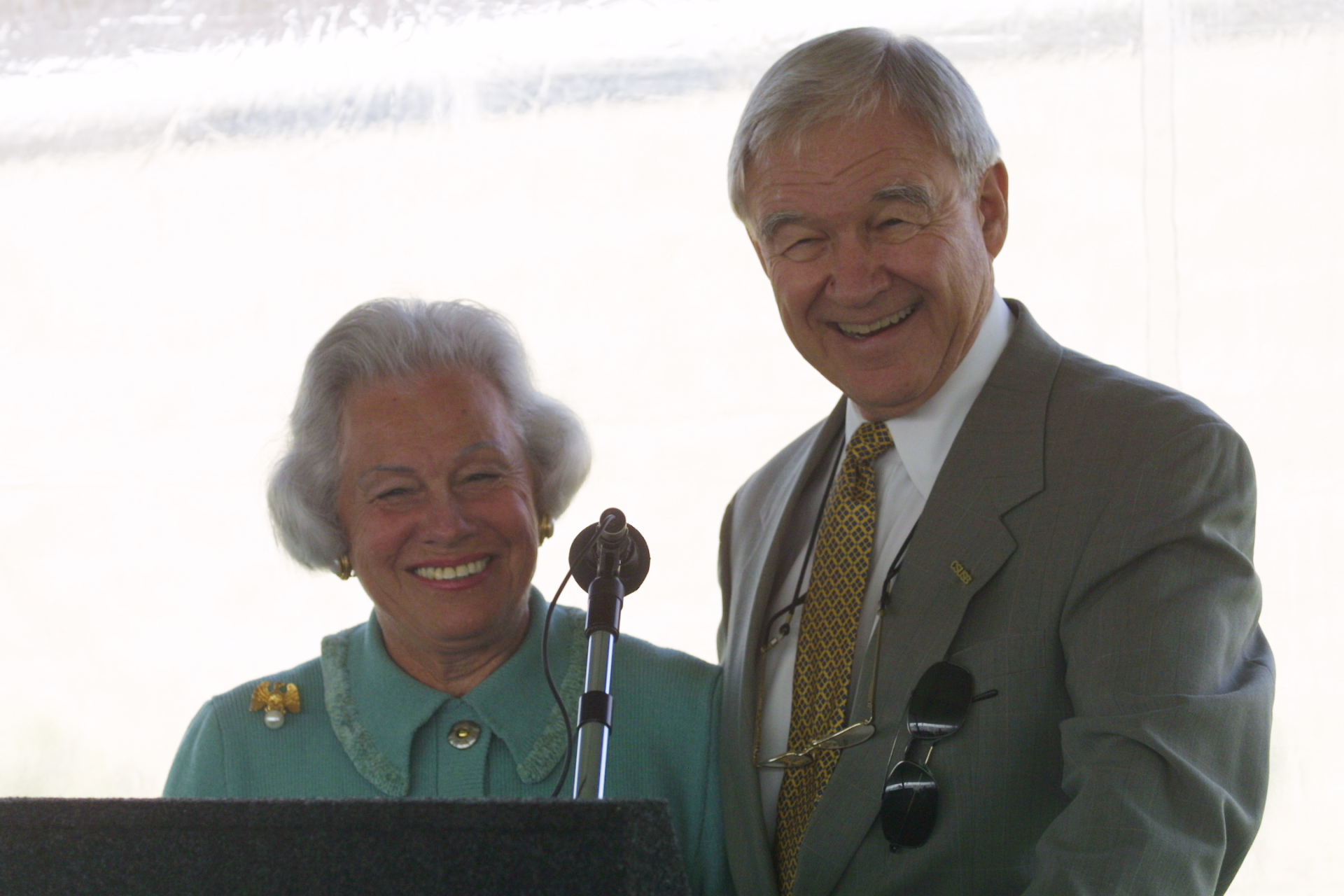
With the support of local city governments, private foundations and individual community donors, the campaign raised more than $40 million for the development and construction of the campus. Local financial support funded the construction of the campus facilities, which the state furnishes and maintains. As profiled in an August 2003 front-page article in The New York Times, the development of the campus is a model partnership between the state and the community.
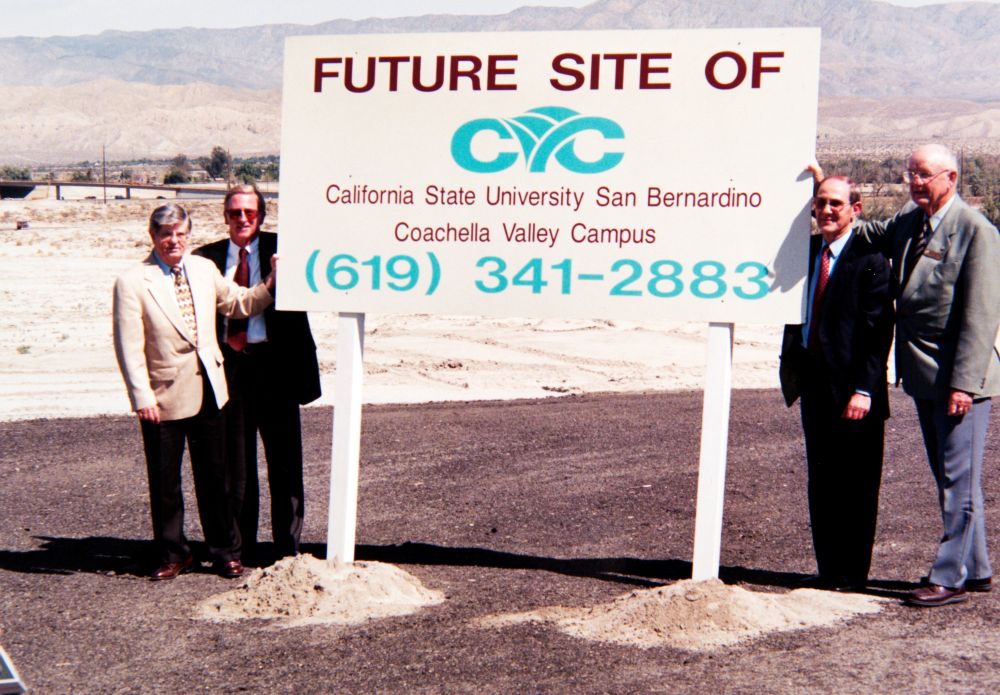
2000 — The university breaks ground on the construction of the first permanent building, the Mary Stuart Rogers Gateway Building.
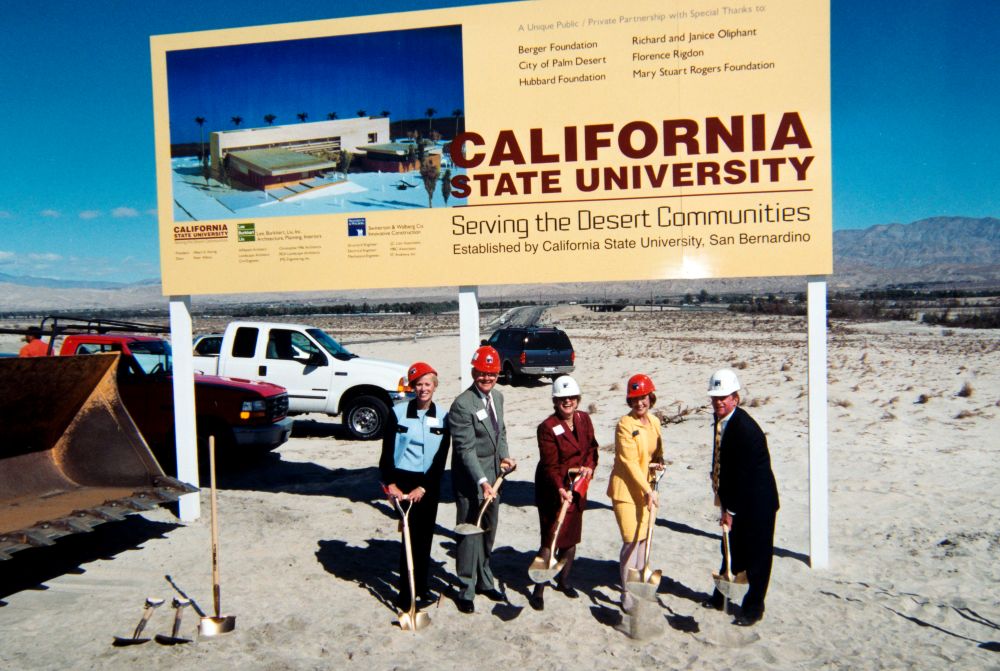
2002 — The campus officially changed its name to the California State University, San Bernardino Palm Desert Campus and the Mary Stuart Rogers Gateway Building opened — built with funds from the Mary Stuart Rogers Foundation, the H.N. and Frances C. Berger Foundation, the city of Rancho Mirage and Florence Rigdon. The building houses the Rancho Mirage Student Center, Associated Students Inc. (ASI), the Richard and Janice Oliphant Auditorium, the bookstore, administrative offices and various types of classrooms.
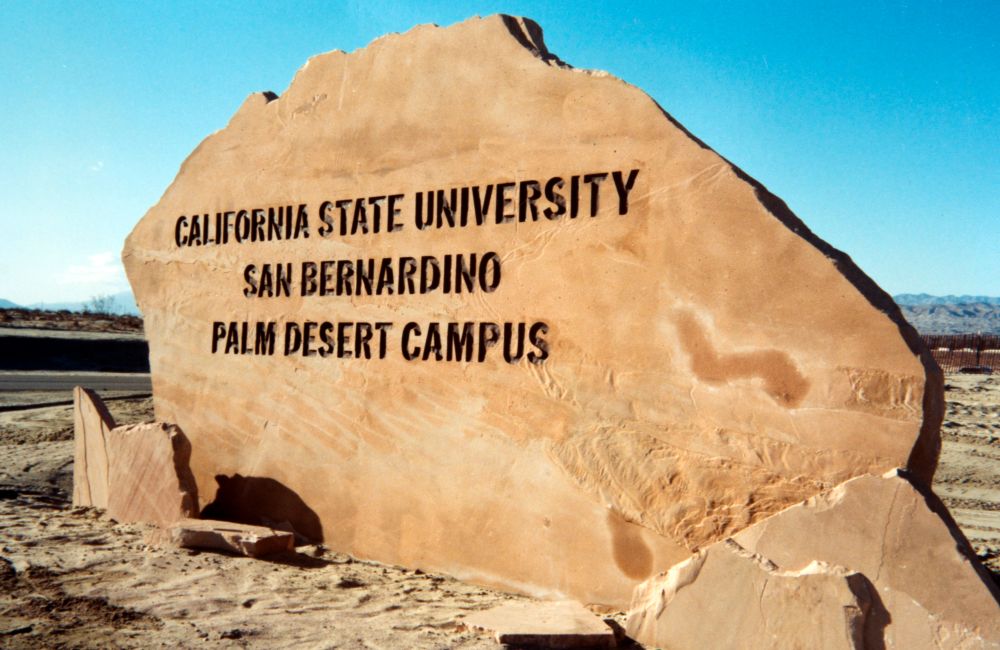
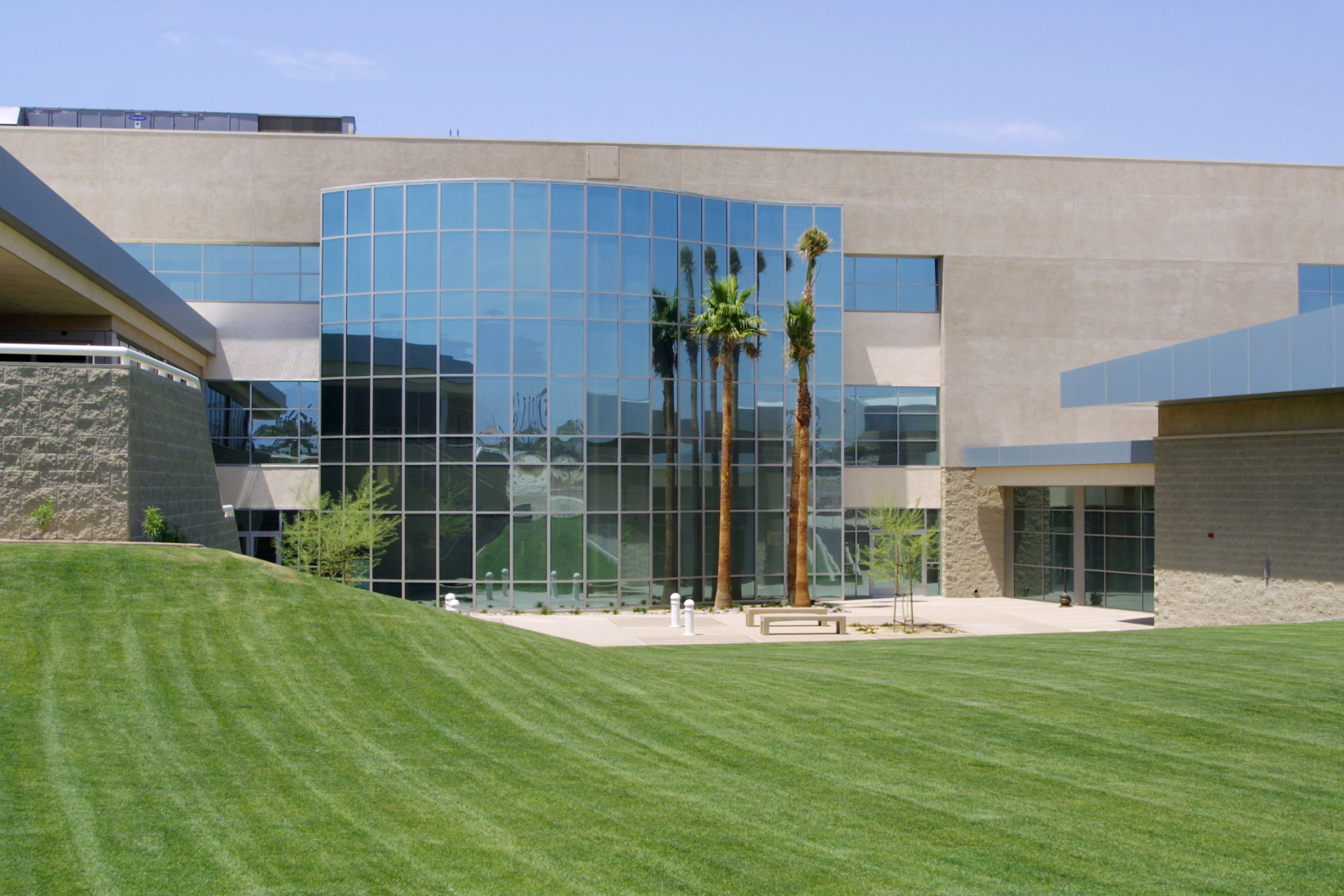
2003 — Fred Jandt became the third dean of the campus and the university breaks ground on the construction of its second and third buildings — the Indian Wells Center for Educational Excellence and the Indian Wells Theater.
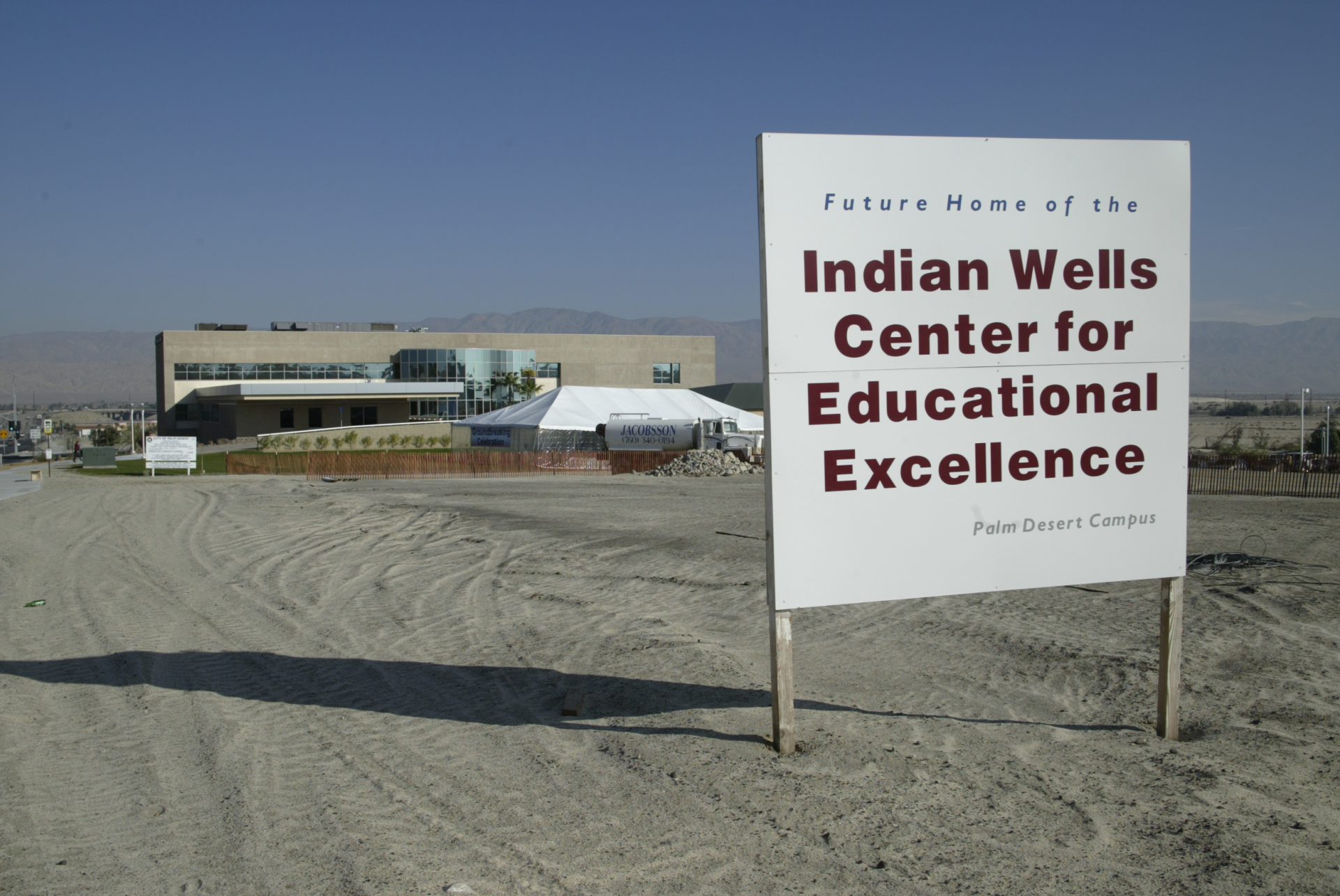
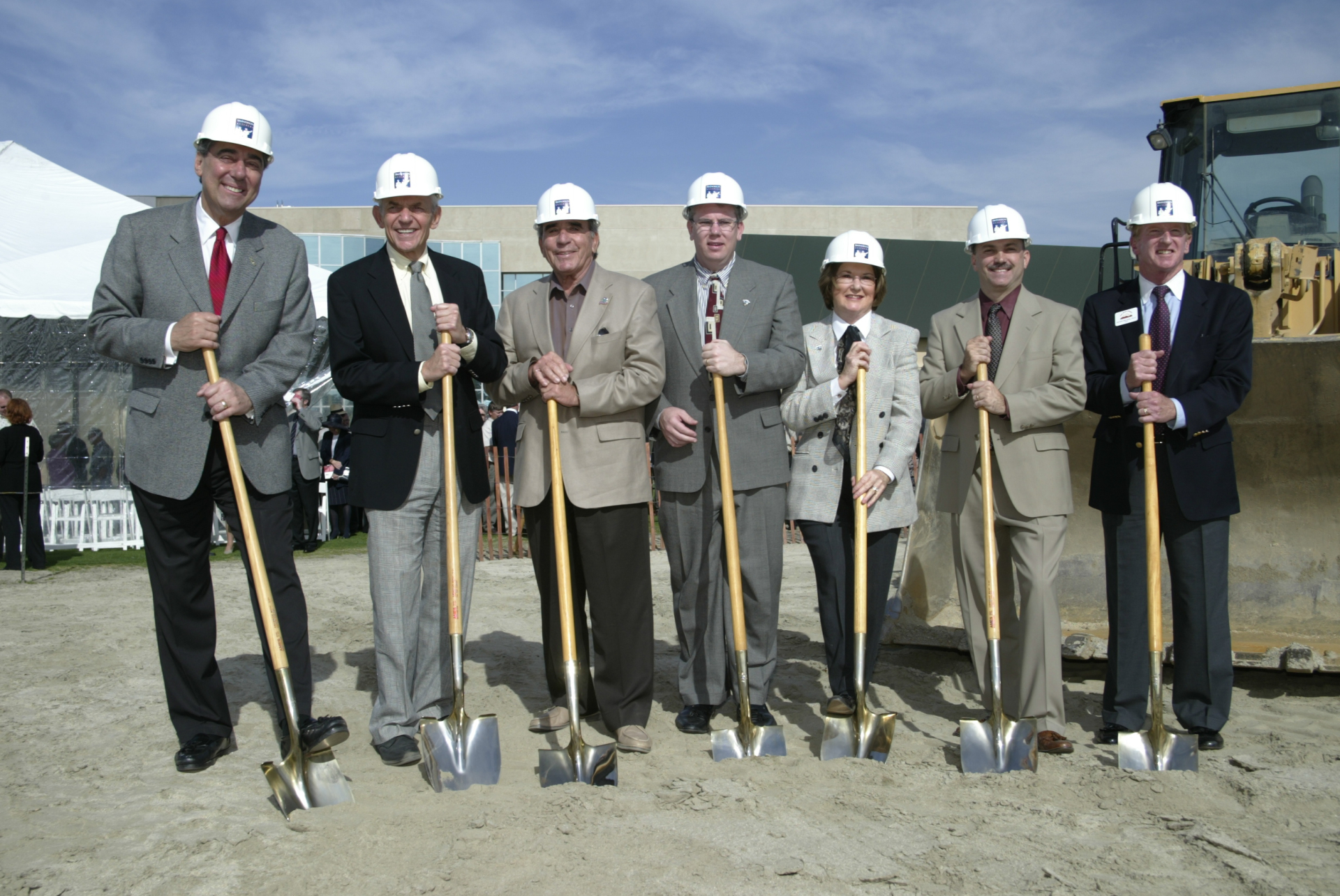
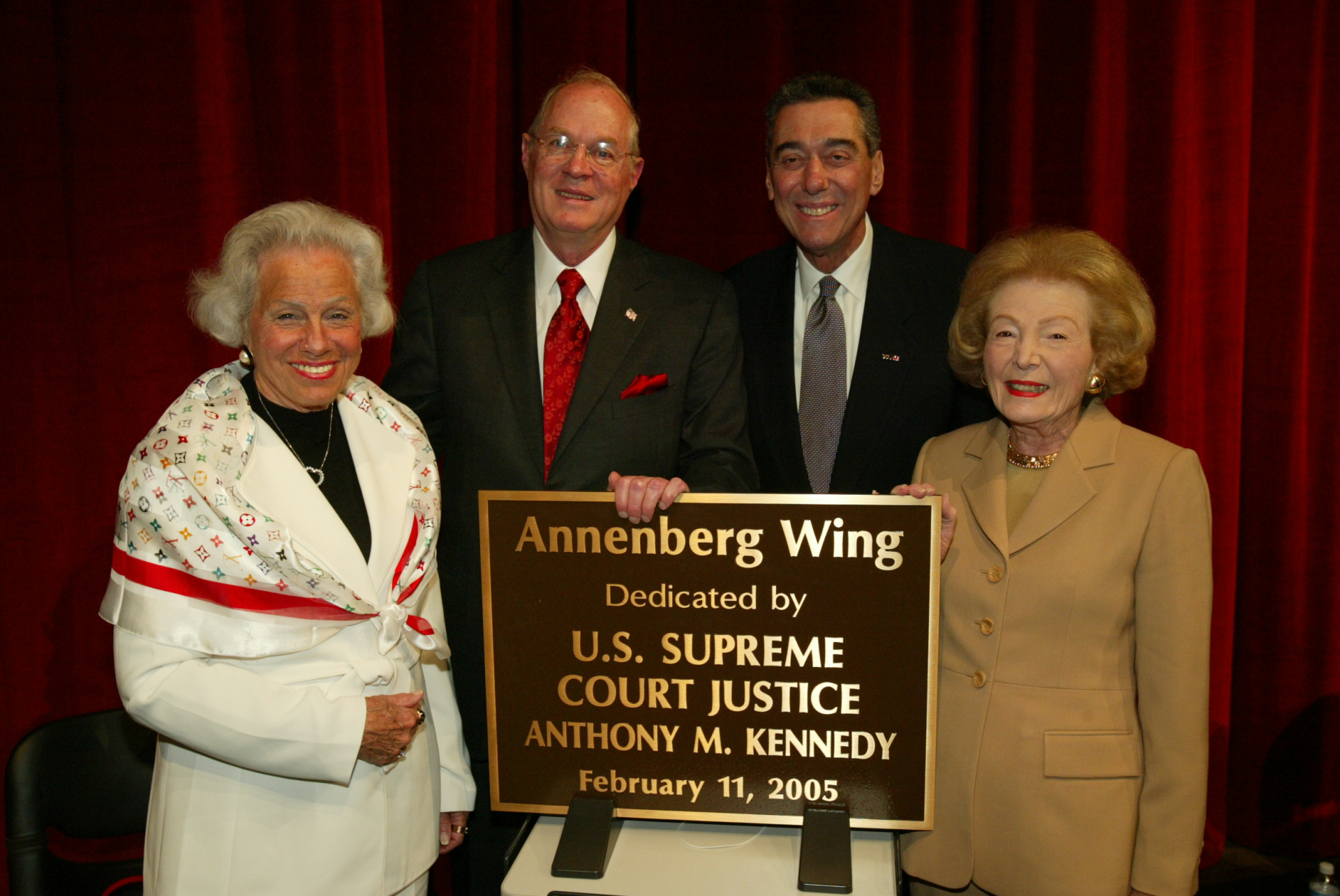
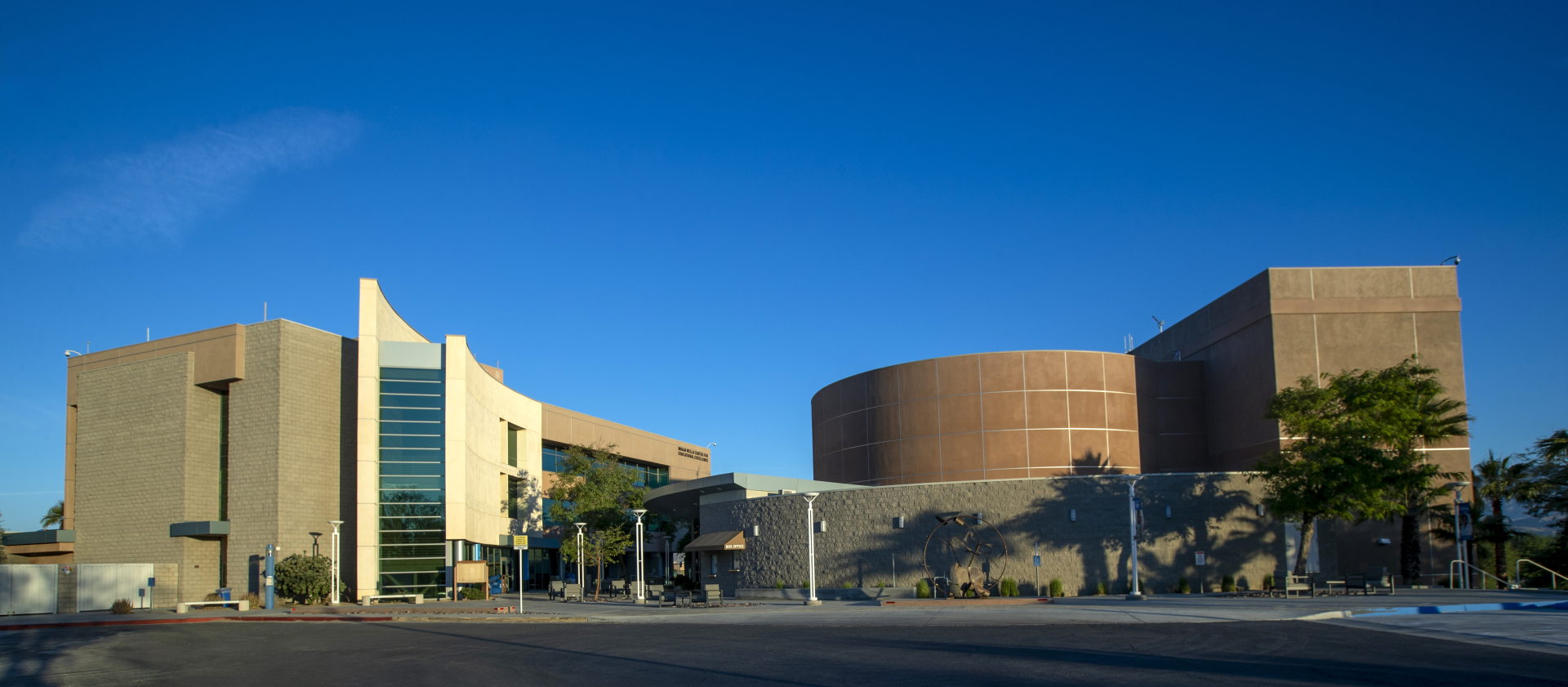
2005 — The second and third buildings opened. Built largely with funds from the city of Indian Wells, the Annenberg Foundation, the H.N. and Frances C. Berger Foundation, Palm Desert National Bank, and Jean Hahn and John I. Hardy, Phase II of the campus included the Indian Wells Center for Educational Excellence, which houses classrooms, various student services, the Career Center, the Porter Resource Room, the Student Success Studio (S3) and the campus radio station; and the Indian Wells Theater, a 300-seat state-of-the-art theater used for classes and various types of events.
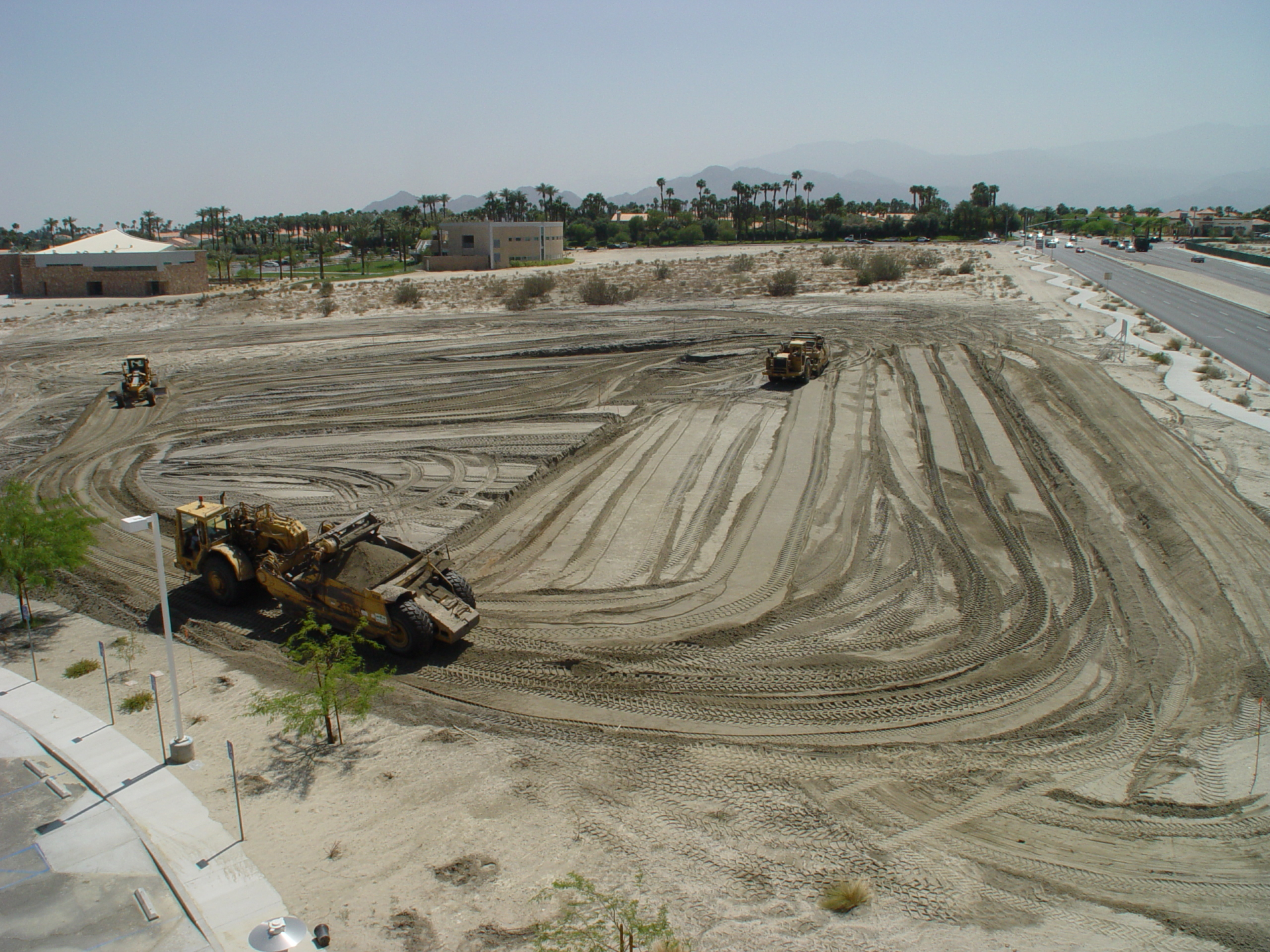
2006 — Ground was broken for the campus’s fourth building — the Palm Desert Health Sciences Building.
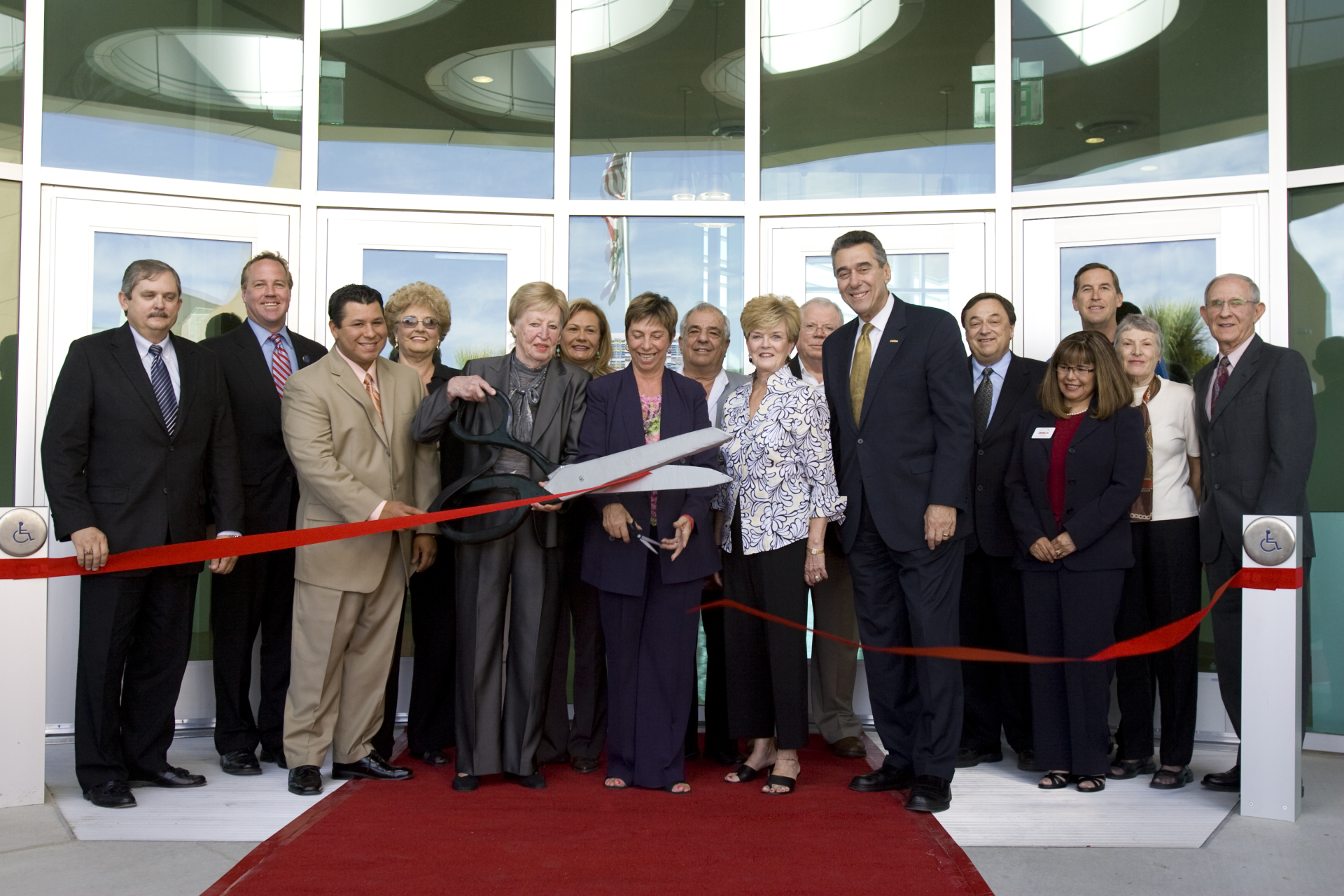
2008 — The Palm Desert Health Sciences Building opened. Donors for this building included all nine cities in the Coachella Valley as well as Riverside County, the Desert Healthcare District & Foundation, the R.D. and Joan Dale Hubbard Foundation, the Webb Foundation, Palm Desert National Bank and other members of the community. The building houses the Helene A. Hixon Information Resource Center, biology and chemistry labs, nursing labs, the R.D. and Joan Dale Hubbard Student Health and Psychological Counseling Center, the DEN Food Panty, the Veterans Success Center, as well as additional classrooms and computer labs.
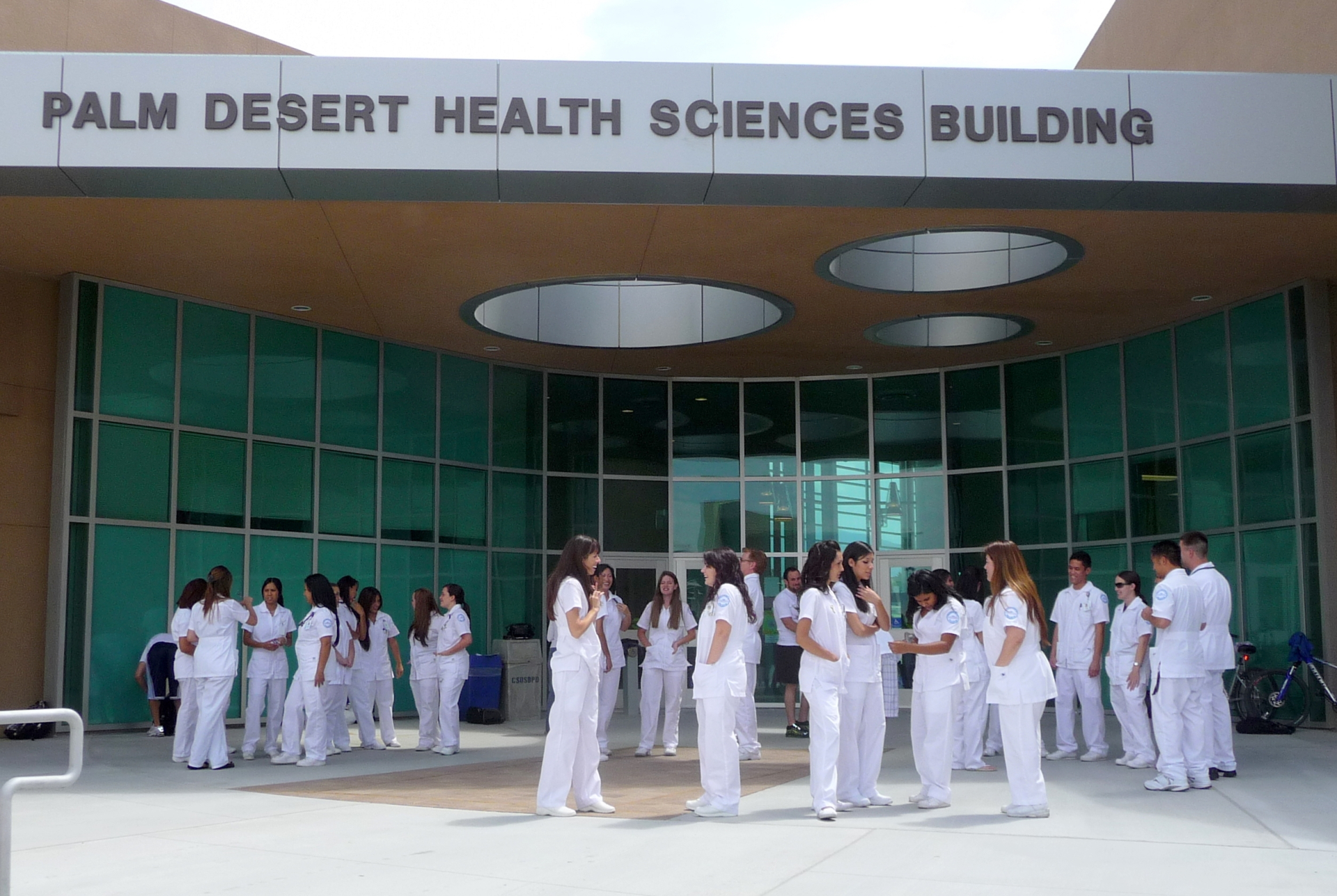
2010 — The campus’s first class of nursing students receive their bachelor of science degrees in nursing.
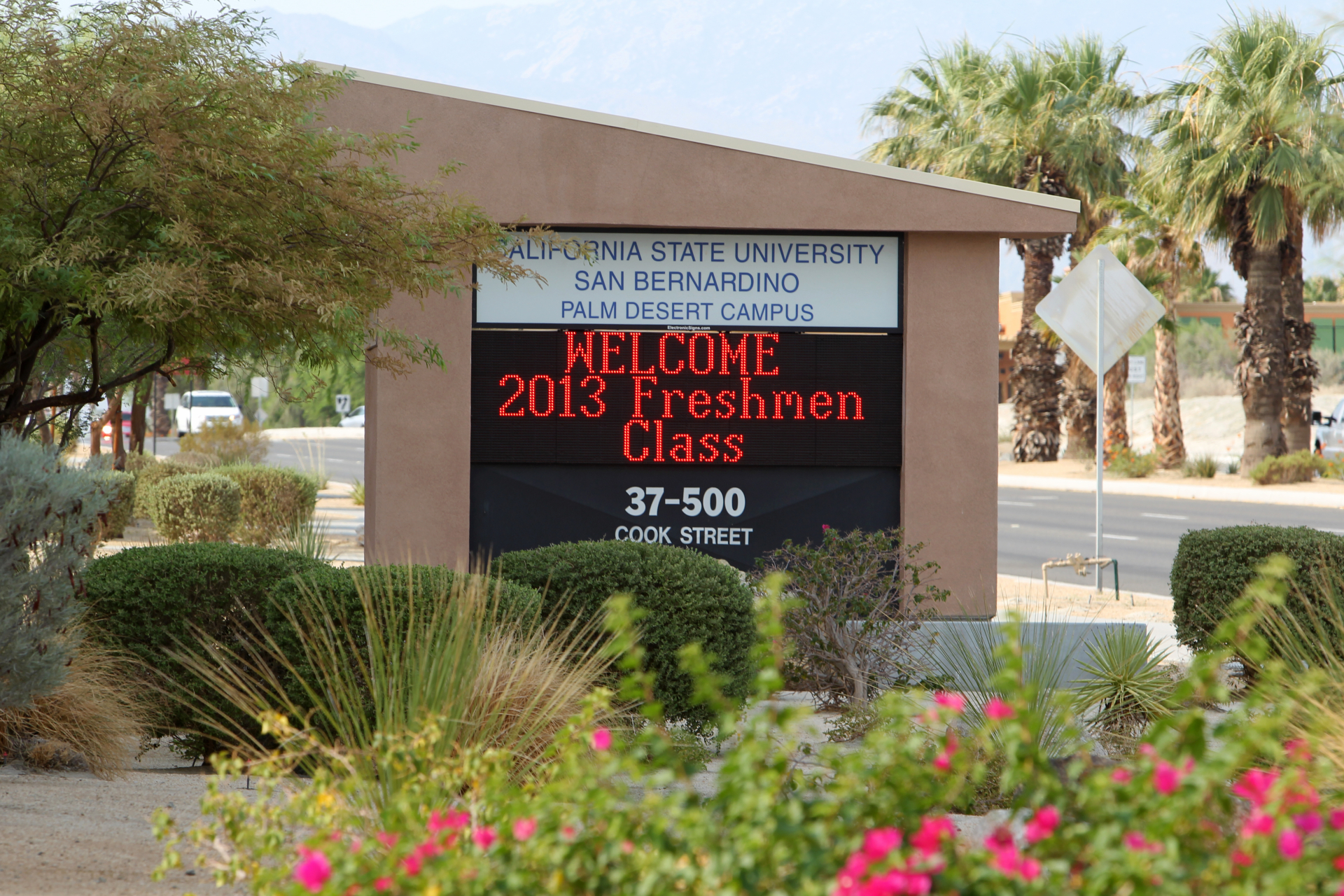
2013 — After 27 years of serving the needs of community college transfer students, the CSUSB Palm Desert Campus opened its doors to its first freshman class, becoming the Coachella Valley’s only four-year public university.
2014 — Sharon Brown-Welty became the campus’s fourth dean.
2015 — The city of Palm Desert donated an additional 114 acres of contiguous land, making the total size of the campus 169 acres.
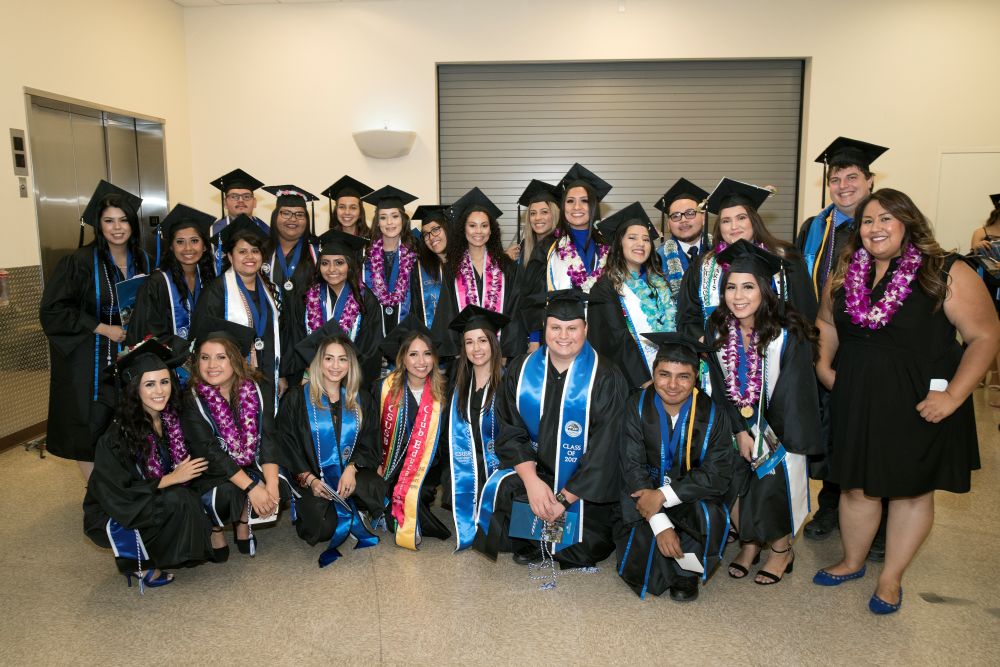
2017 — The campus graduates its first freshman class.
2019 — Jake Zhu became the campus’s fifth dean.
2020 — The hospitality management program is established at the Palm Desert Campus to meet the growing needs of the hospitality industry in the Coachella Valley.
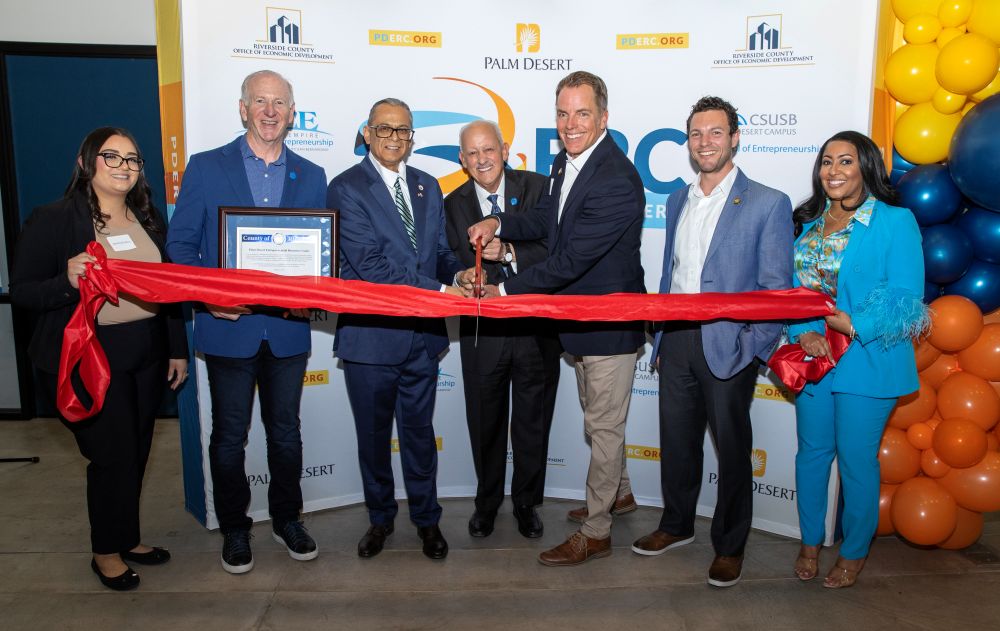
2021 — The Palm Desert iHub, a collaboration of the city of Palm Desert, the Coachella Valley Economic Partnership (CVEP) and CSUSB, opened across the street from campus. The iHub, which is now named the Palm Desert Entrepreneurial Resource Center (ERC), provides support to small businesses through various programs.
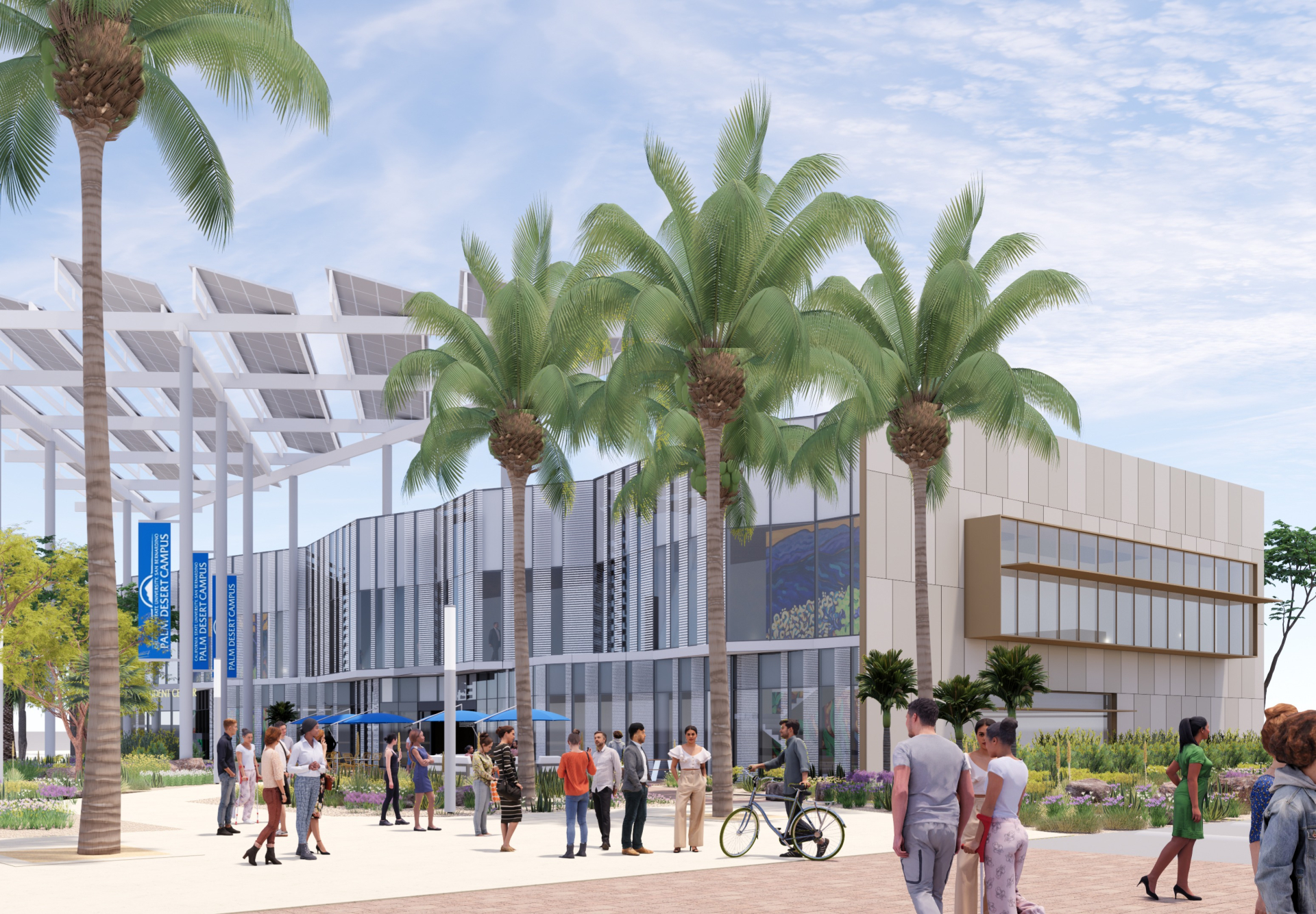
2022 — The State of California funds a $79 million budget allocation to build the new Student Success Center at the Palm Desert Campus – the first building on campus to be built with state funds.
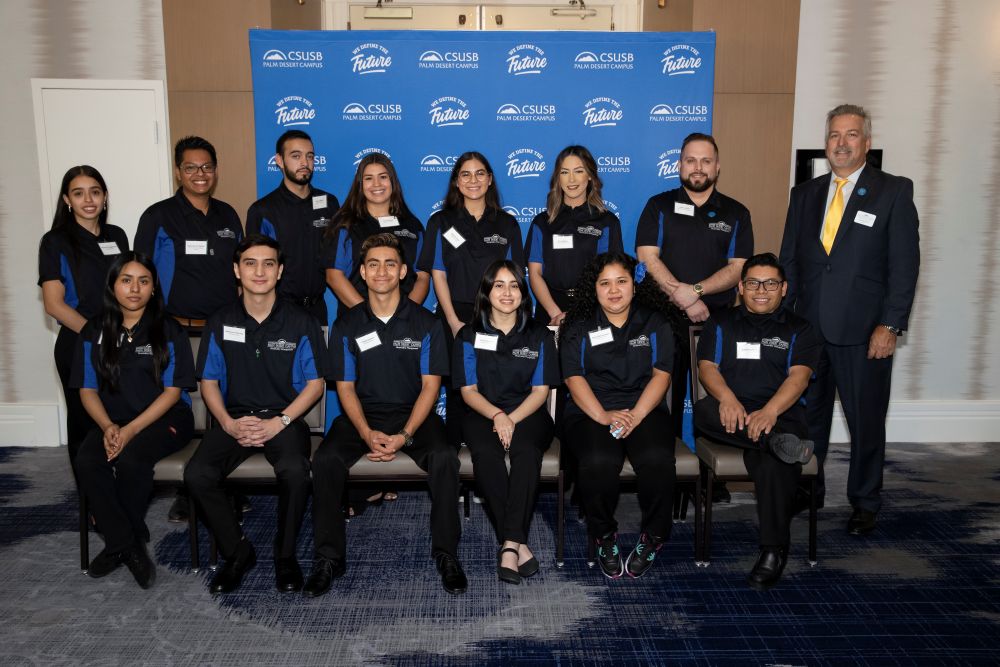
2023 — Edna Martinez is named the associate vice president and administrator in charge of the Palm Desert Campus.
2024 — The Master of Social Work (MSW) program at the Palm Desert Campus was officially accredited by the Council on Social Work Education (CSWE), the accrediting body for all social work programs in the United States.
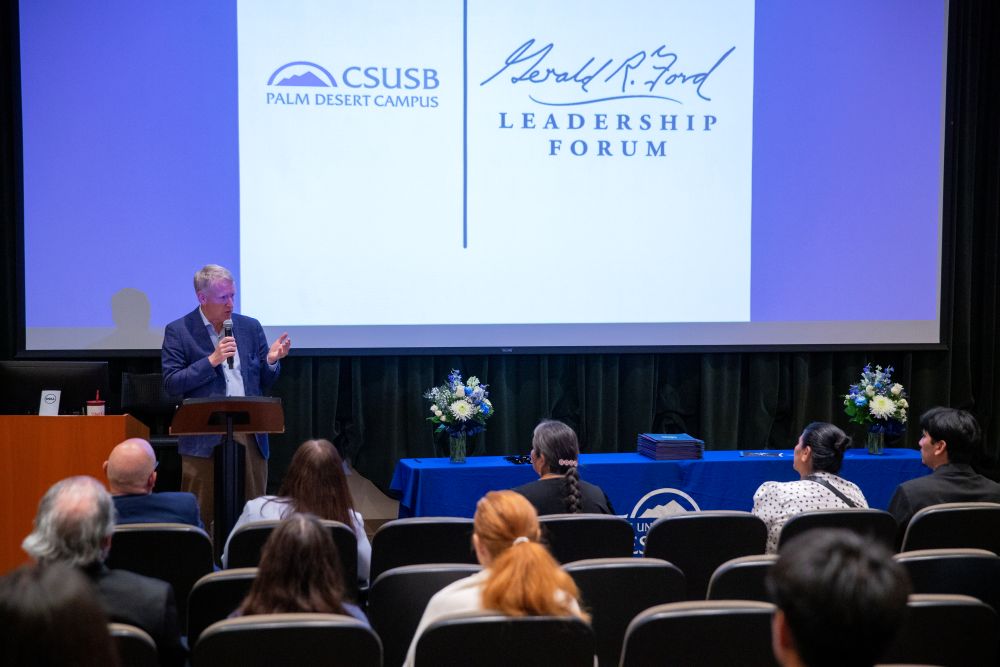
2025 — The Palm Desert Campus establishes the Gerald R. Ford Presidential Fellows Program, joining an elite group of only four chapters in the United States — and the only one in California.
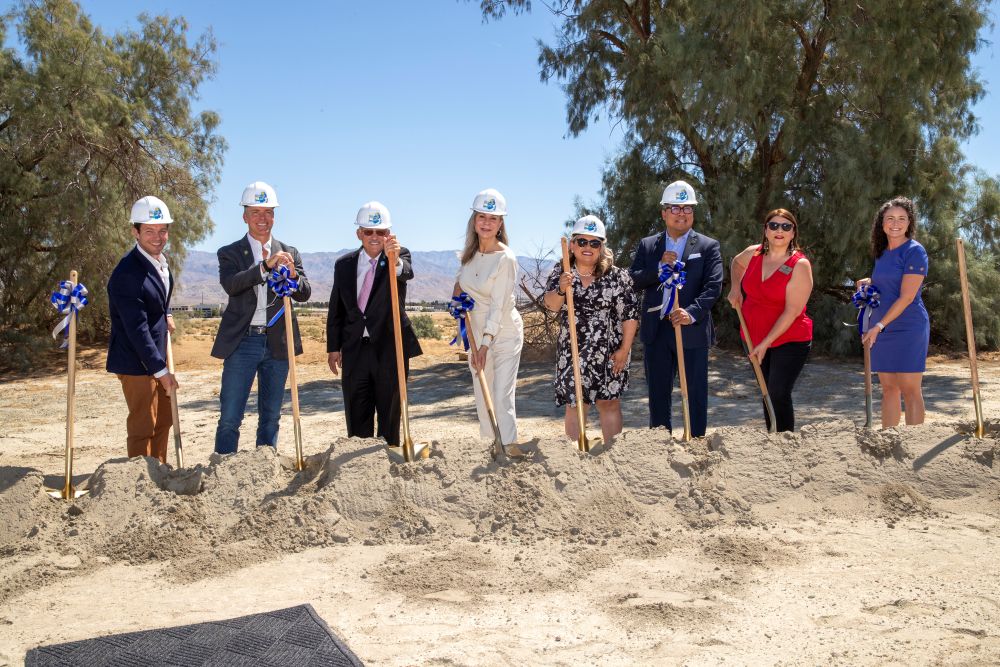
2025 — Ground was broken for the Student Success Center.
2025 — PDC welcomes its largest freshman cohort.
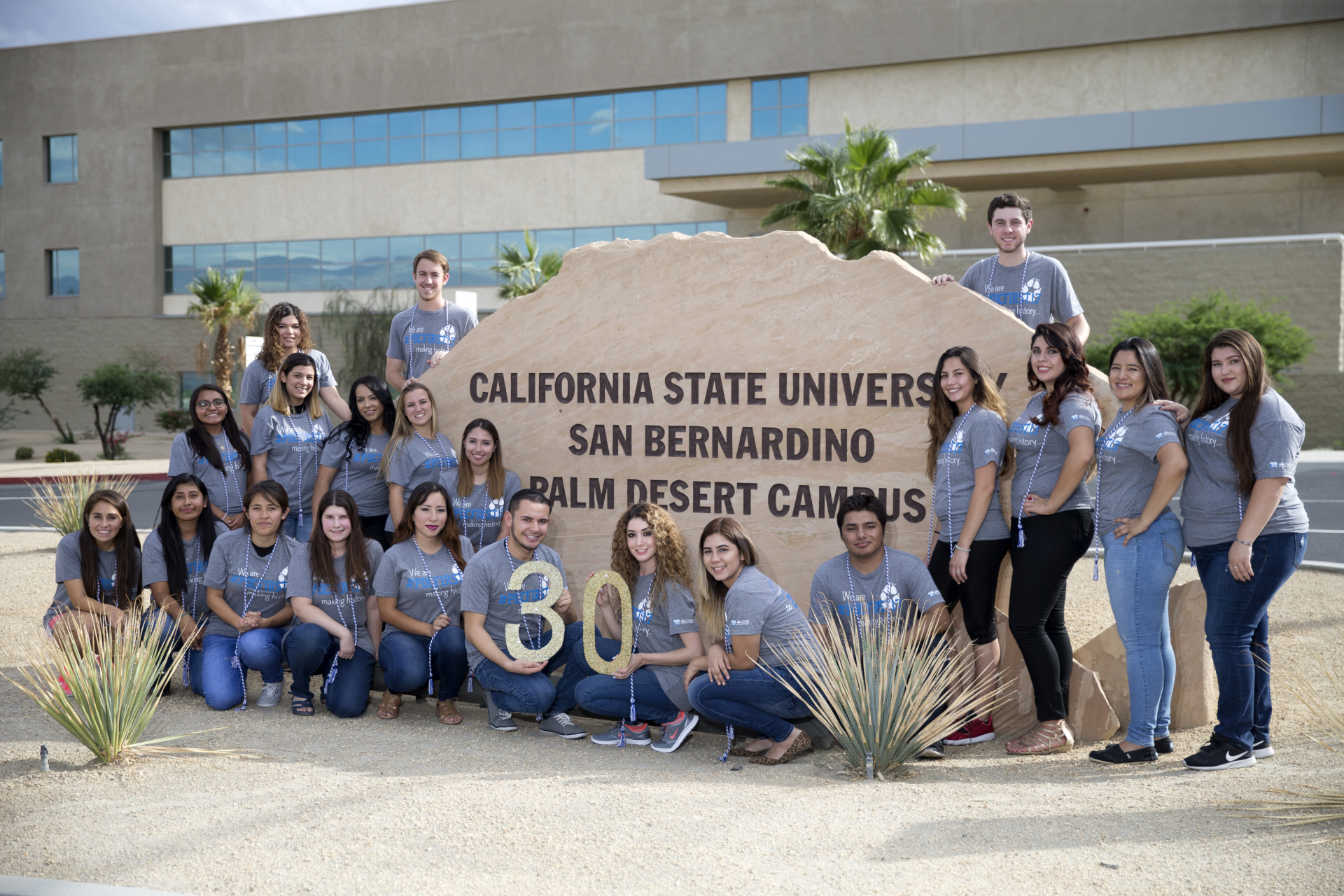
2026 — The Palm Desert Campus celebrates its 40th anniversary, recognizing four decades of student success, community partnership and regional impact.
Looking Ahead
As the Coachella Valley continues to grow and diversify, the CSUSB Palm Desert Campus remains focused on preparing the next generation of leaders, professionals, innovators and entrepreneurs. An example includes expanding the environmental studies program to the Palm Desert Campus to collectively work toward a more resilient future for the Coachella Valley and surrounding desert regions.
The campus is also continuing its commitment to strengthening educational pathways from K-12 schools and community colleges to undergraduate and graduate degrees, helping more students complete their education and remain in the region to contribute to its future success.
The new Student Success Center at PDC, scheduled for completion in 2027, is a critical component of the campus’s long-term expansion plan and a significant step toward meeting the region’s growing educational needs. The 23,700-square-foot building will include an advising/tutoring center, career center, expanded campus library, group study space, a cross cultural center, campus bookstore, food services, a student health center and a recreation and wellness center, and provide enhanced services and support for students at the Palm Desert Campus.
A Legacy of Opportunity
As the campus celebrates its 40th anniversary, university leaders, alumni, students, faculty, staff, donors and community partners are reflecting on a shared legacy built through collaboration, innovation and a commitment to educational access.
The story of the CSUSB Palm Desert Campus is ultimately the story of the Coachella Valley itself —a story of growth, resilience, opportunity and possibility.
Forty years after its founding, the campus continues to serve as a catalyst for student success, workforce development and regional prosperity, helping ensure that future generations have the opportunity to learn, lead and thrive right here in the desert.
About the CSUSB Palm Desert Campus: The CSUSB Palm Desert Campus is dedicated to providing a transformative educational experience in the Coachella Valley. With a focus on academic excellence and community engagement, the campus offers undergraduate and graduate degree programs designed to meet the diverse needs of its students and the region.
For more information about the CSUSB Palm Desert Campus, contact Mike Singer in the Office of Marketing and Communications at msinger@csusb.edu or (760) 341-2883, ext. 78107, or visit the PDC website at www.csusb.edu/pdc.