Alan Llavore | Office of Marketing and Communications | (909) 537-5007 | allavore@csusb.edu
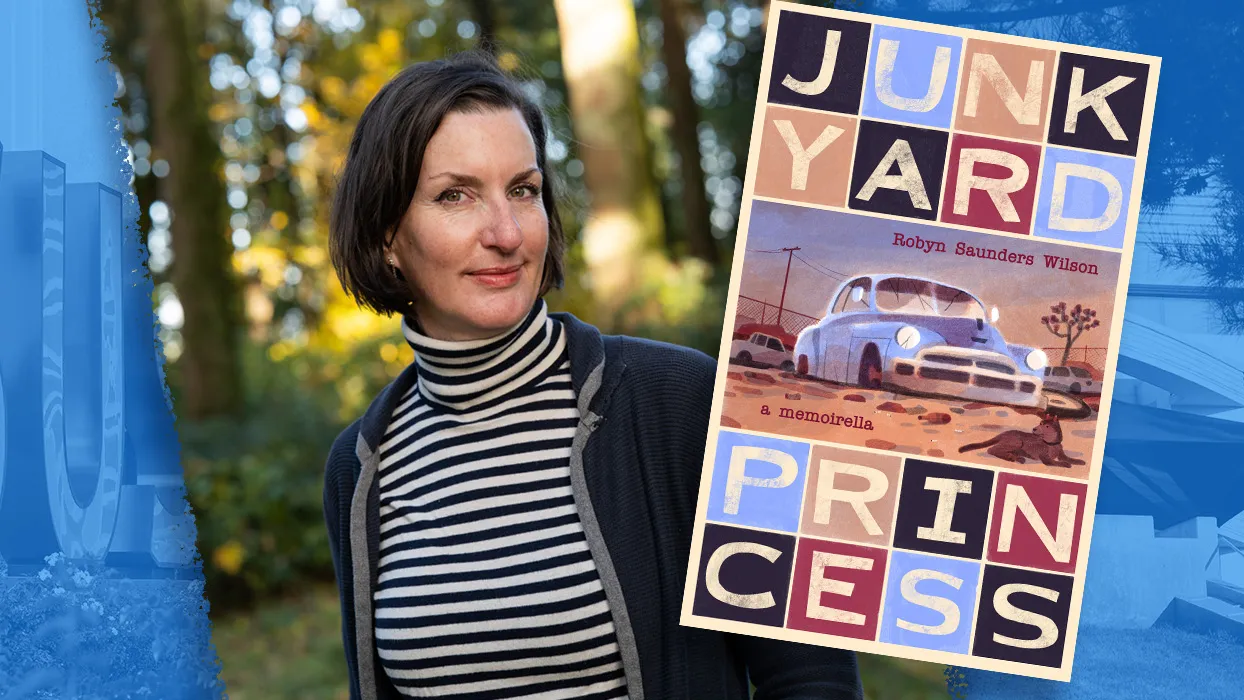
In her recently published memoir, “Junkyard Princess,” CSUSB alumna Robyn Saunders Wilson, who graduated with her bachelor of arts in English in 1996, tells the story of how Cal State San Bernardino became her school of choice. She was looking for a university that would allow her to “stumble all over the map” and accept her application without making her declare a major.
“Cal State San Bernardino was the only school I applied to, and luckily, they let me in,” she wrote. “I loved my studies … I loved the campus and its shady trees with the San Bernardino National Forest lurking in its backdrop.”
Growing up in Hesperia shaped who she was when she arrived at CSUSB. Perched atop the Cajón Pass not far from San Bernardino, the isolated setting made it “a very, very lonely place,” Wilson said. “To be able to come down from that perch, down that Cajón Pass, to what I viewed as civilization, it was remarkable. It was life-saving.”
The Inland Empire itself is the backdrop for Wilson’s memoir, in which she describes moving in 1983 with her parents and younger brother from the coastal community of Irvine when she was just 9 to the High Desert community, where her father had purchased an existing junk yard.
“It was four acres, 1,000 cars, two warehouses, three forklifts, and a junkyard dog, and my dad was beside himself with happiness,” she said. “It was everything he had ever wanted in his whole life. It was his empire.”
At age 12, Wilson began working in that kingdom, where she earned the self-proclaimed title of “Princess.”
“I would go there directly after school and man the phone lines and help customers. Pull parts and do whatever needed to be done, even invoicing,” she said.
In order to scavenge the correct parts for customers, Wilson became adept at scouring Hollander Interchange manuals, indexes of millions of car parts organized by their make and model. Her father, who had a troubled childhood and struggled with mental health issues, never learned to read or write and relied heavily on his daughter’s reading skills.
But as the decade progressed, the auto industry changed, becoming increasingly computerized, and the need for parts dramatically declined. In the beginning, the business had prospered with a steady stream of customers and stable revenues.
“Then mid-'80s, everything started changing so drastically, and the customers stopped coming,” Wilson said.
At the same time, as methamphetamine use and production began surging in the Inland Empire, their clientele became increasingly volatile. Eventually, her younger brother became addicted to meth. Ultimately, the family shuttered the business in 1999.
Last year, her father passed away, and his legacy will live on through the book. “I really wanted to honor him by actually publishing it,” Wilson said. “I wanted a volume for him. And it's dedicated to him.”
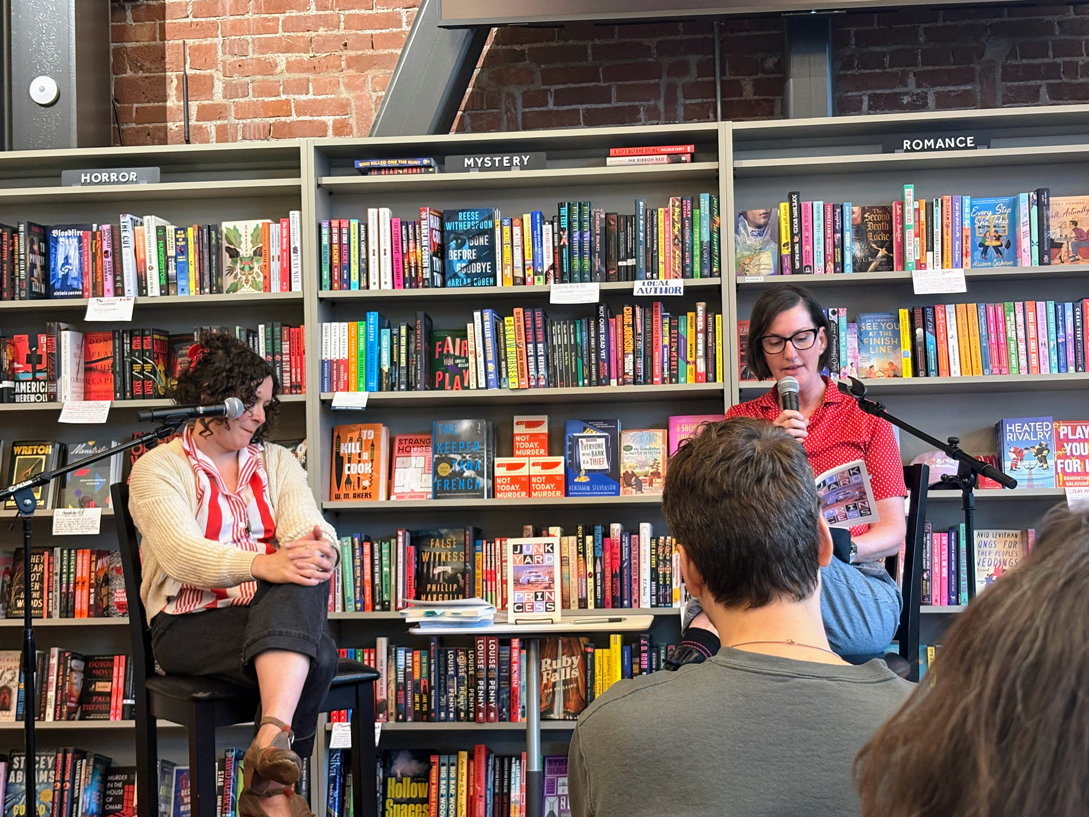
Wilson calls her book a “memoirella” because it doesn’t follow one specific narrative — it revisits the early years in the junkyard, her father’s troubled family history, and the challenges her extended family has faced in the last few years. While she also explores themes of intergenerational trauma, sexual abuse, drug addiction and mental health, her insights are compassionate, forgiving, and much of the time, laced with humor.
During her time at CSUSB, Wilson said she was exposed to possibilities she had never imagined for herself. “It made me realize that it was possible to explore a life outside the one I had already lived,” she said. “I didn't know that until I got to school, and I was separated from my family, that I could have a path that belonged solely to me and still be connected to my family. It made all the difference.”
After graduating, Wilson went on to become a museum installer at Scripps College, where she met her future husband. She later lived in Japan for a year, earned a master’s in professional writing at Portland State University, and built a career that has included work as a communications consultant, bike shop owner, mountain bike coach and community activist. Today, she lives in Salem, Oregon, with her husband, daughter and their dog.
For students who feel caught between where they come from and where they want to go, Wilson falls back on her experience as a mountain bike coach.
“When you approach an obstacle, if you slow down, you're just going to be stuck there. But if you speed up, you’ll have momentum,” she said. “You'll get to the other side, and you'll realize that you're stronger than you thought you were.”