Alan Llavore | Office of Marketing and Communications | (909) 537-5007 | allavore@csusb.edu
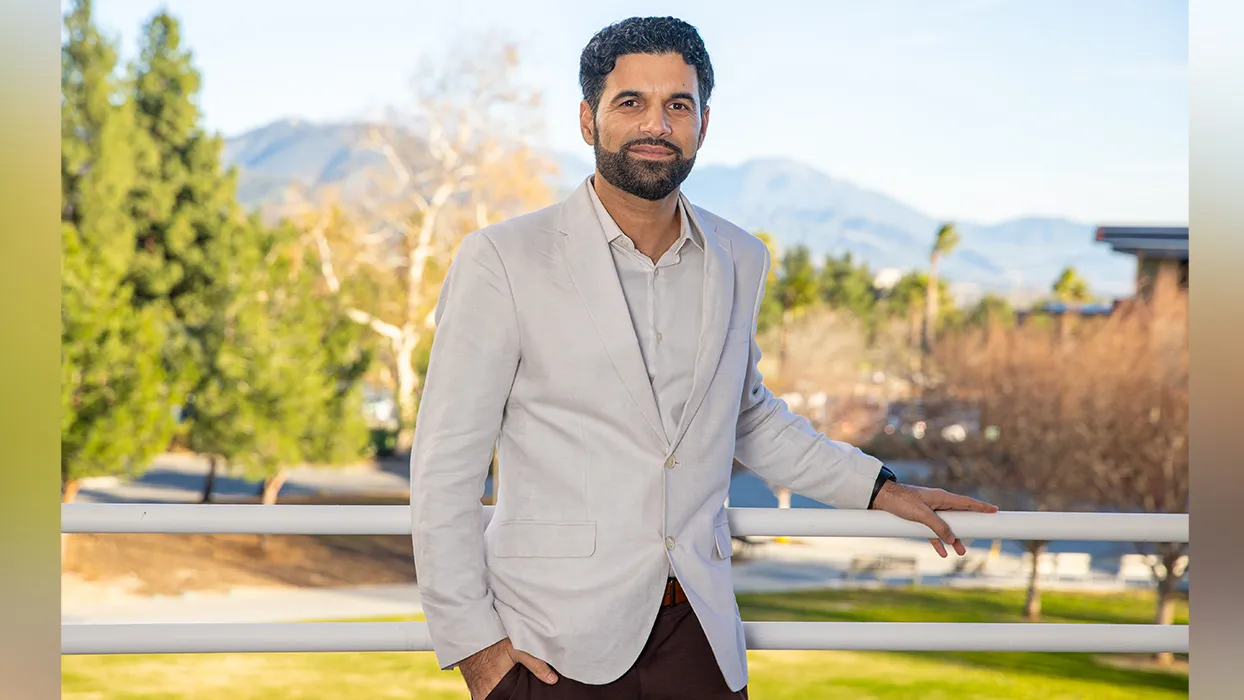
Bilal Khan didn’t come to Cal State San Bernardino to keep his work confined to a lab or a journal. As an associate professor in CSUSB’s School of Computer Science & Engineering, he has created research spaces where students can work on real problems using real data — the kind of experience that helps them understand how what they learn in class applies beyond campus.
In Khan’s research groups, students work with complex data, test ideas and improve systems that must work in real situations, not just in theory. The work is collaborative and hands-on, helping students learn how to solve problems, adjust their approach and clearly explain their findings.
“At CSUSB, my students develop and implement complete machine learning workflows using real-world data,” Khan said.
The university offers “great opportunities for students to get exposed to not only lab-based research but presentations at the university level, as well,” he said.
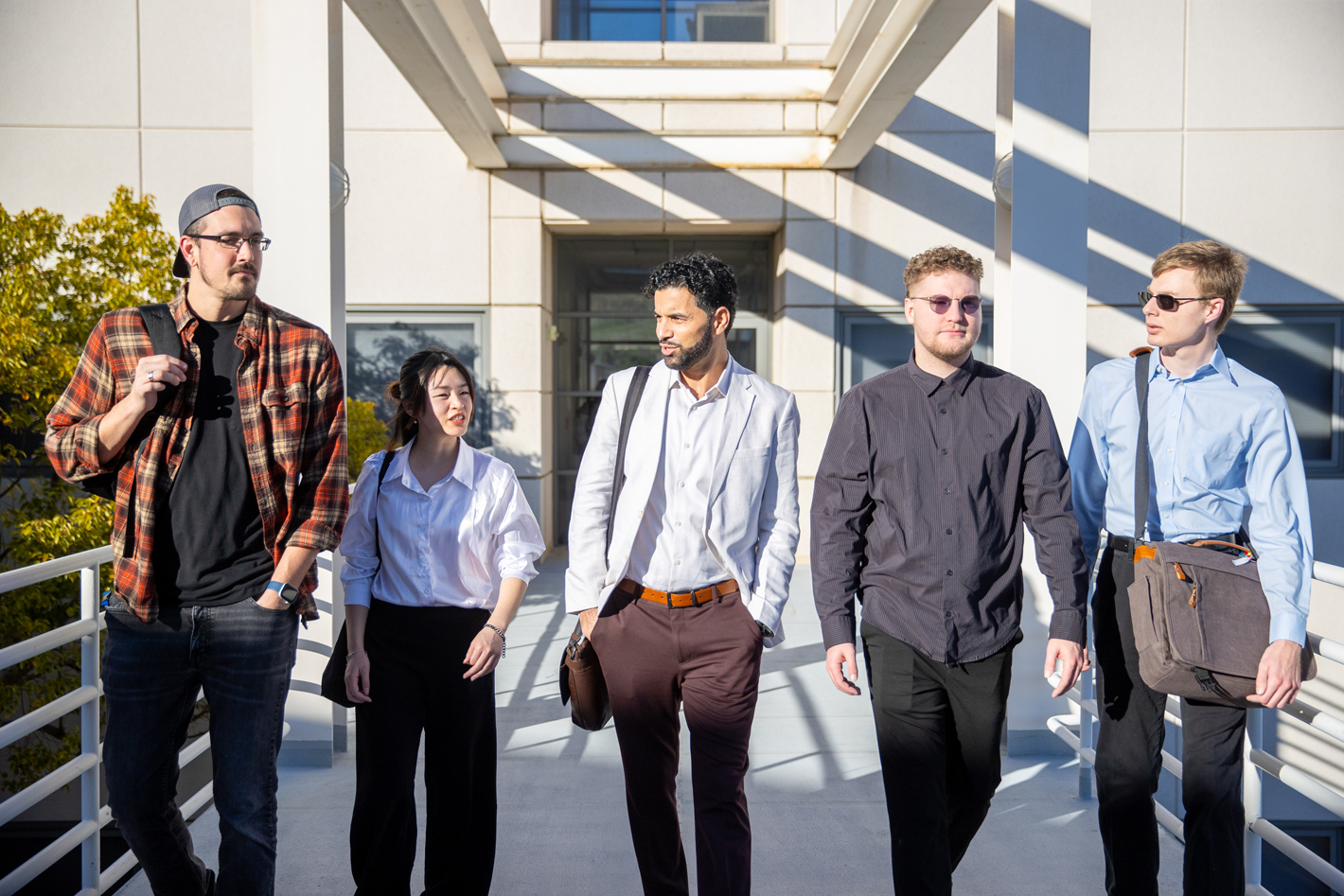
Student contributions have also gained momentum beyond campus. “Quite a few of my students have been publishing and presenting,” he said.
For students, those opportunities often begin with simply raising a hand and being willing to try something new. Ha Trinh, who earned her bachelor’s degree in computer science from CSUSB in December 2025, credits her research experience with helping her build confidence and discover a new direction for her career.
“I went from knowing nothing about research and how to work with my peers on big projects to literally managing one of Dr. Khan’s biggest research projects,” Trinh said. “Doing the research here really opened my eyes on what I want to dig into and do in my future career.”
Experiences like Trinh’s reflect how student involvement in Khan’s research can grow over time, from initial curiosity to meaningful responsibility. Across multiple projects, Khan brings students into faculty-led research collaborations — including his long-running water-system research — where they work alongside faculty and institutional partners on work with real-world impact.
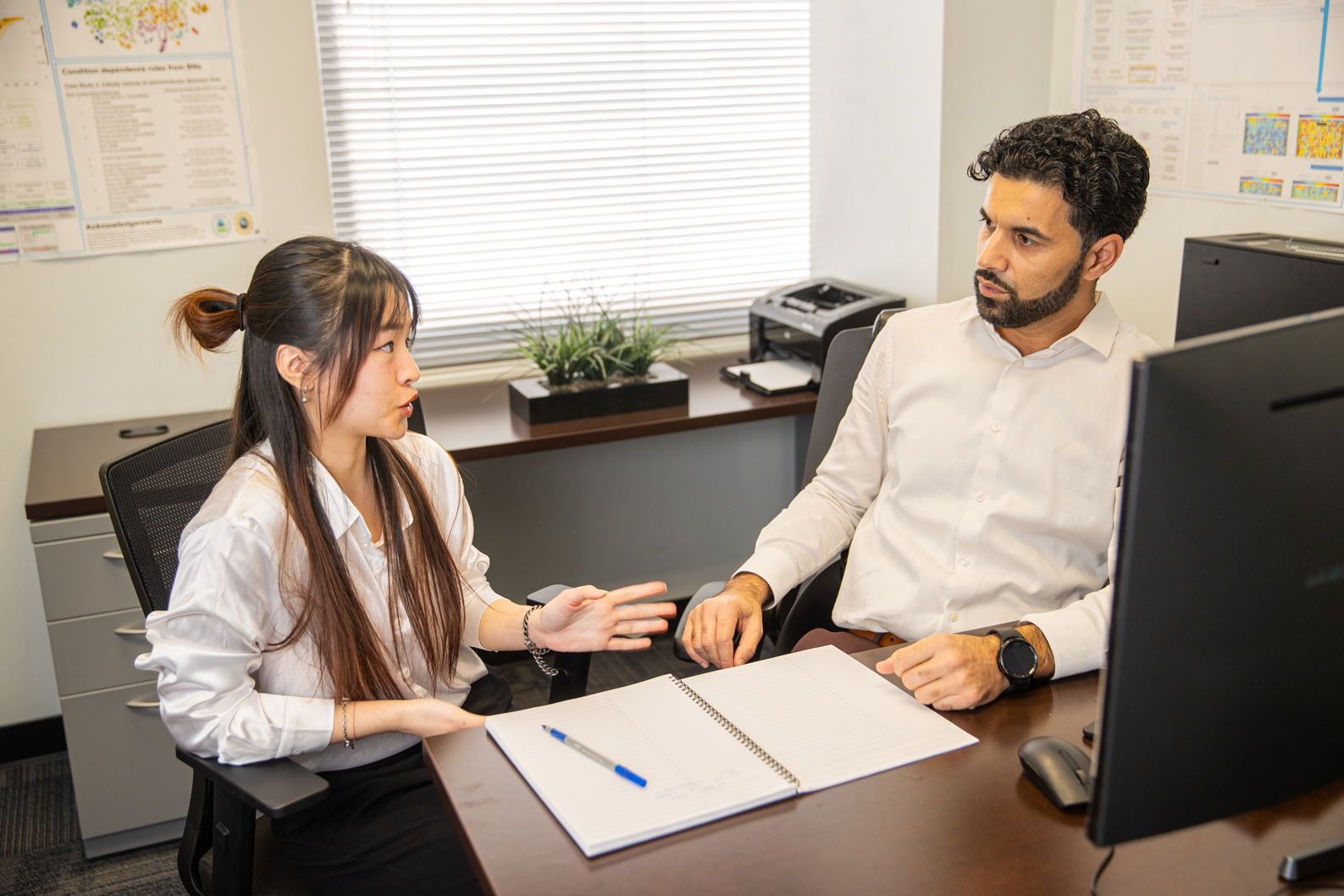
When Khan joined CSUSB, he continued research he began at UCLA, serving as co-principal investigator on a jointly led water-system project with UCLA, alongside collaborators including Lawrence Berkeley National Laboratory.
This research focuses on improving access to clean drinking water in small and disadvantaged agricultural communities across California. In many of these areas, geography and limited infrastructure have made it difficult for residents to rely on safe, centralized water systems.
“These systems are novel because there are no other small-scale and remotely monitored systems serving the disadvantaged communities here in California,” Khan said of the system developed during his research study.
Students are invited into this work directly. Michael Clement, who earned his Master of Computer Science degree from CSUSB in May 2025, said Khan personally encouraged him to join the water treatment project after noticing his work in class. Through that invitation, Clement became part of a research team that included faculty and researchers from UCLA.
“I worked alongside many different researchers, chemical engineers, computer scientists at UCLA,” Clement said. “I feel like the opportunities provided here by Dr. Khan and the school itself rivaled even what those [UCLA] students were receiving.”
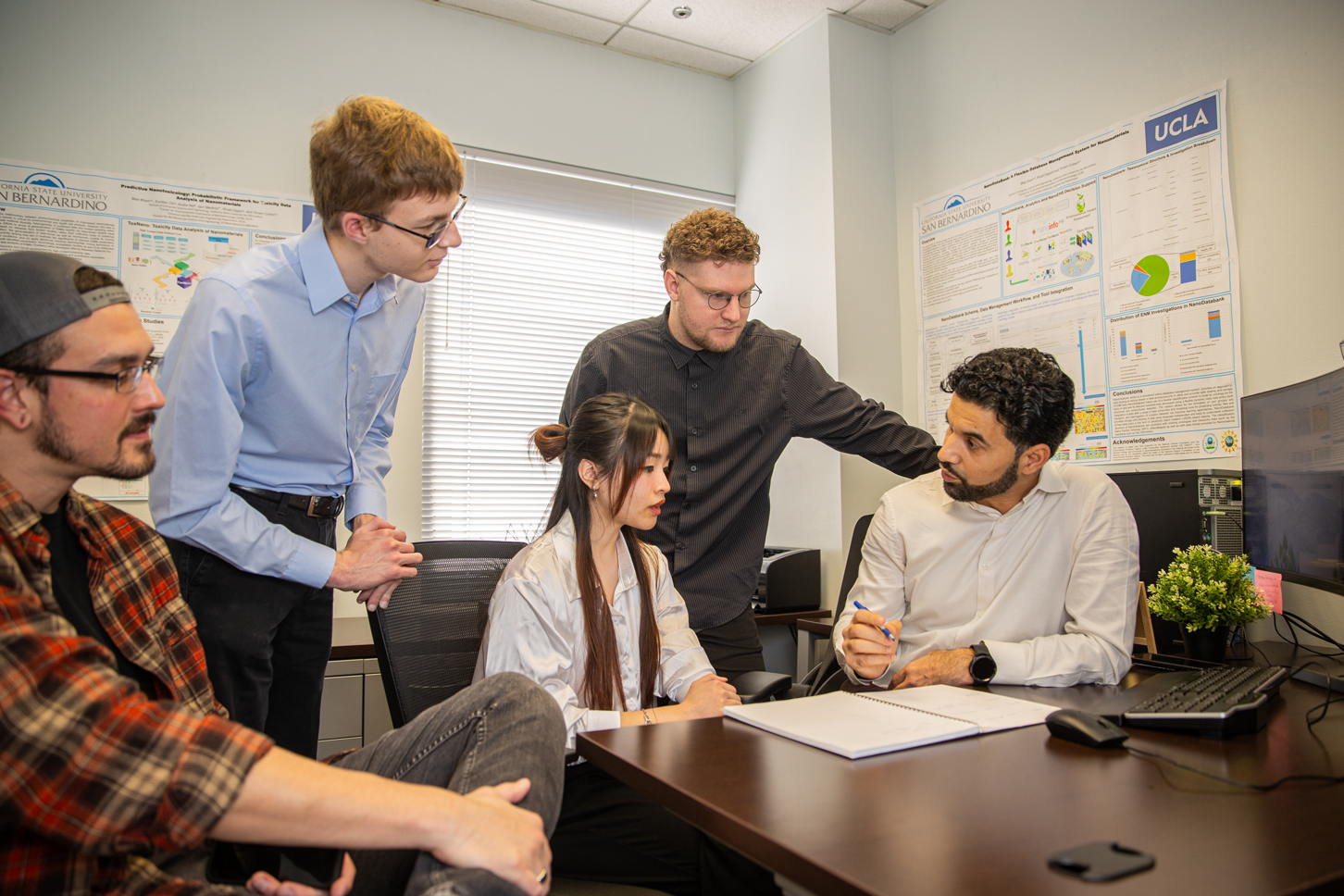
For 10 years, research teams from CSUSB and UCLA designed, installed and operated distributed water treatment and desalination (DWTD) systems at sites across California. Student researchers were part of this work, helping review data, evaluate system performance and support ongoing improvements.
The team also studied how these systems compare to bottled-water delivery. Their analysis showed that treating water locally through DWTD systems used far less energy and produced far fewer emissions. In fact, the systems generated about 400 times fewer greenhouse-gas emissions and used about 1,000 times less energy than supplying bottled water to the same communities. This mattered because it showed that small communities could gain reliable access to clean water without creating new environmental problems.
After a decade of testing and data collection, Khan, student researchers and collaborators shared their findings with California state regulators and officials in 2024. Their work helped support a statewide policy change that removed barriers for small communities to install and operate local drinking-water systems without needing expensive infrastructure upgrades.
“It was delightful to hear comments about our team doing an amazing job,” Khan said, reflecting on that moment, when years of research led to real change.
As a result of this policy shift, DWTD systems have expanded in underserved agricultural communities in the Salinas Valley. So far, these systems have delivered more than 6 million gallons of safe, drinkable water, giving communities reliable access to clean water close to home.
Khan’s work shows what research at CSUSB can look like: collaborative, student-inclusive and focused on real-world impact.
“I think it’s wonderful to engage in authentic and real-world work which has broader intellectual and societal impact,” he said.