Alan Llavore | Office of Marketing and Communications | (909) 537-5007 | allavore@csusb.edu

As a student at Cal State San Bernardino, Erik Hollins (they/them) — then known as Erik Frost, before taking their married name — had a habit of staying on campus until dark. After a day of classes, campus work and student activities, Hollins often found a few quiet minutes to themselves.
“I would just walk the campus before I went home,” they said, “seeing the space, being part of it.”
Hollins hadn’t expected CSUSB to feel quite so much like home. They grew up in a military family, spent part of their childhood in Germany and graduated from Cajon High School in their hometown of San Bernardino. When their mother’s health declined, staying close to home became important. CSUSB became the clear choice for college, however, Hollins had no idea where a degree from the university might take them.
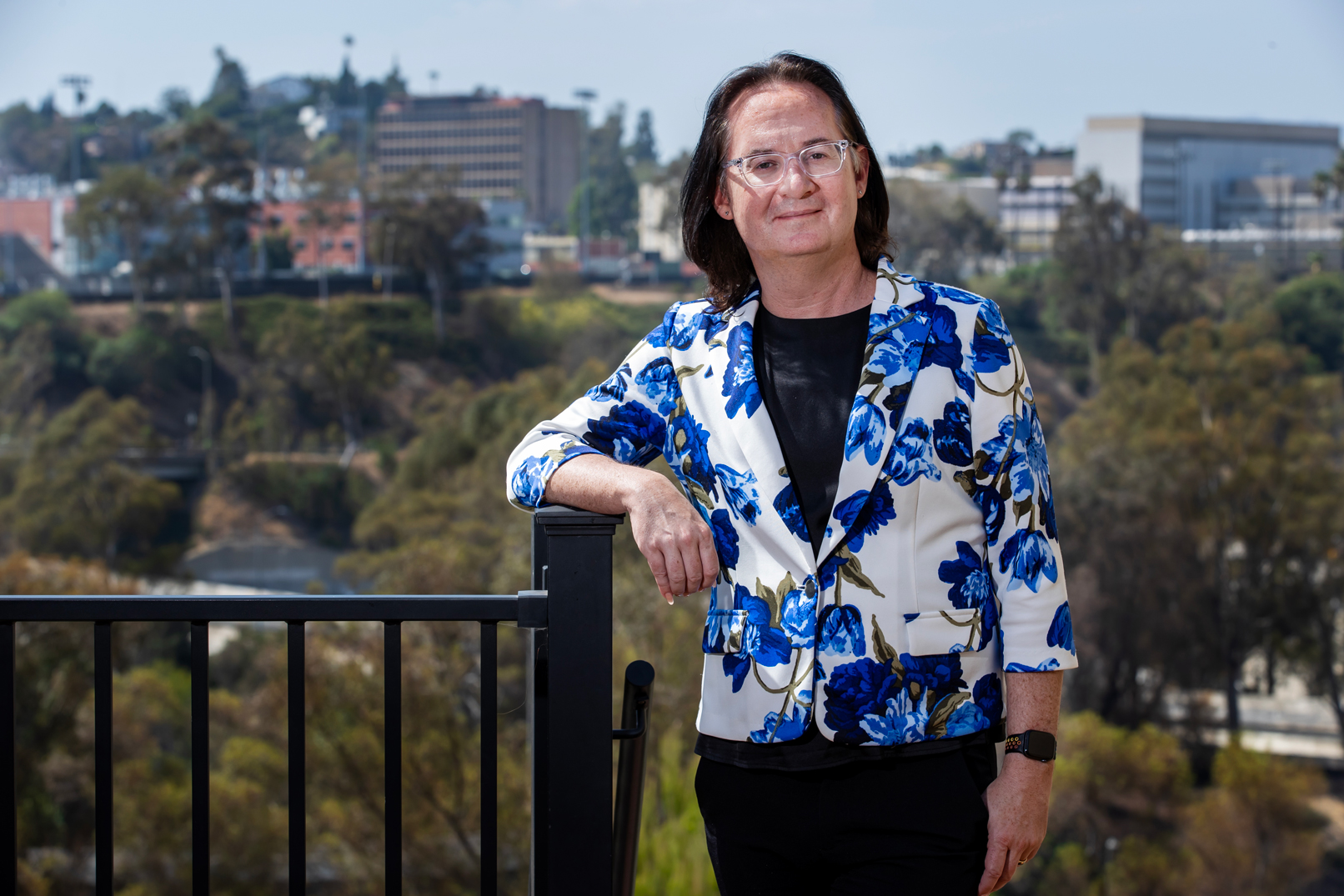
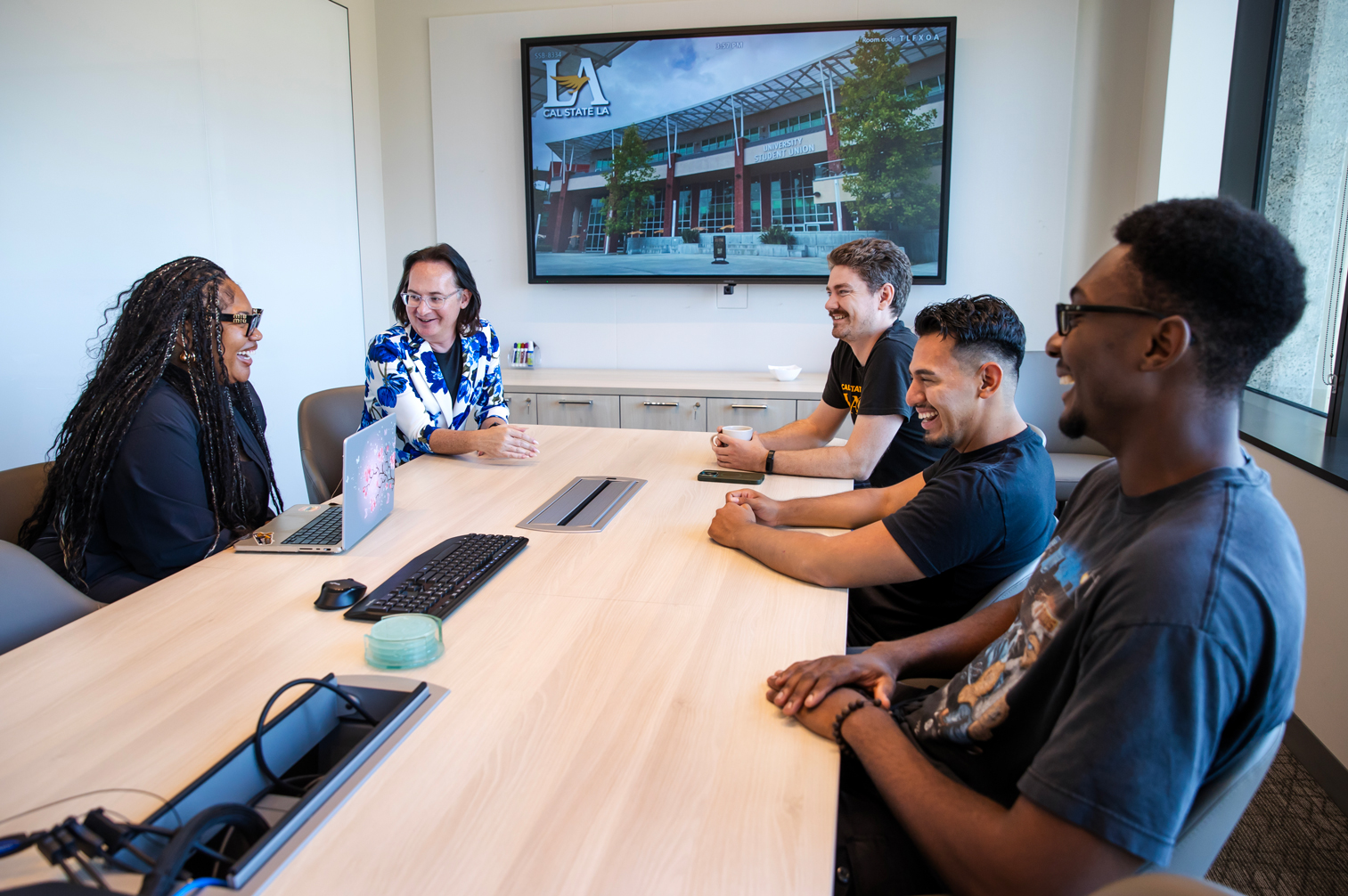
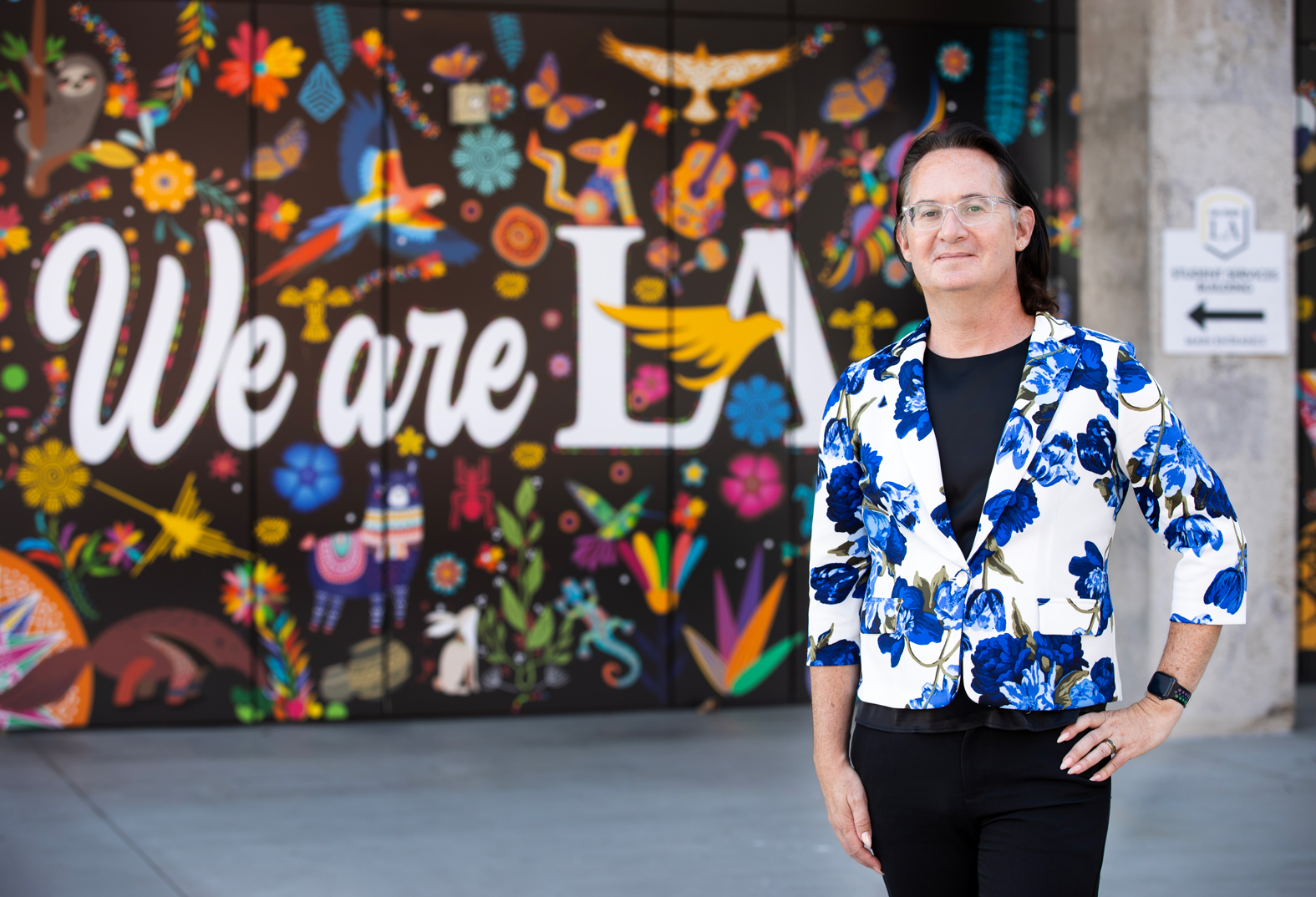
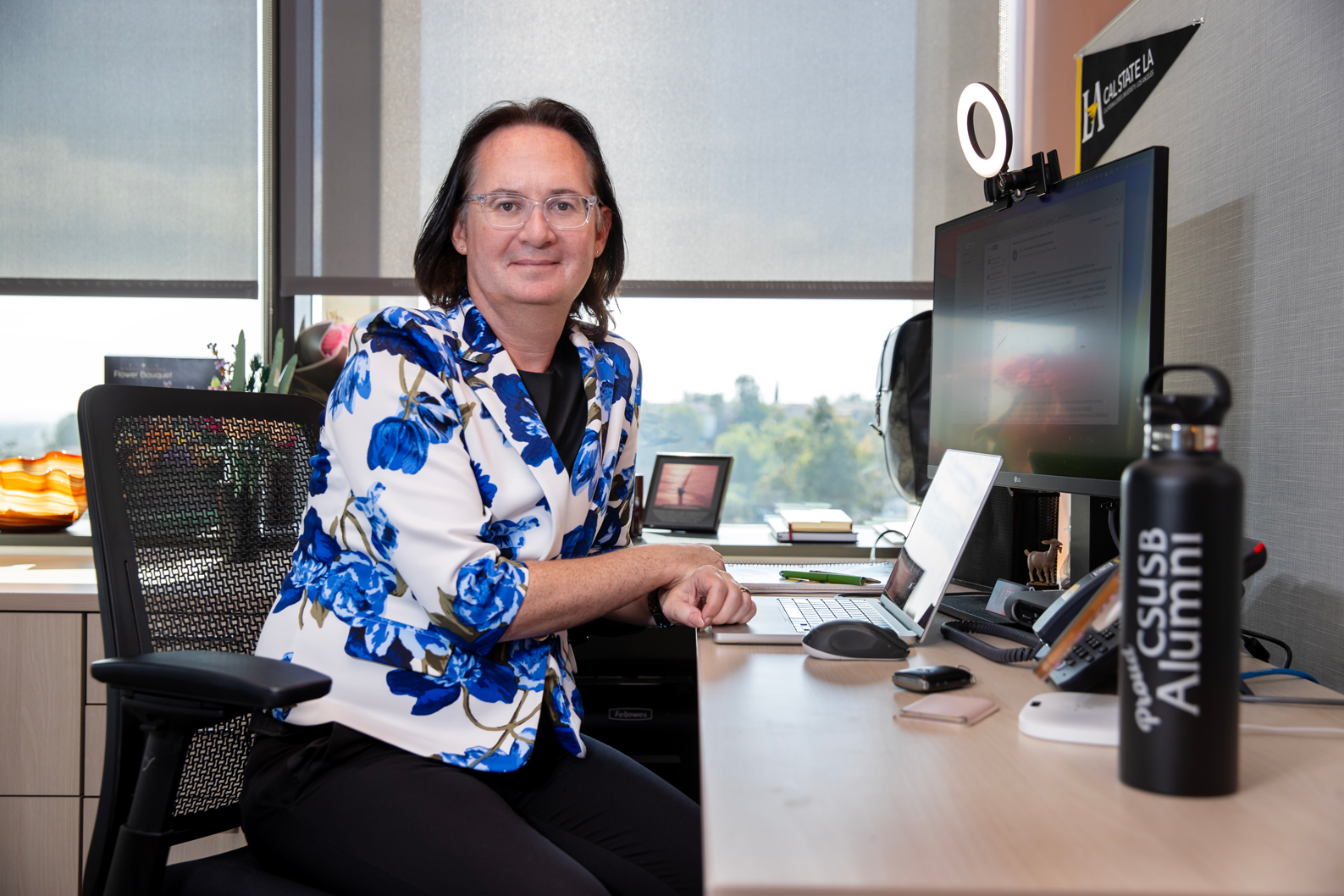
Today, Hollins serves as executive director of strategic communications at Cal State LA. They advise university leaders and lead a team of writers, designers, photographers and other communications professionals.
When Hollins arrived at CSUSB, a career in communications wasn’t on their radar. Economics had caught their interest through Parviz Asheghian, a CSUSB professor and the father of one of their best friends, while a curiosity about international affairs drew them to political science. Hollins chose to study both and see where their interests led.
In their first year, Hollins jumped into an upper-division international relations course taught by Professor Ralph Salmi. They found the class daunting at first, but Salmi’s high expectations pushed them to grow. Their performance prompted Salmi to encourage Hollins to apply for CSUSB’s National Model United Nations (Model UN) program the following year. The invitation came with a challenge: Hollins still had to take the placement test and earn a spot on the team. Hollins did.
Once on the team, they spent semesters researching, writing and preparing for Model UN, followed by trips to New York. There, Hollins and their teammates represented countries, debated proposals and worked with students whose priorities differed from their own. Getting an idea into the committee’s final work took more than a persuasive argument. It took listening, negotiating and finding a way forward together.
“That really set up, I think, a lot of the communication skills and work that I have now taken into the rest of my career,” Hollins said. “Not just the debate piece of it, but the diplomacy piece of it, as well.”
Back on campus, there seemed to be another invitation around every corner. Hollins worked in computer labs, spent time in the alumni office and got involved in student activities. They chaired the student union board and served as president of Associated Students Inc., representing CSUSB before policymakers and the CSU Board of Trustees.
Student leadership gave them decisions to make, too. As student union chair, Hollins helped oversee a building, its programs and its budget priorities. Although the stakes felt real, they weren’t left to figure everything out alone. Salmi, Asheghian, former alumni director Pam Langford and then-President Albert Karnig were among the people Hollins turned to as their responsibilities grew.
“You weren’t doing it in a vacuum,” Hollins said of his time in student leadership. “You were still involved and making the decision ultimately. And I think that was a really empowering thing as a student to experience.”
Hollins also helped a friend establish CSUSB’s Queer and Transgender Resource Center and secure its first space. Hollins identifies as queer today, but during their student years, they were still struggling to understand and accept that part of themselves.
“I always had a toe in, but would never let myself fully enter,” Hollins said. Through the friendships and community they found at CSUSB, they began to imagine a life with more room for who they were. Acceptance came gradually. “The seeds were planted at CSUSB.”
In 2006, Hollins graduated with bachelor’s degrees in economics and political science, a certificate in international relations and highest honors. As a Distinguished Undergraduate in the College of Social and Behavioral Sciences, they were the last to cross the stage at their commencement ceremony. The crowd was already cheering when Karnig greeted them with a hug.
Hollins has held on to that moment. On days when they wonder whether they’re up to a challenge, they remember the applause, the embrace and the people who helped them get there.
Hollins thought graduation would put them on the path to becoming a professor. Then a friend and former ASI president called about an opening in California Gov. Arnold Schwarzenegger’s office. The pitch was simple: “We know you can write.”
Hollins became a constituent affairs representative for the governor’s office in 2006. For someone just beginning their career, working for a governor with a larger-than-life public persona could have been intimidating. What stayed with Hollins, though, was seeing the people behind the public roles.
Schwarzenegger and other senior leaders sometimes asked what Hollins was hearing from Californians — and wanted their opinion, too. That experience gave Hollins confidence to speak up, even as the most junior person in a room. It also sharpened their sense of what good public communication could sound like. They noticed that when officials explained a policy one-on-one, they could make it clear and relatable. Put a camera in front of them, Hollins said, and “policy speak came out.”
“Why can’t we explain things the way human beings explain to each other when we’re just sitting across a table?” Hollins wondered. Bringing that human tone to the voices of leaders and institutions became a thread running through Hollins’ career.
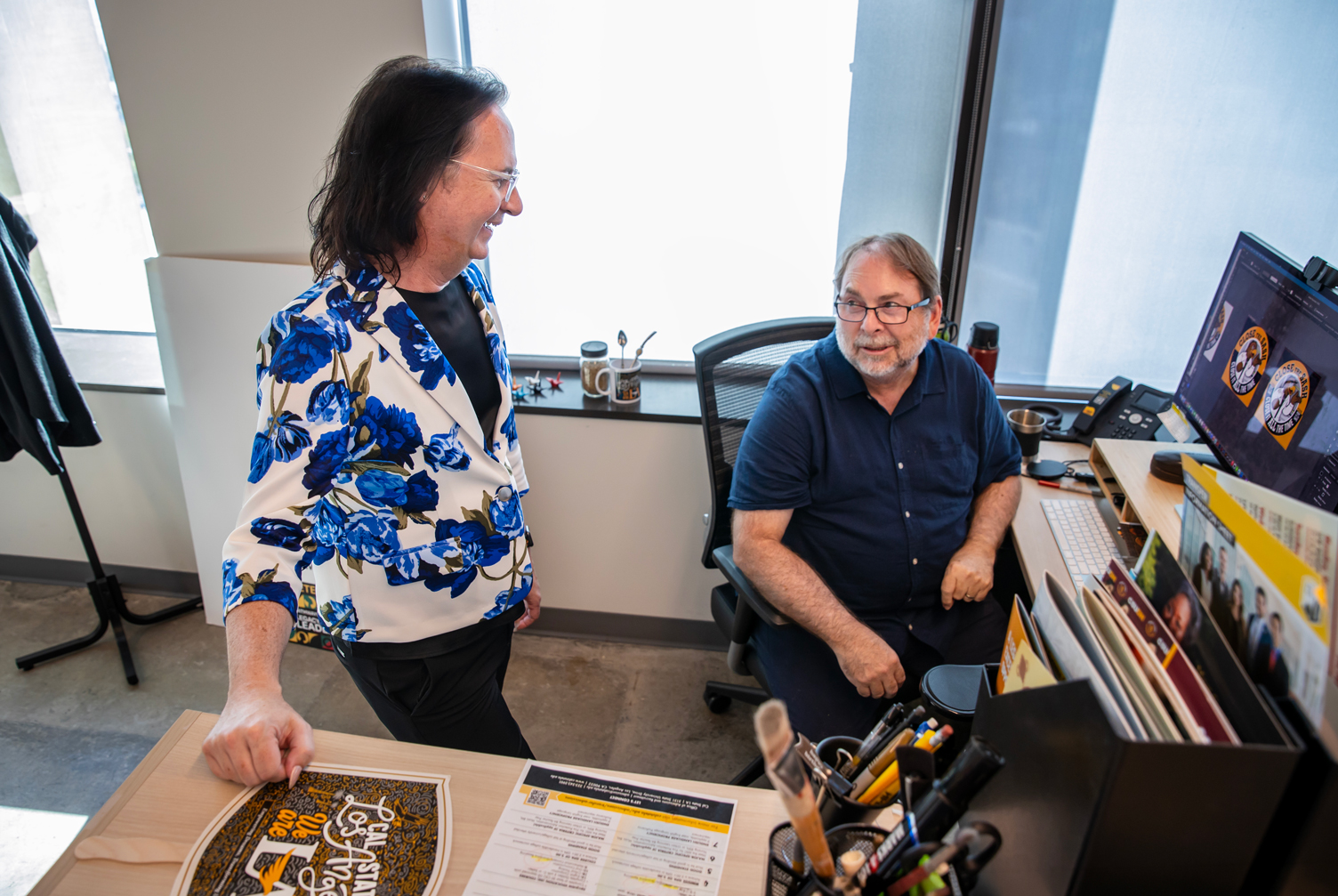
After the governor’s office, Hollins worked for a national public relations agency. They later founded the department of executive writing at the CSU Chancellor’s Office and took on leadership roles at Coast Community College District. At each stop, Hollins drew on skills they had developed at CSUSB: understanding how institutions work, listening to people with different perspectives and explaining complex issues in ways people can understand.
At Cal State LA, Hollins sees in their team the same potential their CSUSB mentors saw in them. They give colleagues room to make decisions, develop their expertise and prepare for opportunities that may take them beyond their current roles.
“I think that faculty mentor side of me never really went away,” Hollins said.
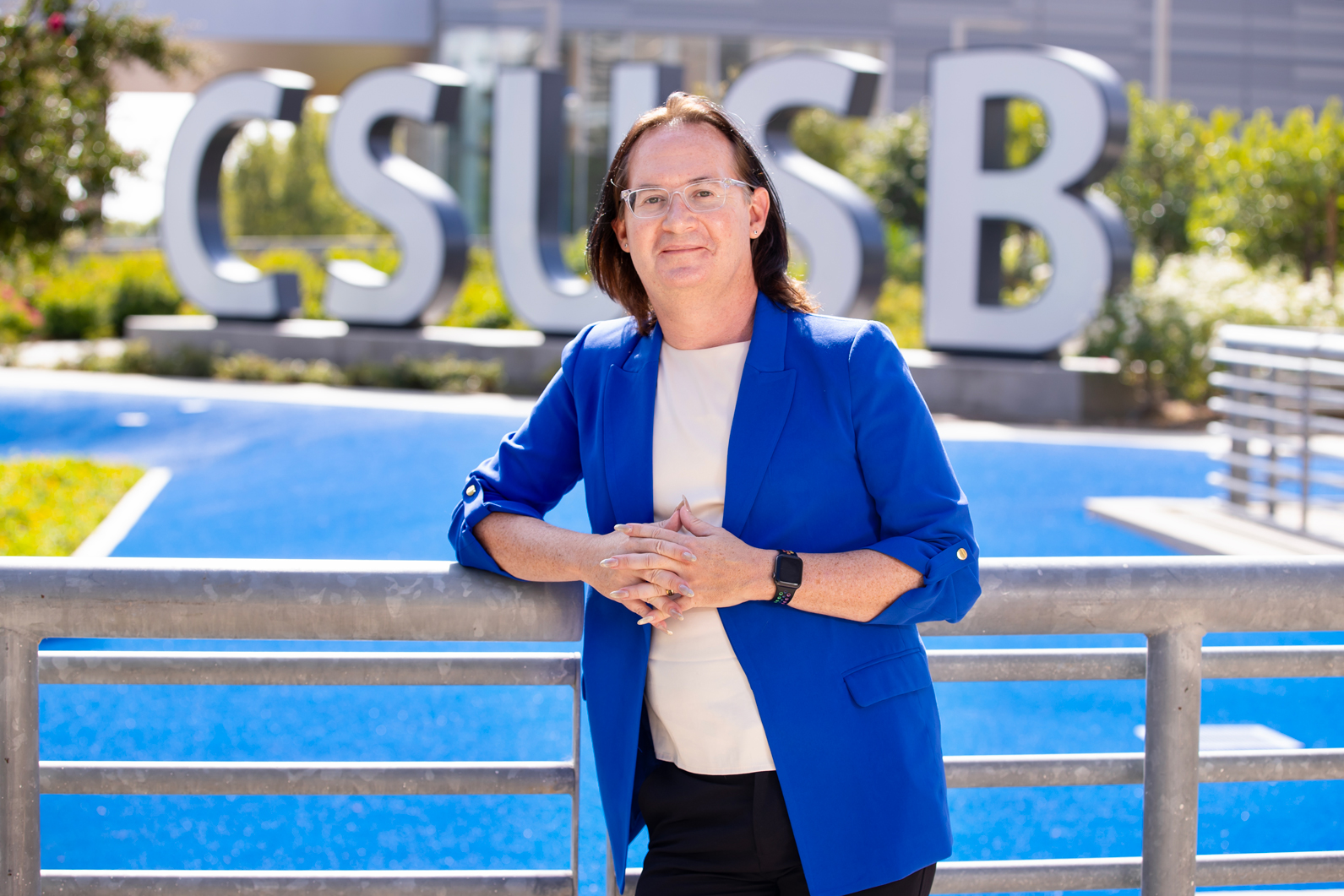
When they think back on CSUSB, they remember how often an invitation began with someone saying, “We need someone to do this.” Each invitation asked Hollins to try something new, and each came from people who believed they could learn. Now they offer others that same trust.
“I don’t know where I would be without my Cal State San Bernardino experience,” Hollins said. “So many of the definitive relationships of my life, so many of the skills that I have been able to move into a career … all came from my experience at San Bernardino.”
Watch this video to hear Erik Hollins share how their student involvement at CSUSB helped build skills they still use today.