Alan Llavore | Office of Marketing and Communications | (909) 537-5007 | allavore@csusb.edu
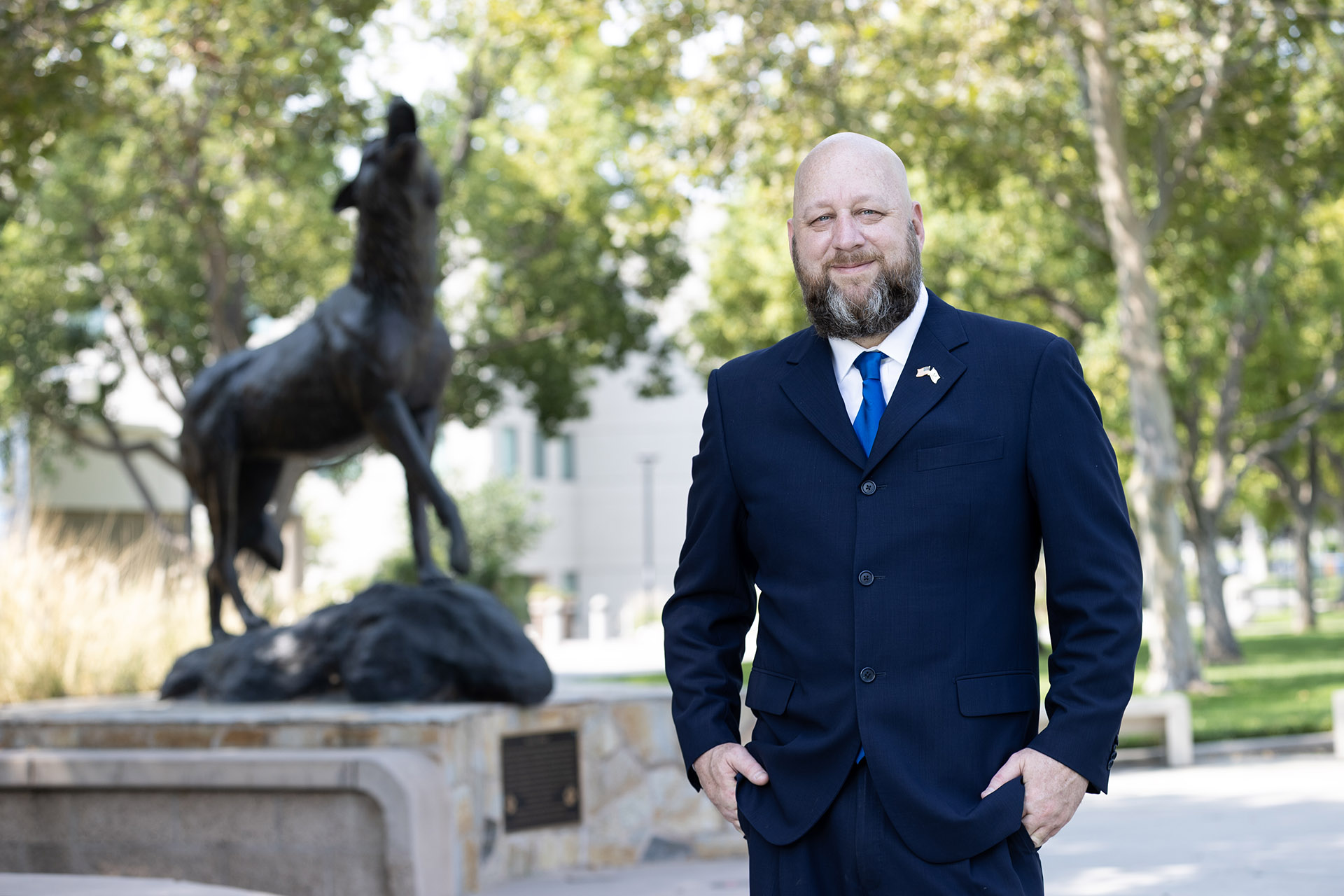
For Damian C. Duncan, studying finance is not simply about understanding how money moves. It is about learning how to move communities forward.
The Cal State San Bernardino senior wants to build and lead nonprofit organizations that help families create stability through housing, finance, education and support services. His academic achievement, perseverance and community service have now earned him the highest student distinction in the California State University system.
Duncan has been named the CSU Foundation Board Member Michael A. and Debe Lucki Scholar and is one of 22 students selected for the 2026 CSU Trustees’ Award for Outstanding Achievement. He and the other recipients were honored on Sept. 22, during a special ceremony at the CSU Board of Trustees meeting in Long Beach.
“I was very humbled and surprised,” Duncan said of learning that he had received the award. Once he understood its significance, he said, the recognition also brought a sense of responsibility.
“It was a wow moment for a couple of days,” he said. “And then I said, ‘Wow, I’ve got to get to work now pretty intensely.’”
The annual CSU Trustees’ Award recognizes students who demonstrate superior academic performance, personal accomplishment, community service and financial need. Since the program began in 1984, more than 500 CSU students have received the honor.
Duncan’s path to the award included military service, a career in real estate and finance, work assisting low-income families and a return to college amid personal and financial challenges.
A U.S. Army veteran, Duncan left the military in 2004 and began working in real estate and finance, helping people become homeowners. He later moved into the nonprofit sector, where he found a stronger sense of purpose.
“You’re not just financially fulfilled,” Duncan said. “You like going to work.”
As director of housing programs at Neighborhood Housing Services of the Inland Empire, Duncan provided housing counseling, financial education and access to resources for low-income families. The work allowed him to see how financial knowledge could change a person’s outlook.
“You could do 20 housing counselings, and it’s that one client that you’re talking to and you see it when the light goes on,” he said.
That moment might come when a client who had been learning about budgeting, credit and saving for a down payment began bringing new ideas and strategies into the conversation.
“It’s that moment where it shifts,” Duncan said. “You see, ‘OK, I accomplished that mission. Let’s go to the next 20.’”
Duncan worked through service-related injuries and severe personal and financial hardship before resuming his education in 2023. In the years following the COVID-19 pandemic, he also became a single parent. He graduated with honors from San Bernardino Valley College before transferring to CSUSB.
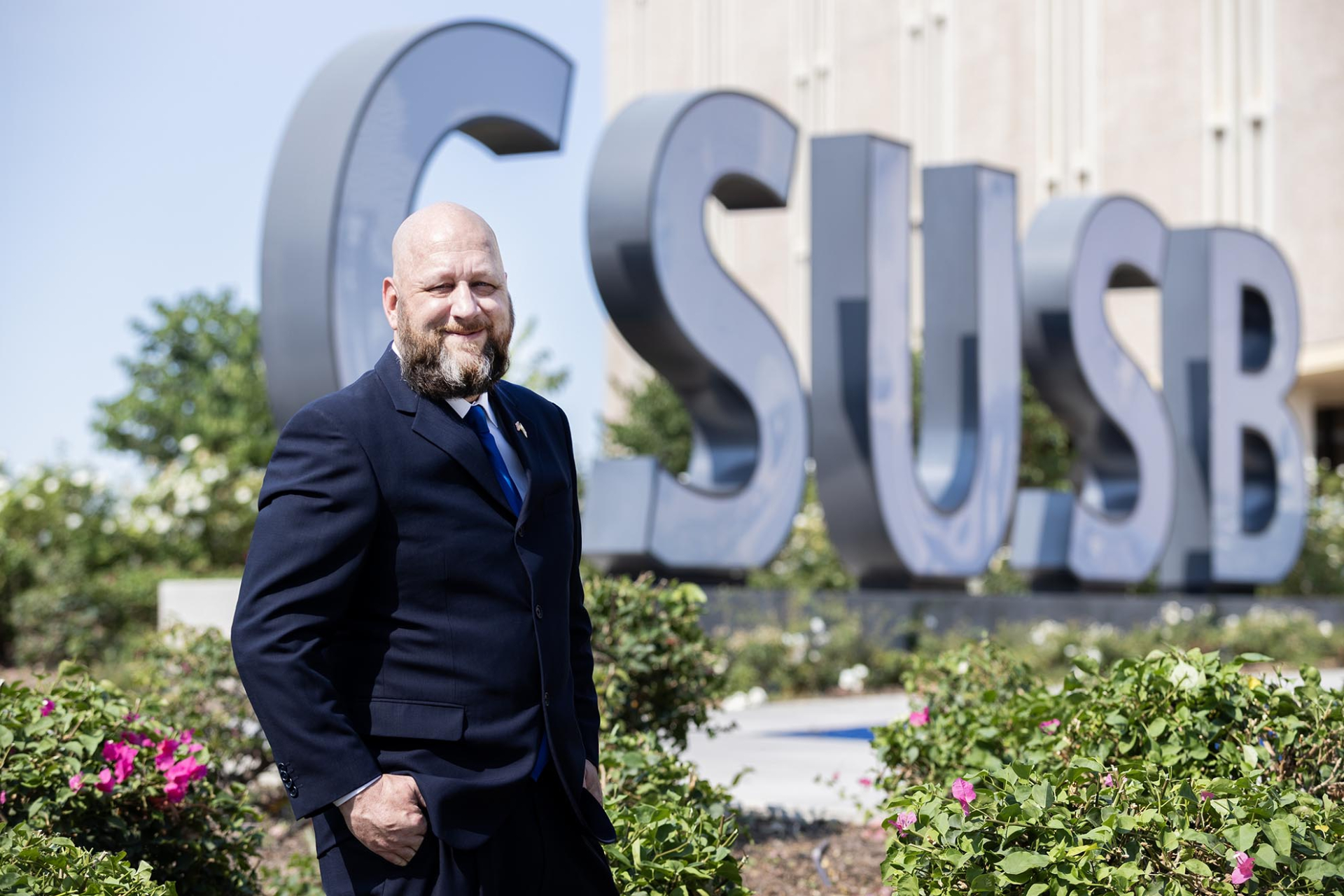
A first-generation college student who graduated from Yucaipa High School, Duncan said college had long been part of his plans. What changed with time was his understanding of why he wanted an education.
“When you first start going to college, you don’t have any idea what you want to do,” he said. “You’re going to get a degree, go to work for someone and be rich. That’s what you think.
“Now I know exactly what I need to learn,” he added.
Duncan chose finance because he sees sound financial planning as essential to effective nonprofit work. Charitable organizations, he said, must be able to sustain themselves if they are to fulfill their missions over the long term.
“A lot of the issues that I see with nonprofits’ inability to do their mission have to do with financing issues and planning issues,” he said.
His professional experience also introduced him to community development financial institutions, or CDFIs, which provide financial products and services in low-income and underserved communities. Duncan believes access to capital can help communities put promising ideas into action and create lasting growth.
At CSUSB, he found professors who made complex material understandable and immediately applicable to his goals.
“I’m glad I came, for one,” Duncan said. “I’ve been impressed so far, just even my first semester, just the level of professors and how they taught, how I understood the material. It was just amazing.”
Duncan expects to complete his bachelor’s degree in finance in 2027 and is interested in continuing into a blended graduate program.
He currently serves as executive director of the United States Council for the Protection of Children and Families, a nonpartisan public-interest research institute focused on child welfare systems, institutional design, procedural safeguards, and evidence-informed reform.
Duncan said the developing organization will bring together people with varied perspectives, partner with academic institutions and examine data to identify ways to improve child welfare policy and practice.
“I need everybody at the table,” he said. “Every different kind of faction, I believe, has a small piece to the puzzle.”
The organization’s work will take time, he said, because of the system’s complexity and the sensitivity of the issues surrounding it. Its long-term goal is to provide policymakers with evidence about approaches that have proved effective.
Duncan also understands that leading such an effort will require him to become more comfortable speaking publicly and reaching out to communities. He said he has deliberately begun challenging himself in those areas, including through a business communications course at CSUSB.
The Trustees’ Award reinforces that effort while recognizing how far he has already traveled – from military service and financial hardship to honors graduate, nonprofit executive and university scholar.
“It is with tremendous pride that I celebrate the outstanding academic achievements and remarkable perseverance of this year’s Trustees’ Award scholars,” CSU Chancellor Mildred García said. “Thanks to the visionary generosity of our donors, the CSU is able to recognize these exceptional scholars who have overcome significant challenges in pursuit of a college degree that will not only transform their lives but will also elevate their families and strengthen their communities across California.”
For Duncan, that transformation begins with knowing precisely why he is in college: to develop the financial knowledge needed to build organizations that serve families responsibly, effectively and sustainably.
“I know exactly the points that I need to learn,” he said, “to make this system better.”