Alan Llavore | Office of Marketing and Communications | (909) 537-5007 | allavore@csusb.edu
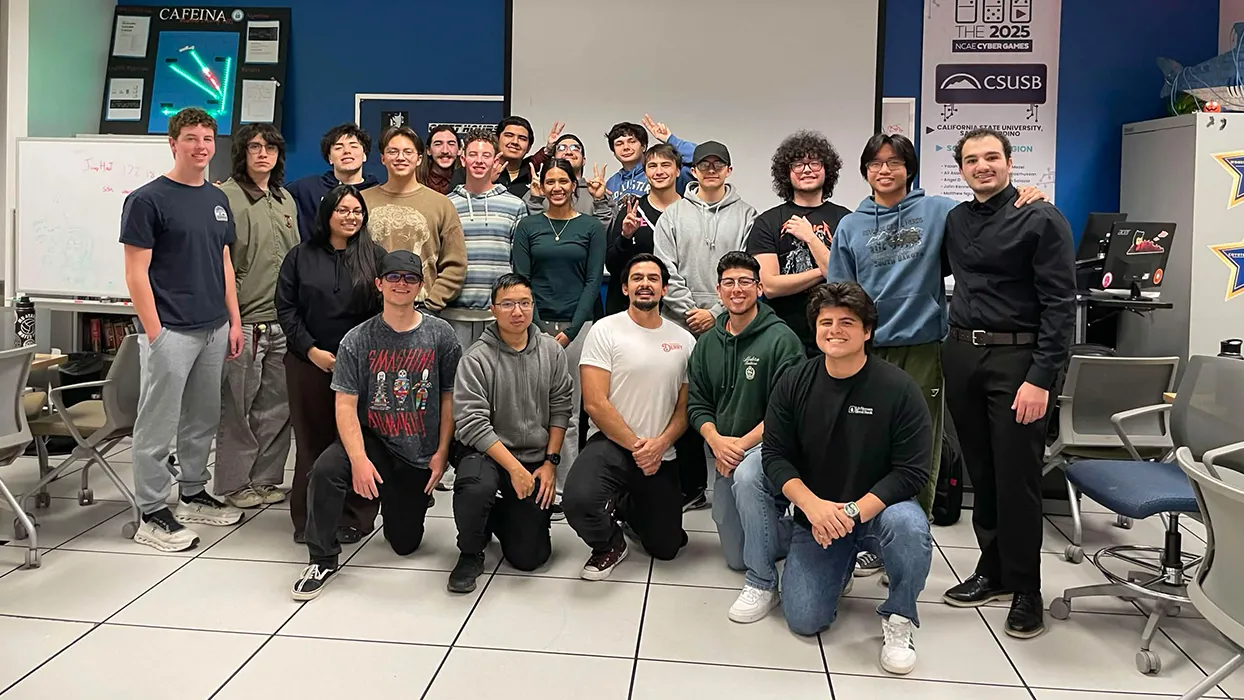
Cybersecurity students at Cal State San Bernardino gathered in the Cyber Intelligence and Security Organization (CISO) lab early on a Saturday morning, laptops open and conversations already in motion. As the National Centers of Academic Excellence (NCAE) Cyber Games Southwest Regional Competition got underway, the room quickly filled with focus, urgency and collaboration.
Although the competition was held online, CSUSB teams chose to compete side by side, creating an environment that mirrored the teamwork required in the field.
“Our teams met in the CISO lab so we could work together, and communication is key for this competition,” said Noah Pond, a CSUSB freshman studying information systems and technology with a concentration in cybersecurity. “I heard before competing how fun it is and how you can build camaraderie with your team through all the training, and it was all true.”
That sense of connection translated into strong results. Three CSUSB student teams competed against universities from across the Southwest, with one team earning first place, another securing fourth place, and a third demonstrating resilience and steady performance throughout the day.
The NCAE Cyber Games is designed to simulate real-world cybersecurity environments, where students must defend systems, respond to live threats and solve complex challenges under pressure. The fast-paced format pushes participants to apply technical knowledge while working collaboratively to adapt in real time.
For many students, the experience revealed an unexpected dynamic.
“What surprised me the most is that the other teams are not there to discourage you,” Pond said. “They want your team to succeed and do your best. Everyone was very helpful, and it created a great learning experience.”
Across the room, that same energy carried through each challenge. Students shifted quickly between tasks, troubleshooting issues, monitoring systems and communicating constantly as conditions evolved.
“I loved that our team was together in the CISO club room competing because it made the experience more fun and less stressful,” said Allegra Ramirez, a CSUSB junior studying information systems and technology with a concentration in cybersecurity and a member of Women in Cybersecurity (WiCyS). “In the competition, things were constantly changing quickly, so making sure to stay on top of your service gave me great hands-on experience.”
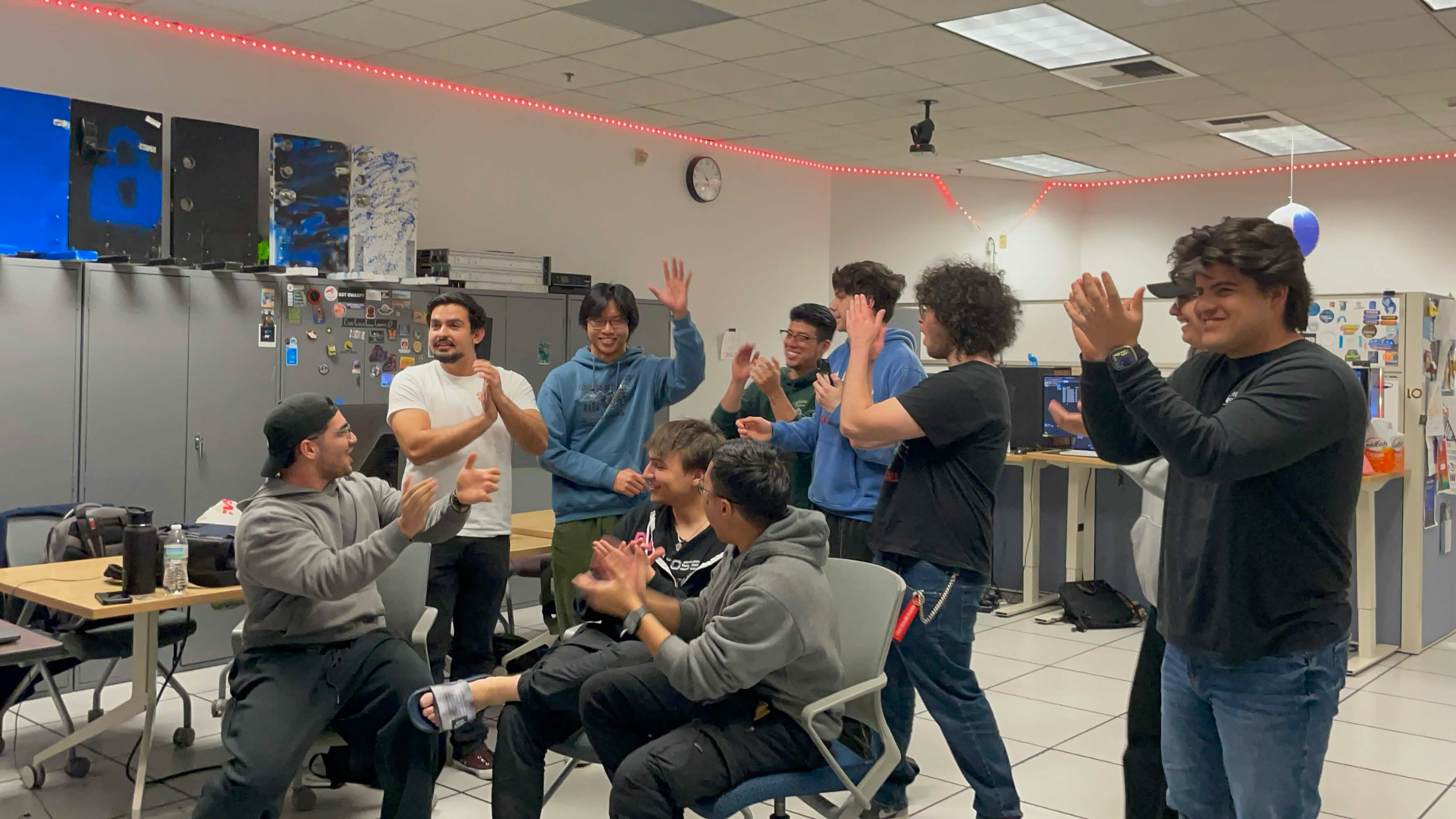
Unlike traditional competitions focused primarily on static challenges, the Cyber Games introduced a more dynamic element, with opposing teams actively working to disrupt systems.
“In NCAE Cyber Games, teams are actively trying to take your service down constantly, which made it really exciting,” Ramirez said. “It gave me more insight into what cybersecurity jobs are like because you are working in a team and applying what you’ve learned in real scenarios.”
Preparation for that level of intensity begins well before competition day. Student organizations such as CISO and WiCyS play a central role in building both technical knowledge and confidence through mentorship, peer learning and hands-on practice.
“Talking to previous competitors gave me great insight into what to expect, and our NCAE Warriors project teaches you how to set up your infrastructure,” Pond said. “Nothing prepares you like getting your hands dirty, and we were able to do that because of other CISO members at CSUSB.”
Participation in the NCAE Cyber Games is supported by CSUSB’s designation as a National Center of Academic Excellence in Cybersecurity, placing the university among a select group of institutions recognized for their commitment to advancing cybersecurity education and workforce development.
For students, the impact goes beyond competition results. The experience offers a direct connection between classroom learning and career preparation, reinforcing the skills needed to succeed in a rapidly evolving field.
“It exposes you to so many new things and builds skills that transfer directly into the workplace, like teamwork, troubleshooting, communication and adaptability,” Pond said. “Employers love seeing hands-on experience like what we did in NCAE.”
As the competition wrapped and systems powered down, what remained was more than a ranking. It was a shared experience rooted in collaboration, problem-solving and the kind of real-world preparation that defines CSUSB’s approach to cybersecurity education.