Becoming A Net Zero Waste Campus
CSUSB is committed to becoming a waste-free campus. At both the San Bernardino and Palm Desert campuses, we are actively working to divert materials from landfills and transform them into valuable resources through recycling, composting, reuse, and smarter purchasing. Here’s how we’re making progress, as we strive toward our goal of zero waste:
- More than 90% of construction and demolition waste from the Center for Global Innovation project was diverted from landfills.
- Procurement reported that 66% of items purchased by the University in fiscal year 2016/17 were from recycled content. Together, we can increase this number. The CSU system uses its purchasing power to support the recycling manufacturing industry and lower the demand for products made from virgin resources.
- Printing Services uses at least 30% recycled content for all paper products and offers waste-reduction options for banners and event materials.
- CSUSB has invested in pairing outdoor recycling bins with trash cans on campus to increase and encourage recycling. The recycling bins labeled only for bottles and cans provide funding for sustainable programs. The Solid Waste Working Group is creating steps to streamline waste operations toward zero waste.
- Organic recycling bins capture food waste from dining facilities. The Food Recovery and Waste Working Group redistributes leftover food and works to reduce overall food waste. .
Small daily actions make a big difference. By properly sorting recyclables, compostables, and landfill waste, you help reduce single-use materials and keep valuable resources out of landfills.
Together, we can create a more sustainable, zero-waste Coyote community.
Landfill | Recycling | Organic Recycling (Composting) |
|---|---|---|
Styrofoam | Metal | Food |
Wrappers | Glass | Food-soiled Paper |
Juice Boxes | Paper |
|
Plastic Bags | Cardboard |
|
Plastic Utensils | Plastic Containers |
|
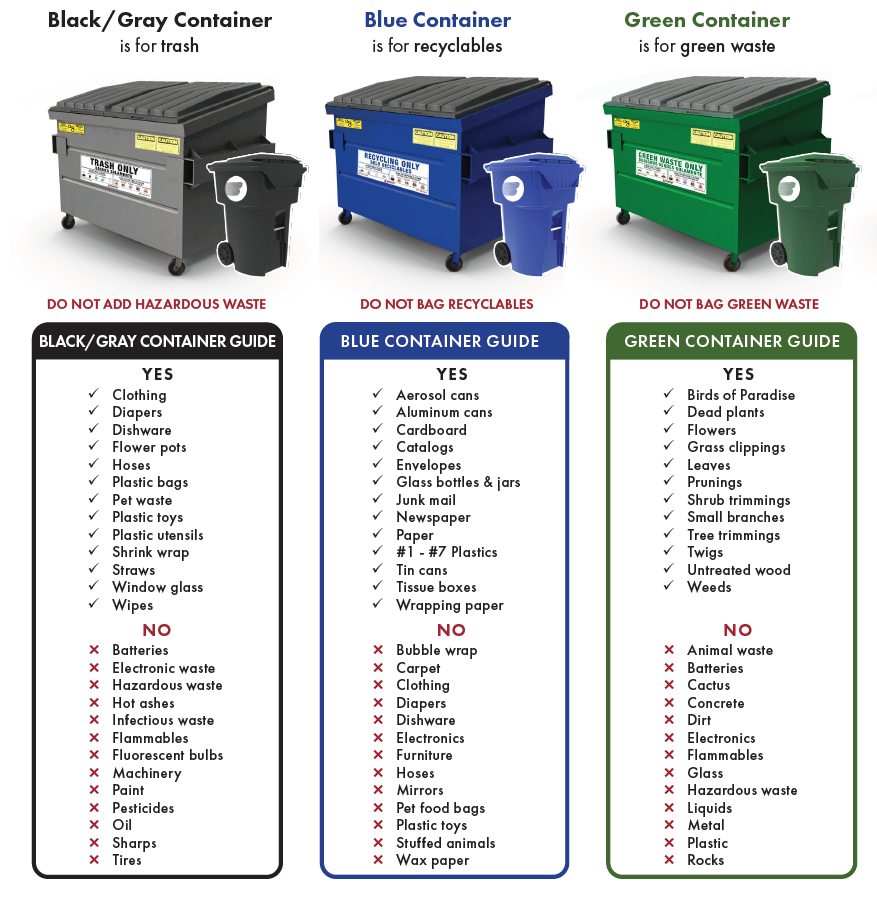
Did you know: Disposing a regular trash bin is approximately three times the cost of disposing a recycling bin on campus waste? Landfill diversion will provide financial savings for our school. It will also reduce the need for more neighborhoods to experience smells, sights and property devaluation associated with landfills.
If you see something, say something. If you notice a space on campus that seems to attract a collection of trash build up, tell us! Send an email to Resilient@csusb.edu and include: the time, date, location, or a timestamp picture of the issue.
For event waste disposal needs, please submit a work request through WebTMA for the appropriate bin size: 3-yard, 4-yard, 10-yard, 20-yard, or 40-yard. |