Viktor Wang
Contact
Bio
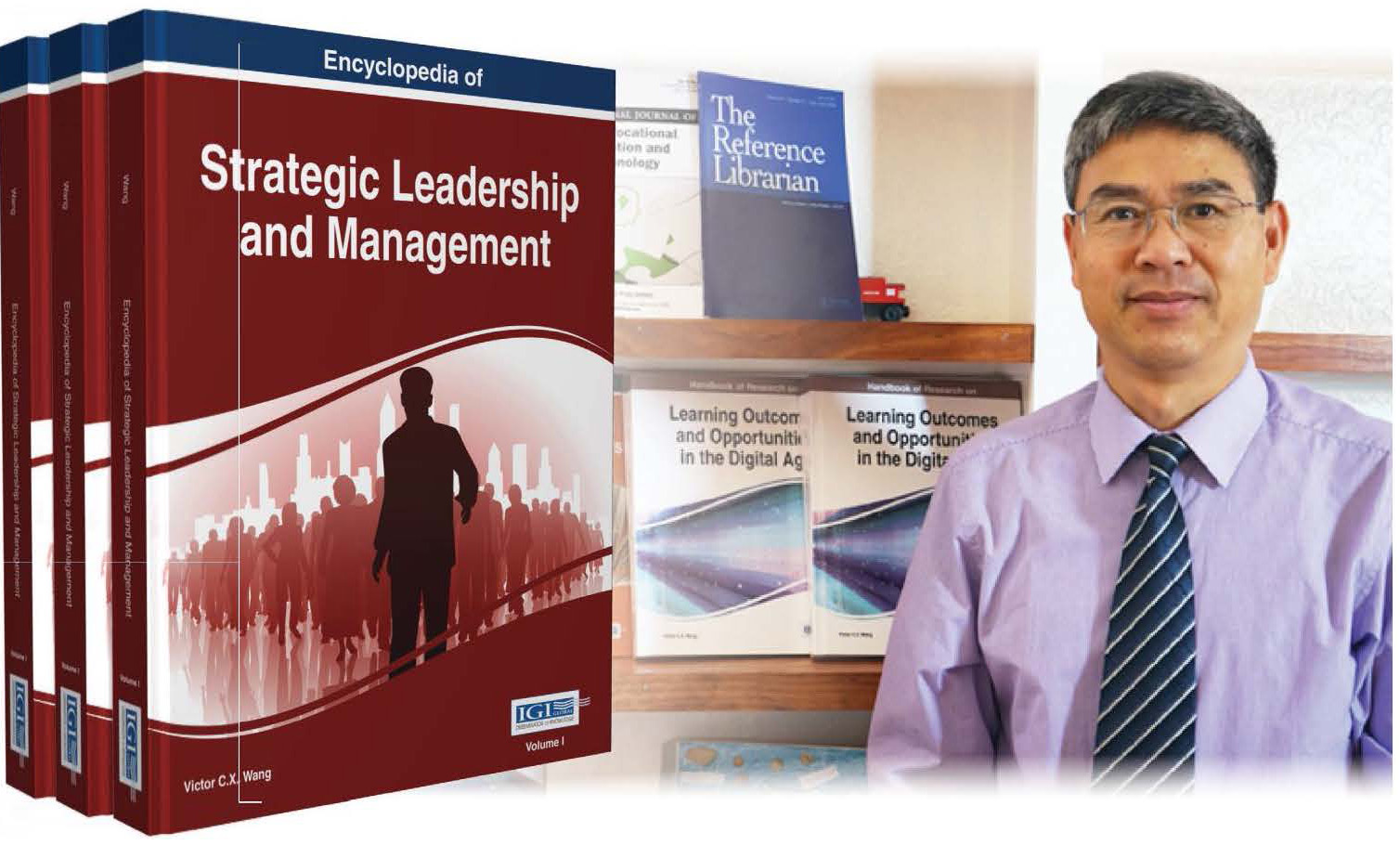
Viktor Wang is a globally recognized professor in education, with expertise in career and technical education, lifelong learning, and the integration of artificial intelligence in pedagogy. He has authored and edited 288 peer-reviewed publications, including more than 80 refereed books consisting of both single-authored and edited volumes, and serves as editor of multiple international journals and scholarly volumes supporting a global network of researchers; his scholarly books are indexed in major international academic databases, including Scopus, Web of Science Book Citation Index, ERIC, PsycINFO, ACM Digital Library, Clarivate Analytics, and IET INSPEC, and his work has been widely disseminated, encompassing over 2,000 articles and book chapters across his publications and edited volumes. His publications are held in major academic libraries, including Stanford University and other leading research institutions. Dr. Wang has received numerous honors, including the 2016 Presidential Award for Exceptional and Innovative Leadership from the American Association for Adult and Continuing Education (AAACE), along with institutional awards for distinguished faculty achievement. A dedicated mentor, he has guided more than 90 doctoral students to completion. His leadership has contributed to program development, enrollment growth, and international educational partnerships. His recent work focuses on future-ready education, particularly the integration of general education and career and technical education, and the role of AI in transforming teaching, learning, and global education systems. Currently, Dr. Wang serves as the Editor-in-Chief of the International Journal of AI in Pedagogy, Innovation, and Learning Futures, a California State University–sponsored open-access journal dedicated to advancing interdisciplinary scholarship on artificial intelligence, innovation, and the future of education.
Doctoral Mentorship in Educational Leadership: Research, Publication, and AI-Enhanced Learning
I mentor doctoral students to produce high-quality, publishable research in educational leadership, AI in education, career and technical education, and adult learning. My mentees regularly present at conferences, publish in peer-reviewed journals, and complete their dissertations under clear expectations and structured guidance.
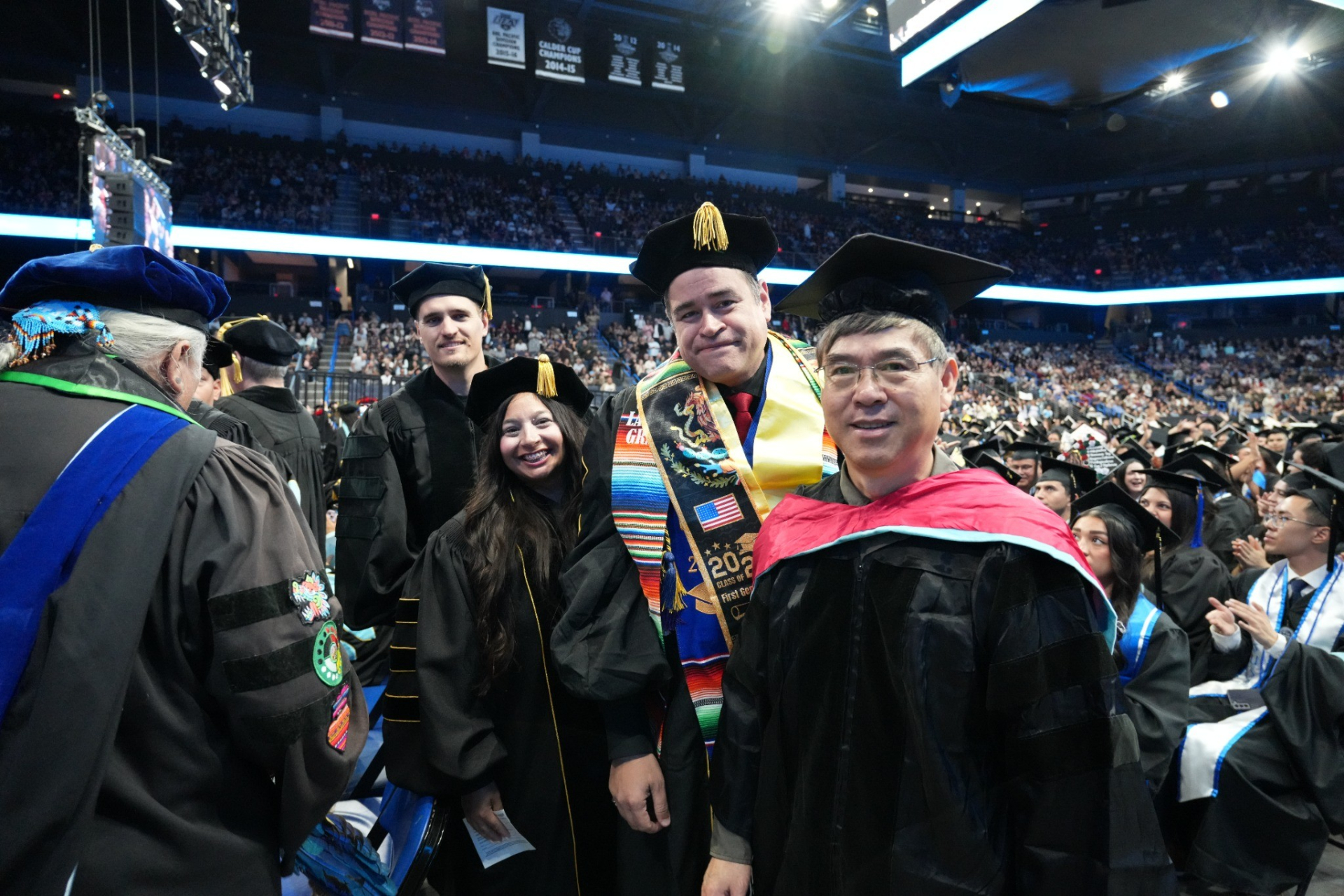
Celebrating the successful graduation of three of my dissertation students during the Spring 2026 commencement ceremony at California State University, San Bernardino. This moment reflects years of perseverance, scholarly growth, research development, and academic mentorship. Watching doctoral students cross the commencement stage and emerge as scholars and professional leaders remains one of the most meaningful aspects of university teaching and dissertation advising.
Teaching Effectiveness and Doctoral Mentorship Across Institutions and Levels
My teaching effectiveness is demonstrated through consistently strong student evaluations across undergraduate, graduate, and doctoral courses over more than two decades of teaching in multiple institutions. Course evaluations from 2002 to 2025 show sustained high ratings for instructional quality, clarity, feedback, and engagement, including many perfect or near-perfect scores across courses and semesters. Student feedback consistently highlights structured course design, timely and meaningful feedback, and the ability to connect theory to real-world practice across diverse subject areas and professional contexts. This record extends to dissertation supervision, where students describe the mentorship experience as supportive, rigorous, and instrumental to their academic progress. Together, these outcomes reflect a sustained commitment to effective teaching and doctoral mentorship across diverse educational settings. This record reflects teaching effectiveness from 2002 to 2025 and does not include earlier exceptional teaching evaluations in China (1989–1997), during which my teaching was featured on Liaoning Radio and selected episodes appeared on China Central Television (CCTV).
Teaching effectiveness (2002–2025) available here.
In one year, Dr. Wang authored 13 books—an intensive, high-output writing sprint that reflects sustained scholarly focus and disciplined publication-level production: Watch his book video
Featured media: Dr. Wang's televised interview on CCTV-America highlighting the global impact of Career & Technical Education (CTE), adult learning, and workforce-ready skills. Watch his CCTV-America Interview
Education

The International Journal of AI in Pedagogy, Innovation, and Learning Futures (IJAIPIL) is a peer-reviewed, open-access journal supported by the CSU Open Journal platform: https://journals.calstate.edu/ijaipil/about. It is endorsed by leading academic and administrative scholars affiliated with institutions including UC Berkeley, USC, Penn State, and other internationally recognized universities, as well as scholars representing influential traditions in adult and lifelong learning.
Current Research
My current scholarship examines how artificial intelligence and technological transformation are reshaping educators, curricula, workforce preparation, and the leadership and governance of higher education.
New Book — Springer Nature (2026)
Reinventing Career and Technical Education: Global Disruption, Innovation, and Transformation
View Book Flyer — Flyer_978-981-92-2908-6-1.pdf
Springer Book Page
Reinventing Career and Technical Education
Forthcoming Books — Available for Preorder
Governing AI in Higher Education: Leadership, Shared Governance, and Institutional Accountability (Palgrave Macmillan | Springer Nature) examines how colleges and universities can govern artificial intelligence responsibly through effective leadership, shared governance, transparency, ethical decision-making, and institutional accountability. The book offers practical frameworks for building trustworthy, AI-ready institutions while preserving academic quality, faculty autonomy, and public trust.
Springer/Palgrave Book Page
Governing AI in Higher Education
Transformative Journeys in Education: Theory, Praxis, and Educator Identity (Springer, 2026) brings together international educators who explore how theory and lived experience shape teaching, research, and leadership. The volume highlights educator identity, lifelong learning, and global perspectives on adult and continuing education, offering insights for faculty development and academic practice.
Springer Book Page
Courses/Teaching
To Prospective Students
If you are thinking about becoming a teacher, teacher-leader, or educational leader in CTE or beyond, I would be honored to work with you.
Whether you are pursuing a CTE credential, a BA/BS in Career and Technical Studies, an MA in Career and Technical Education, or a doctorate in Educational Leadership, know that you will not just be a name on a roster—you will be my scholar.
For over 20 years, I have taught and conducted research across cultures and contexts, from adult learners returning to school to doctoral students shaping policy and practice. My classrooms and research groups are places where your professional experience, cultural background, and life story are strengths, not footnotes.
As a tenured professor in Educational Leadership & Technology and CTE, my role is to challenge you, support you, and help you grow into a reflective, ethical leader who serves real students in real communities. If you choose to study with me, you can expect high expectations, honest feedback, and a deep commitment to your success.
If you are a prospective student who sees yourself in CTE or educational leadership—and you are ready to work hard, think critically, and care deeply—I invite you to connect with me. Reach out through my CSUSB email, introduce yourself, and tell me about your goals.
I would be glad to walk alongside you as you take your next step in education.
Dr. Wang's in-person teaching has positively impacted exceptional students at the undergraduate, graduate, and doctoral levels from diverse regions, including China and many U.S. states. Consistently, he receives outstanding to perfect teaching evaluations from both his students and colleagues every semester, reflecting his dedication and effectiveness as an educator.
"Teaching doesn't end at graduation. Sometimes it crosses oceans, follows languages like Esperanto, and echoes through the same halls where Nobel laureates once taught. To know that my students carry what we built together—that's the real legacy."
San Bernardino – 2026: A Doctoral Cohort in Motion
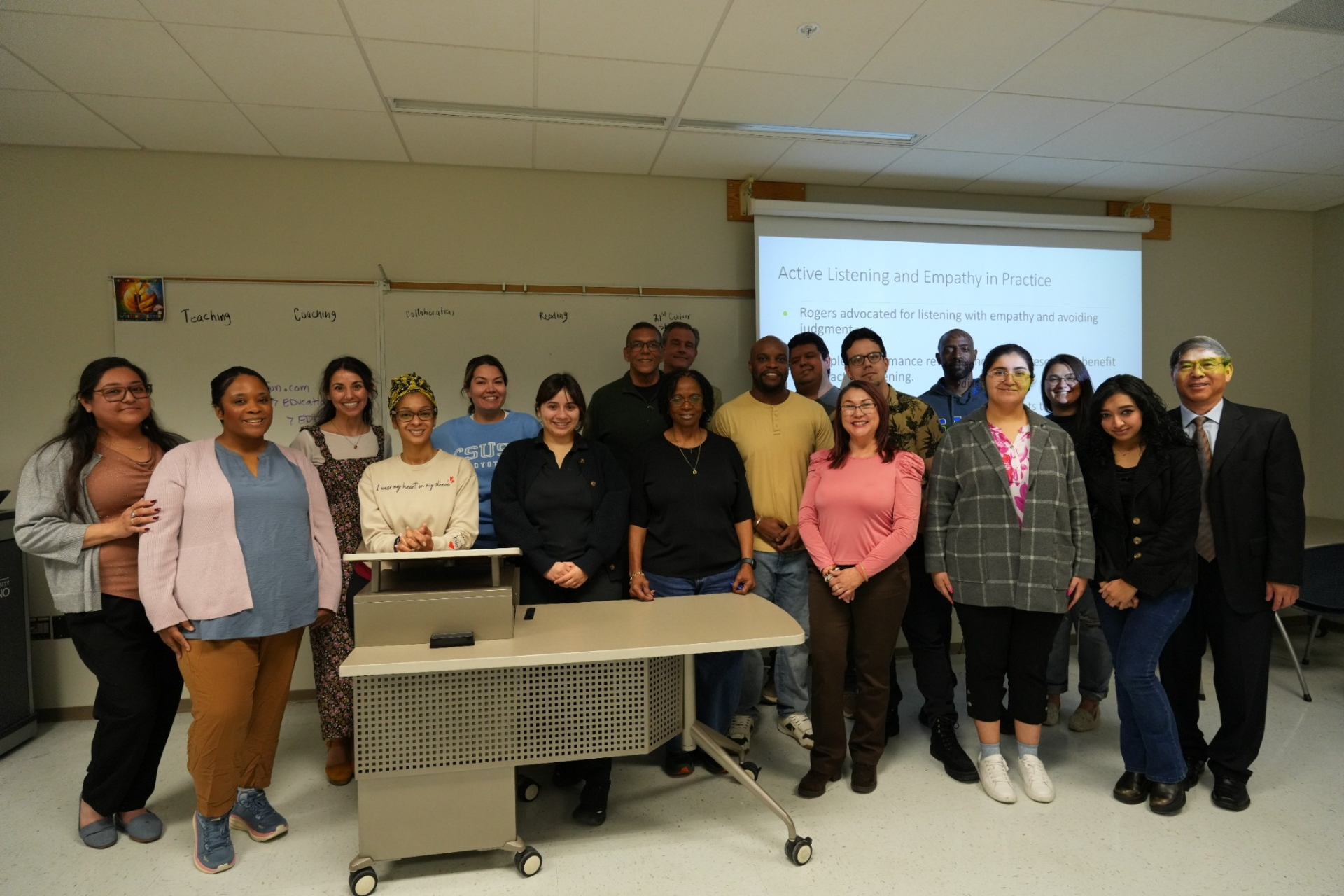
San Bernardino, 2026—a doctoral learning community bringing together educators and educational leaders with diverse professional experiences. Through dialogue, course readings, research, and reflection, students connected leadership theory with the realities of educational practice.
The cohort illustrates an important principle of adult and doctoral education: learners bring substantial professional knowledge and lived experience to the classroom. These experiences can become important resources for critical reflection, scholarly inquiry, collaborative learning, and professional growth.
Together, the cohort represents the continuing relationship among theory, research, experience, and educational leadership practice.
Long Beach, 2002 – A Classroom That Voted With Its Heart
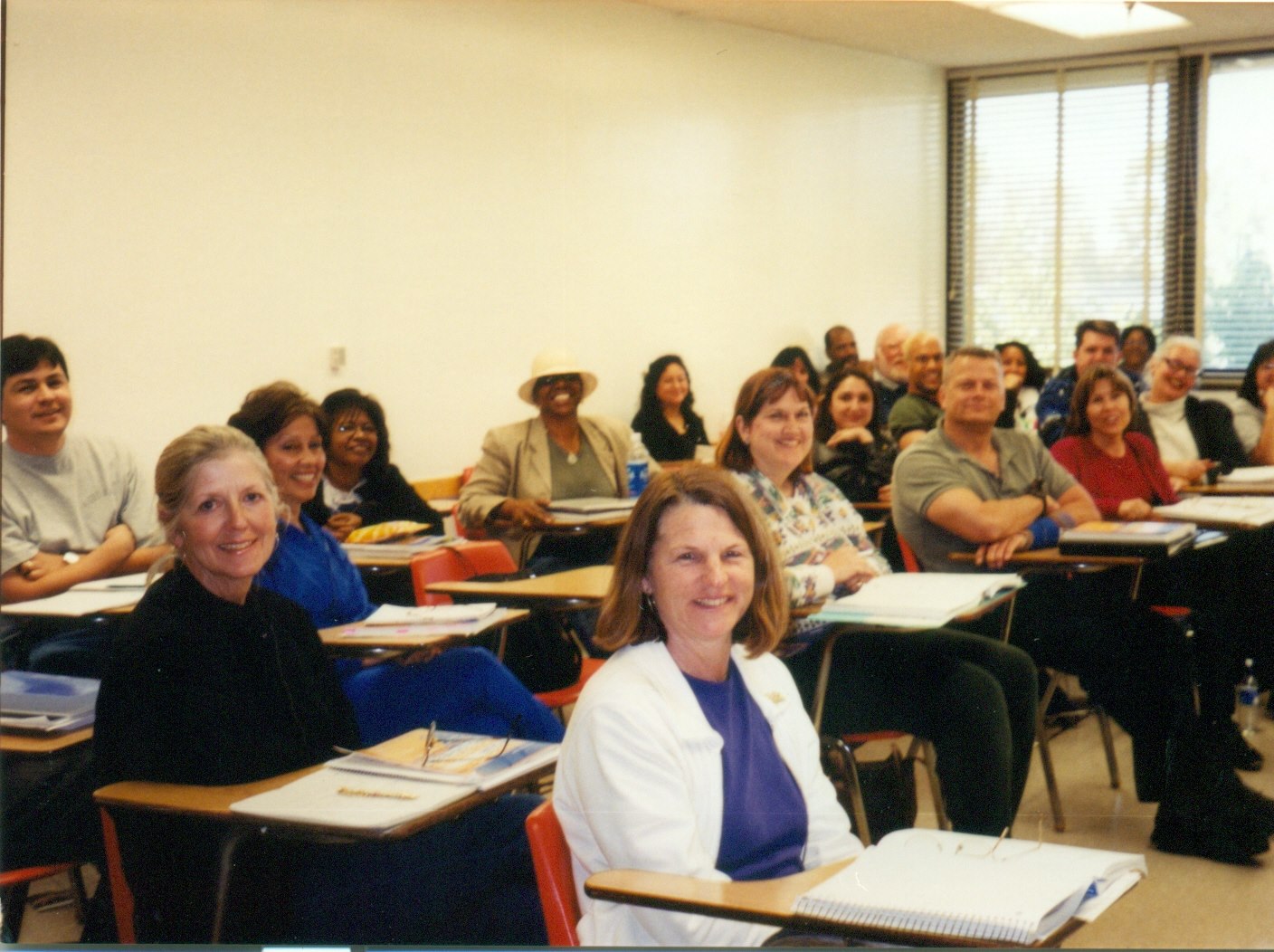
Reflection – Long Beach, 2002
What a moment that was. Long Beach, 2002—a room filled with minds wide open and hearts eager to learn. I remember walking into that classroom, not knowing that over the next few days, I would witness something rare: a classroom that felt like home.
Their smiles, captured forever in a single frame, remind me that teaching is not just about knowledge—it’s about presence, connection, and the subtle joy of being understood. I stayed in Long Beach for four days that week, invited for an interview at CSULB. But it was this class—and another—that voted with their hearts, telling me without words, “You belong here.”
One student later told me, “You speak like President Clinton.” Perhaps it wasn’t the voice, but the rhythm—the way words tried not just to teach, but to touch.
That photo? It isn’t just a class picture. It’s a chapter. A reminder of what teaching looked like when sincerity filled the room and learning was alive. Beautiful memories, beautifully lived.
Reflection – Florida, 2014
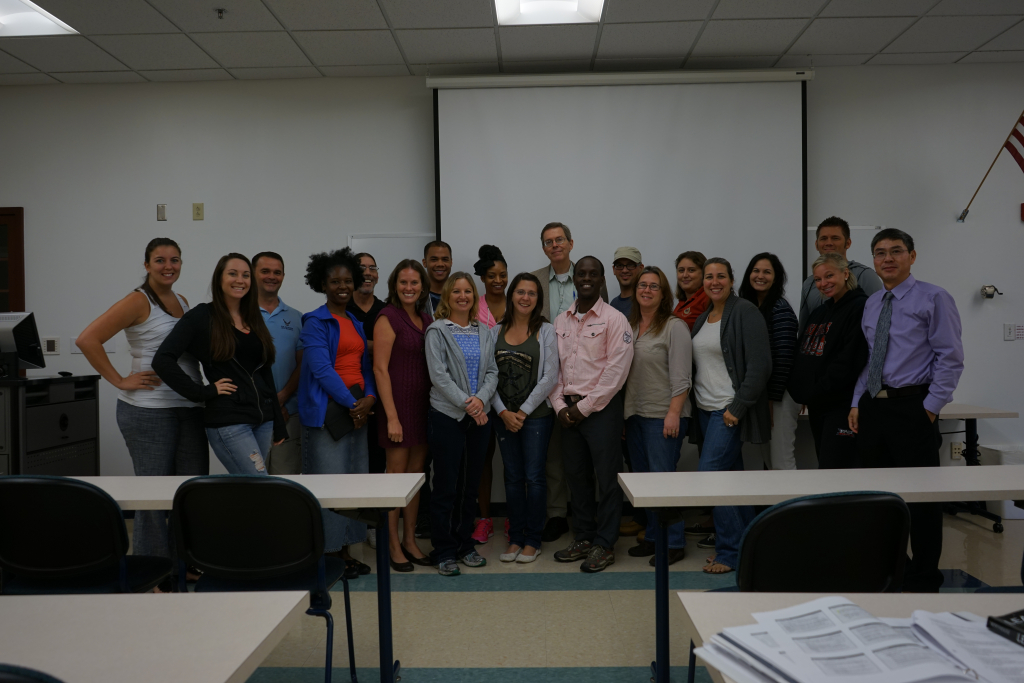
A Room of Rising Voices
Florida, 2014—a classroom alive with brilliance, laughter, and something even rarer: trust. These were my PhD and master’s students, a group whose energy made every lecture feel like a conversation with the future. They didn’t just give me exceptional evaluations—they gave me their stories, their questions, their hope.
I remember writing letters of support late into the night—each one a quiet vow to stand behind their journeys. I still smile thinking about the day I brought seaweed to a pregnant student, just because she mentioned a craving and I wanted her to feel seen.
Among them stood a tall scholar who once showed me his GRE scores—near perfect. He speaks six languages, and he could teach at any university in the world. But in that classroom, we were all learners, and we were all teachers.
This picture? It isn’t just a photo. It’s a moment of mutual respect, warmth, and shared promise. Beautiful people. Beautiful memories.
Specialization
AI, Pedagogy, and Andragogy: Scholarly Contributions, 2025–2026
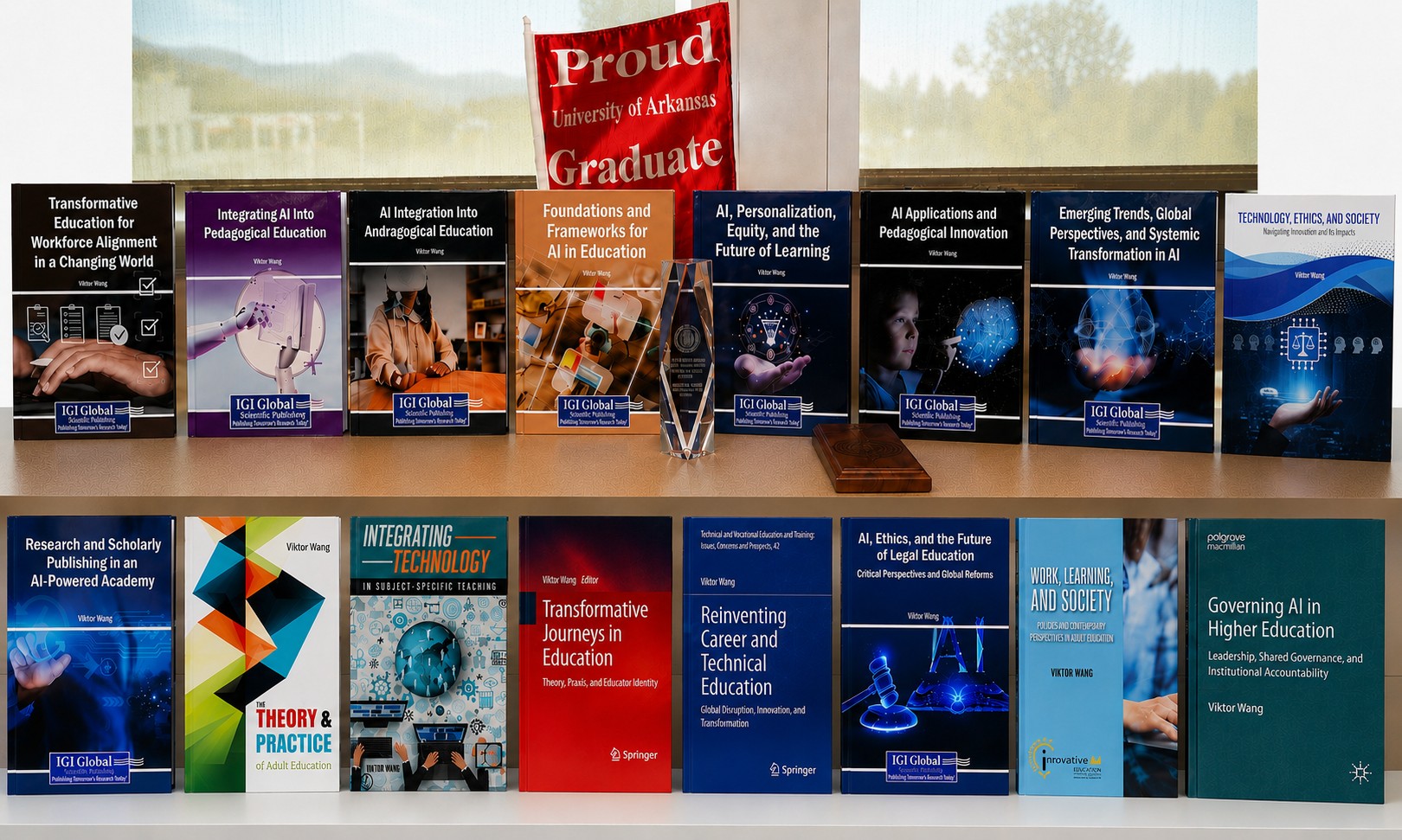
One of Dr. Wang’s books was reviewed by Dr. Young, Dean and Professor at UC Berkeley, in Teachers College Record. The review is available in English, Chinese, German, and Spanish.
CSUSB employees and students can access Dr. Wang's e-books with unlimited access
Handbook of Research on Andragogical Leadership and Technology in a Modern World
Handbook of Research on Educational Leadership and Research Methodology
Adult education and vocational training in the digital age
Educational leadership: Perspectives, management and challenges
Critical theory and transformative learning
Scholarly publishing and research methods across disciplines
Handbook of research on transdisciplinary knowledge generation
Handbook of research on program development and assessment methodologies in K-20 education
Promoting qualitative research methods for critical reflection and challenge
Handbook of research on ethical challenges in higher education leadership and administration
Research and Teaching Interests
Dr. Wang’s scholarship and teaching span career and technical education, adult and lifelong learning, artificial intelligence, educational leadership, workforce development, and higher education governance.
Selected Videos: Teaching, Scholarship, Leadership, and Mentorship
|
|
|
|
|