Demographics
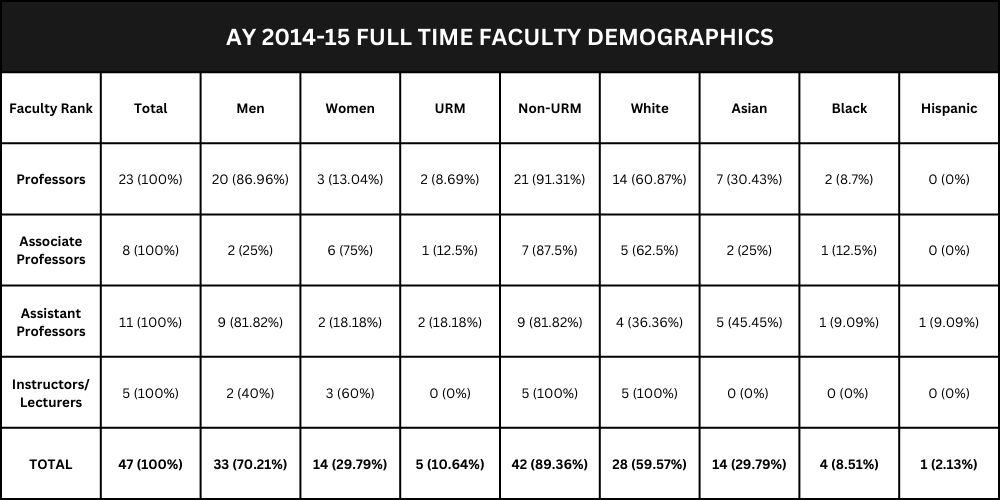
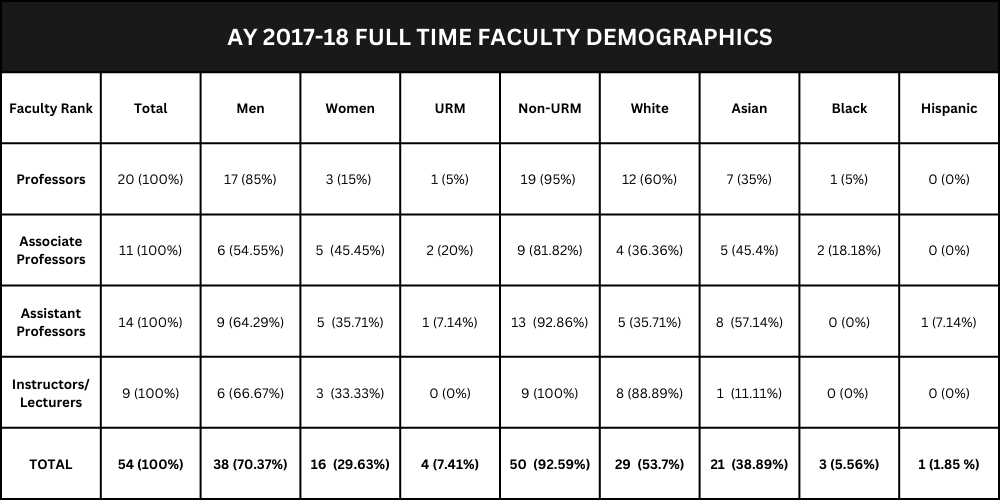
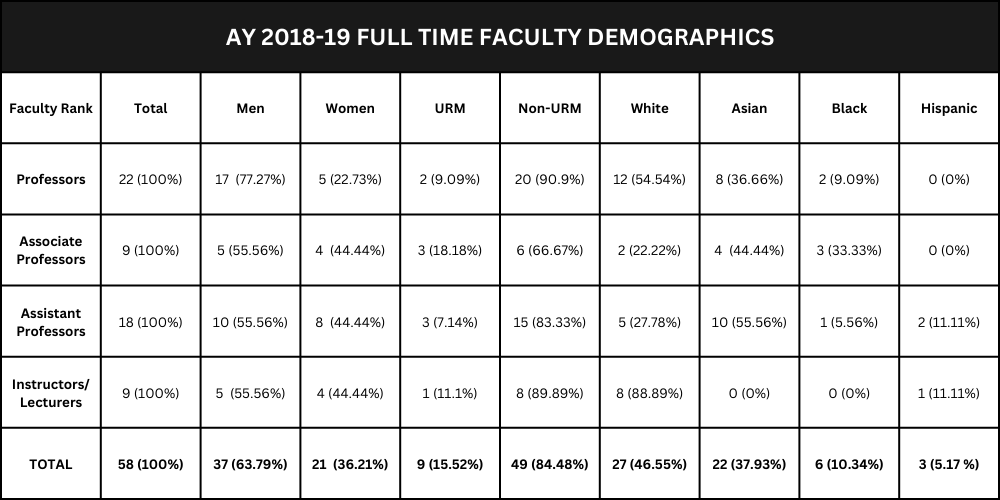
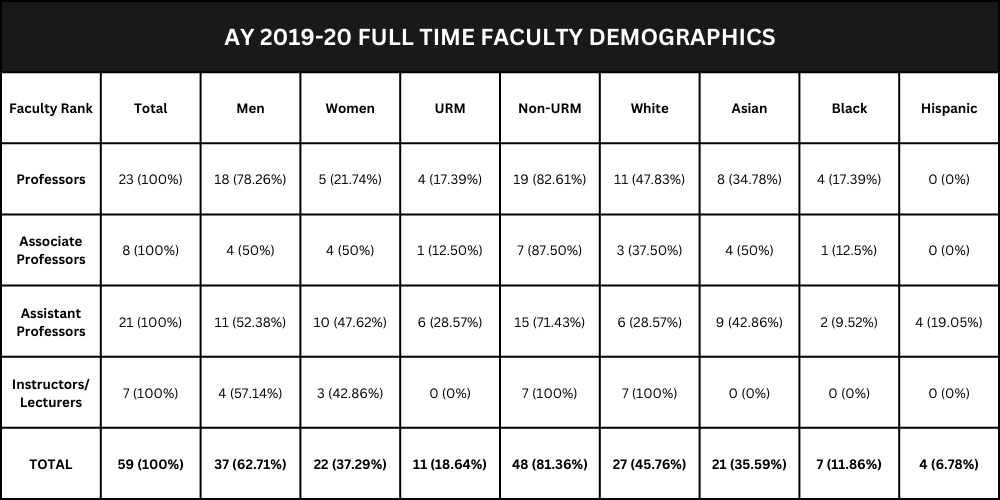
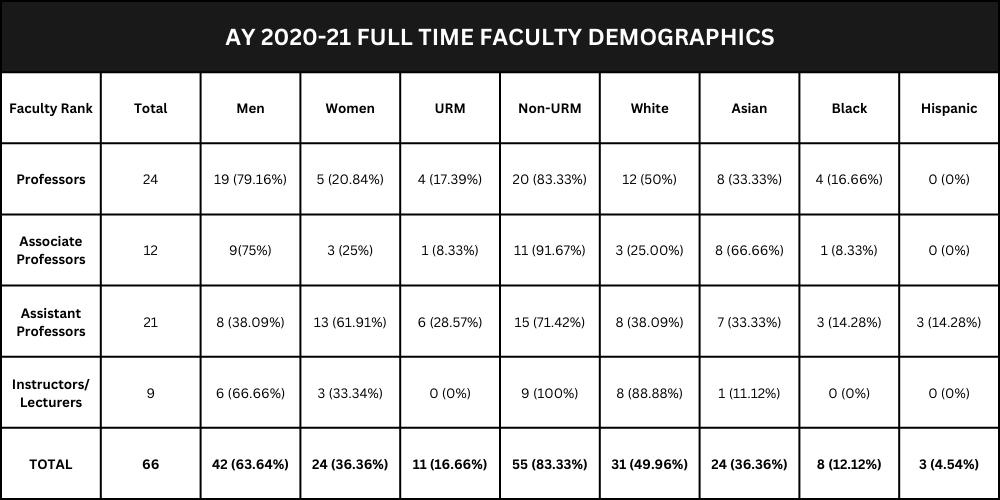
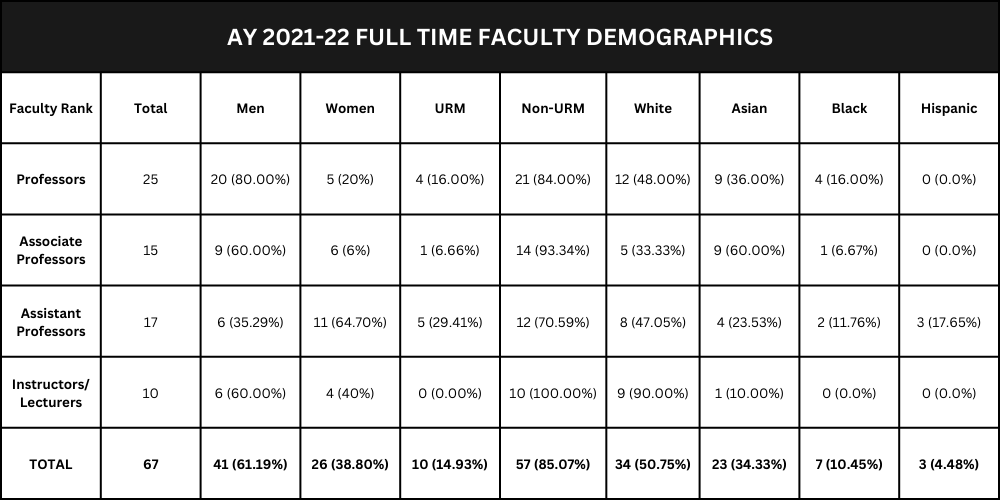
Reviewing the JHBC data about faculty members for the academic year 2014-15, we observed that approximately 70% of faculty members across all ranks are male and 30% male. The representation of underrepresented minority (URM) faculty members was low, with only 10.64% of faculty members belonging to this population in a minority-serving institution. The data also showed that 87% of professors are male, and only 13% were female. The representation of URM professors remains low, with only 8.69% of faculty members belonging to this population, and 0% of Hispanic representation. The distribution is similar for Assistant Professor; 18% are female and 9% of the faculty members belonged to the Black and/or Hispanic populations.
The Associate Professor rank showed a reversal in gender representation, with 75% of faculty members being female and 25% being male. However, the representation of URM faculty members remained low, with only 12.5% of faculty members belonging to this population, and 0% of Hispanic representation.
Instructors/Lecturers had relatively equal gender representation, with 60% being female and 40% being male. However, the representation of URM faculty members was still low at 10.6%, with only 2% being Hispanic and 8.5% being black.
Faculty Salary
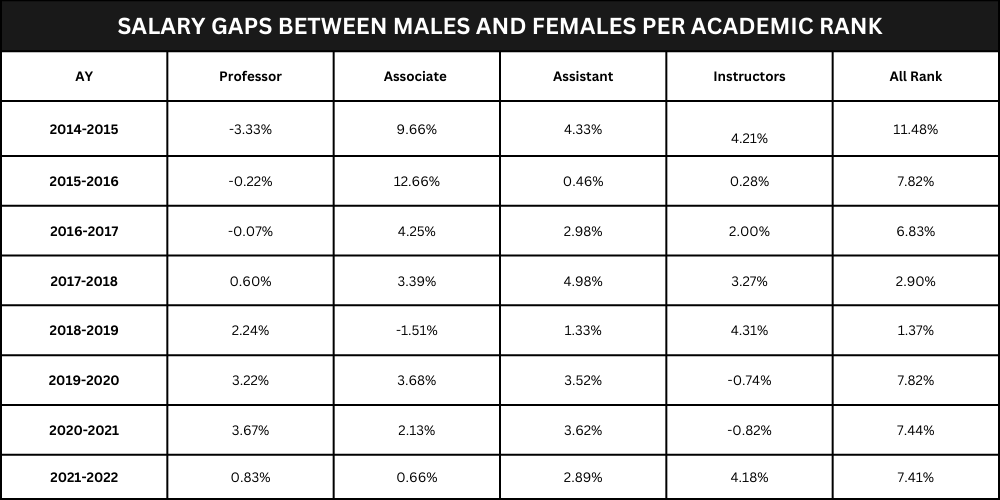
Over an 8-year period from 2014 to 2022, the overall salary difference between men and women faculty members (all ranks) decreased to 1.37% in 2018 from 11.84% in 2014. The salary gap increased again during the 2019 AY and has remained consistently high since (7.41%).
For Instructors, we observed that the 2022 percentage of salary difference between male and female instructors has remained almost the same since 2014 (4.18% in 2022 v 4.21% in 2014). Although the gap dropped to zero in 2015 and in 2020, it returned to the 2014 level in 2022. For Assistant Professors, the male-female salary gap was slightly above 4% between 2014 and 2017. The gap has since decreased to 2.89% in 2022. For Associate Professors, we observed a significant improvement in compensation differences for male-female faculty members, the male-female salary gap has almost disappeared in the past 8 years (from 12.66% in 2015 to 0.66% in 2022). For Professors, even though the salary gap for male-female faculty members started to slowly increase in 2017 to reach 3.67% in 2021, it eventually came down to 0.83% in 2022.
JHBC Full-time Faculty Male & Female Salary Percentage Gap